
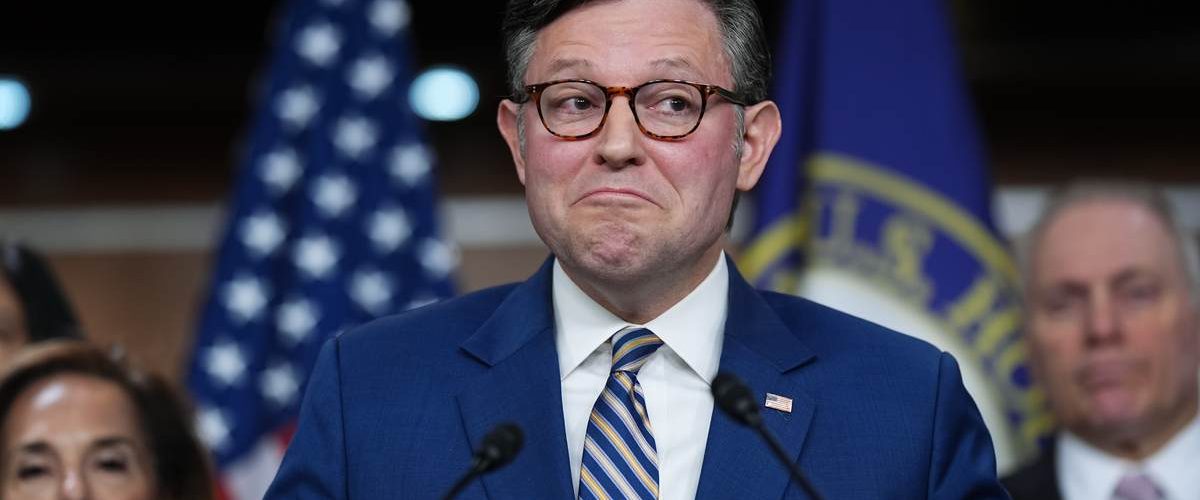
I’ll argue the core exchange: House Speaker Mike Johnson faced aggressive questioning from legacy reporters about the Iran conflict and related political fallout, pushed back hard on the premise that he or the House should be blamed for the war’s length or costs, and called out the media’s gotcha framing in blunt terms.
When the House reconvened, Speaker Mike Johnson stepped back into the press gauntlet and encountered a press corps still eager to pin blame for global events on Capitol Hill leaders. Reporters leaned on familiar talking points about Iran, trade frictions, and domestic complaints tied to national policy, as if the speaker personally orchestrated every move. That setup invited a confrontation over responsibility and the limits of the speaker’s role.
One exchange showed how sloppy or willful the questioning can be. A reporter bundled disparate complaints—military action, trade disputes with Canada, cattlemen upset by imports, a Great Lake name change, and perceived threats to cultural institutions—then asked whether Johnson supported those moves. The question mixed policy, politics, and opinion in a way that forced a defensive answer rather than a substantive discussion of oversight or legislative options.
REPORTER: Since you were on recess, the war in Iran has escalated. At this podium in March, you said that it would be over in short order. In addition to that war escalating, we are now in a greater trade war with Canada, usually one of our greatest trading partners. In addition, the president has angered cattlemen throughout the country by bringing in imports. And they still say, even today, that they are concerned about their livelihoods because of his moves. I know he’s tried to mitigate them. In addition, he has tried to change the name of a Great Lake and threatened to demolish the Kennedy Center.
Are these moves that you support? And do you understand Republicans, some of whom I just spoke to who said these hurt your chances and some of the voters do not like them.
Johnson answered with the patience often required when the press confuses coordination with command. He explained that advising and coordinating across branches does not hand the speaker a veto over every executive decision. The speaker underscored that the president directs military operations and that the House’s role is distinct, even when reporters want to collapse institutional separation into a single target for blame.
After that podium moment, a CNN correspondent pursued Johnson in the hallway, forcing a terse exchange that exposed the awkward leap reporters often make from policy expectations to personal responsibility. The correspondent cited past predictions that the conflict would be short and asked whether the speaker should be judged for being off in those projections. The question framed the speaker as a forecaster rather than a legislator.
CNN: On Iran, you said repeatedly that this war was going to be over, soon. You said that it would be a temporary blip on short term… on gas prices. It is more than six months, people are still getting hurt still at the pump. Should the American people not also judge you on your projections here that were clearly off base?
JOHNSON: Manu, that is one of the stupidest questions you’ve ever asked.
https://x.com/HQNewsNow/status/2094807073665986619
The corridor back-and-forth grew sharper as the reporter attempted to insist the speaker was responsible for selling the public on the timeline and the costs. Johnson pushed back hard, pointing to the separation of responsibilities and refusing to accept a premise that held the House speaker accountable for the prosecution of a global military campaign. That blunt refusal to accept the premise of guilt is exactly the pushback the public deserves when the press overreaches.
CNN: Why is that stupid?!
JOHNSON: I have nothing to do with the prosecution of the war across the globe.
CNN: You are responsible. You are selling this to the American public, are you not?
Johnson did not let the reporter steer him into an apology or an admission of responsibility that would have been inaccurate. When asked point-blank whether the speaker should be held accountable for the length of a foreign conflict, he turned the question back on the interrogator. That rhetorical move exposed the thinness of a narrative that seeks to indict domestic leaders for tactical military decisions made by the executive branch.
JOHNSON: So, should the House Speaker be held responsible for the duration of a military conflict across the globe? You answer that question.
CNN: I believe you called this a short-term skirmish and it’s costing billions of dollars…
Two video snippets circulated that captured the drama: one from the podium press conference and one from the hallway confrontation. Both show reporters chasing a simple narrative—assign blame to a convenient target—rather than addressing the institutional realities that would inform smarter coverage. The result was a teachable moment about the distinction between accountability and convenient scapegoating.
The larger lesson here is about media responsibility. When questions assume false equivalence between separate branches of government or lump unrelated grievances into a single indictment, the answers will be sharp and revealing. Johnson’s bluntness didn’t hide a lack of competence; it exposed a media instinct to manufacture drama rather than parse who actually makes the calls.
For voters watching, the episode illustrated how political theater can distract from genuine oversight. Holding officials to account is essential, but so is asking accurate, proportionate questions that lead to meaningful answers. The press corps should aim for that standard rather than recycling talking points that muddle responsibility and motive.



Add comment