
Checklist: Review filing amendments, explain disappearing small-dollar totals, detail the complaint and its numbers, note related investigations, and highlight why the campaign must answer for the inconsistencies.
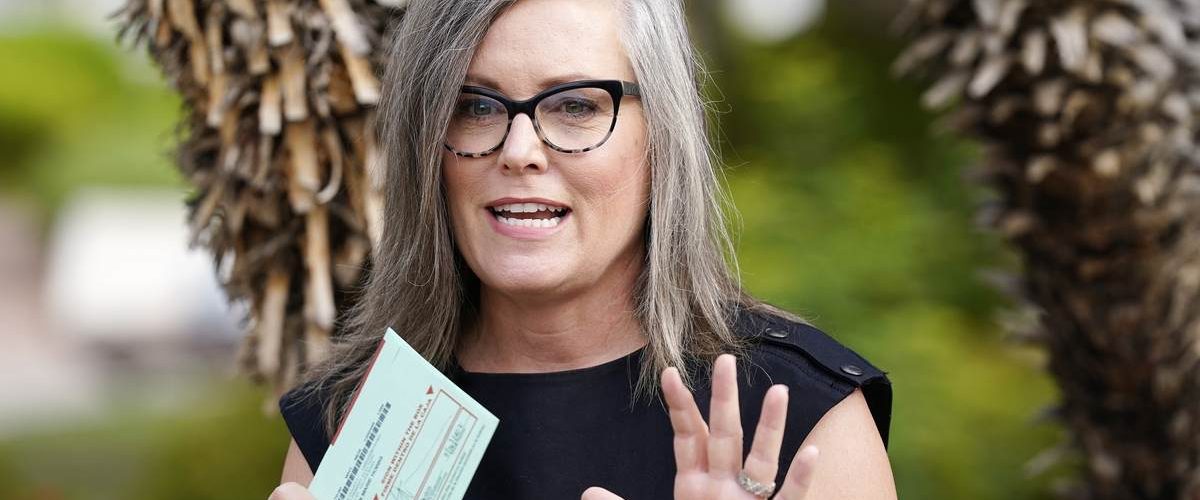
Arizona Governor Katie Hobbs’ campaign amended the same finance report ten separate times, and the revisions produced wildly different totals for small-dollar donations. Initially, Elect Katie Hobbs reported $1,426,552 in exempt small contributions for the second quarter of 2026, then the figure vanished in subsequent filings before partially reappearing. Those shifts are not minor bookkeeping tweaks; they amount to more than a million dollars moving in and out of a category that should be straightforward to tally. The recurring changes have prompted a formal complaint asking prosecutors to examine the accuracy of the filings.
The complaint filed by Arizona resident Gary DeBerge raises questions not just about Hobbs, but about statewide filings that show odd patterns across multiple campaigns. It points to an anomaly in how exempt small contributions were reported and then removed, calling the situation troubling given the scale of the discrepancy. Elect Katie Hobbs started with $1,426,552 recorded in that category and later reported zero, and after further amendments the campaign ended at $394,802 in exempt small contributions. The back-and-forth creates reasonable suspicion that the filings need a forensic review.
The rest of the quarterly report shuffled as well, with total receipts swinging between figures that differed by millions. Hobbs originally disclosed $2.64 million in total receipts, then amended the figure to $3.1 million, cut it to $1.68 million in a later version, and eventually returned to a number around $2.65 million. Ten amendments and sizable oscillations like that erode confidence in the accuracy of campaign disclosures. When donors, watchdogs, and prosecutors see such wide variation, transparent answers are essential for public trust.
The complaint singles out another odd tally: 46,335 entries listed contributors as “not employed” or “unemployed” in Hobbs’ 2026 filings. That number can include repeated entries from the same donors, so it does not necessarily mean 46,335 different people, but the scale is still striking. For comparison, Attorney General Kris Mayes had 17,530 such entries and Secretary of State Adrian Fontes had 12,640 in their filings. Republican gubernatorial nominee Rep. Andy Biggs had 26 such entries, highlighting how unusual Hobbs’ totals appear relative to others.
DeBerge’s complaint directly alleges this about the exempt contributions:
Elect Katie Hobbs has reported approximately $1.4 million in exempt contributions and then later reported that those same contributions never existed. This should immediately raise questions regarding the accuracy of one, if not all, of the recent filings made by this committee.
That is an allegation, not proof of a criminal scheme, but the filings themselves document the repetitive amendments and shifting numbers. The complaint frames the pattern as one that should trigger investigative scrutiny, particularly given the volume of entries that declare donors as unemployed. Whether the repeated amendments stem from clerical error, misinterpretation of reporting rules, or something more serious is the central question now.
Separately, Attorney General Kris Mayes announced on Aug. 21 that her office would not pursue charges after a two-year bribery investigation involving Sunshine Residential Homes, which had given more than $550,000 toward efforts supporting Hobbs and later benefited from a rate increase and a higher-paid state contract. Mayes’ criminal division chief stated:
After two years of investigation, consisting of 12 interviews, reviews of campaign-finance records, procurement records, bank documents, and State emails and chats, totaling over one terabyte of data and more than 100,000 documents, the investigation has not uncovered any evidence of the necessary quid pro quo to support a bribery charge.
The bribery probe and the complaint about the amended filings are separate matters, but together they form a pattern of questions that hover over Hobbs’ administration as she seeks reelection. Voters and watchdogs should expect precise, documented explanations when campaign numbers swing dramatically across multiple published reports. The filings are public records and they show the changes; the campaign owes an explanation that goes beyond vague accounting fixes.
For a major statewide campaign to repeatedly alter a single report ten times and produce inconsistent small-dollar totals is a red flag that cannot be waved away. The complaint asks prosecutors to investigate, and until a clear answer is provided, the discrepancies will continue to shape how the campaign is viewed heading into the November election. Hobbs’ team must account for where the money was reported, why entries were removed, and how such large shifts happened in a category meant to be summarized, not disappeared.


Add comment