
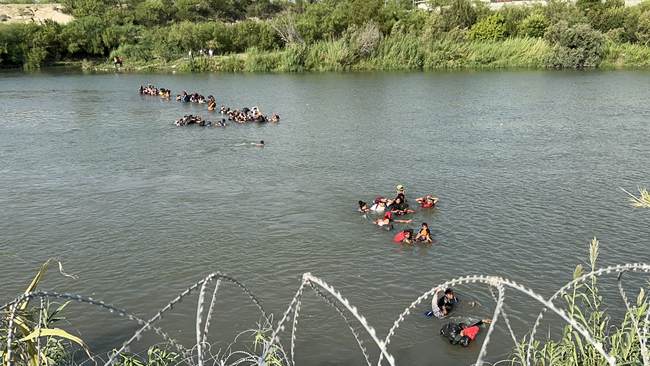
Texas Department of Public Safety spokesman Chris Olivarez reported that a TX DPS K-9 helped Border Patrol catch seven Chinese nationals on a private ranch near Eagle Pass, raising fresh concerns about border security, potential national security risks, and the consequences of lax immigration enforcement.
Chris Olivarez, a lieutenant and the official DPS spokesman, shared the incident on his official X account, noting that a K-9 unit helped track and capture the group on private property near Eagle Pass. The discovery of seven Chinese nationals on a ranch is the kind of event that highlights both tactical law enforcement work and broader policy failures at the border. Local officers and federal agents coordinated the response, and the K-9 played a key role in bringing the incident to a close. The presence of military-aged foreigners in sensitive border regions is a reality taxpayers deserve straight answers about.
https://x.com/LtChrisOlivarez/status/2059686802735133133
The post Olivarez shared included stark context about the estimated number of Chinese nationals in the United States illegally, which he placed between 250,000 and 400,000. That figure, whether at the lower or higher end, is sobering and underscores the scale of unauthorized migration from China into the U.S. For Republicans who prioritize border security, the idea of hundreds of thousands of potentially undocumented foreign nationals scattered across the country is an unacceptable vulnerability. The worry is not just numbers but what some of those individuals might be doing while here without oversight.
As Olivarez noted in his post, China is a major trade partner but not necessarily a friend, and we should treat that distinction seriously. Friendly nations do not, the post argued, infiltrate young, military-aged men into other countries they claim to be friendly with. While there was no direct evidence linking the seven detained individuals to the Chinese Communist Party, the post warned that little happens in the People’s Republic without the party’s approval. That line of thinking stokes legitimate concerns about potential foreign influence or surveillance operations masked by migration flows.
The post reads:
The best estimate is, right now, between 250,000 and 400,000 Chinese nationals in the United States illegally. In case anyone hasn’t noticed, China isn’t exactly friendly to the United States. They are a trade partner; a major trade partner, in fact. But that doesn’t make them a friend. Friendly nations don’t infiltrate young, military-aged men into other nations they are friendly with, and while there’s no evidence that the seven Chinese nationals nabbed near Eagle Pass were sent by the Chinese government, by which I mean the Chinese Communist Party, we might note that little goes on in the Middle Kingdom without the Chinese Communist Party’s blessing.
And as for those 250,000 to 400,000 Chinese nationals here already, thanks to the non-enforcement of immigration law by the late, unlamented Biden administration, we now have very little idea where a lot of those people are or what they are doing. Some of been caught photographing sensitive military bases, running illegal biology labs, and so forth. None of those facts is comforting, not by a long shot.
Beyond the political rhetoric, there are operational takeaways: Texas law enforcement and Border Patrol can and do work together effectively when they have the tools, training, and legal clarity to act. The K-9’s role in tracking and apprehending the group is an example of boots-on-the-ground results that citizens notice and appreciate. But single successes do not erase the systemic failures that allow these situations to arise repeatedly. Every capture is important, but prevention and smarter border policy are where long-term gains happen.
Some officials expressed frustration that as of the time of the report, the TX DPS had not issued a formal press release with additional details. That silence fuels speculation and makes it harder for the public to understand what happened and why. Transparency after such incidents is critical to maintain public trust, especially when national security implications are raised. People deserve clear, timely information from the agencies responsible for their safety.
The political angle is unavoidable: lax enforcement and inconsistent immigration policy are recurring themes among Republican critiques of the current administration. When public servants and law enforcement find potentially risky foreign nationals on private property, it reinforces the argument for firmer control of entry points, better vetting processes, and deportations when appropriate. For many voters, the priority is plain: secure the border, enforce the law, and protect communities.
On the ground, officers deserve credit for doing difficult work under pressure, whether it’s tracking individuals through rough terrain or coordinating across jurisdictions. K-9 teams, local sheriffs, and federal agents often operate with limited resources and high stakes. Recognizing those successes does not mean ignoring the policy failures that force law enforcement into reactive modes. Effective public policy should support proactive measures so officers spend more time preventing illegal crossings and less time cleaning up avoidable crises.
Incidents like the Eagle Pass capture are a reminder that immigration is not just an abstract policy debate but a day-to-day public safety issue. The public conversation should focus on realistic, enforceable solutions that respect the rule of law and protect national security. Honest reporting on such events, paired with sensible policy responses, can reduce risk and restore confidence in our border management systems.

Add comment