
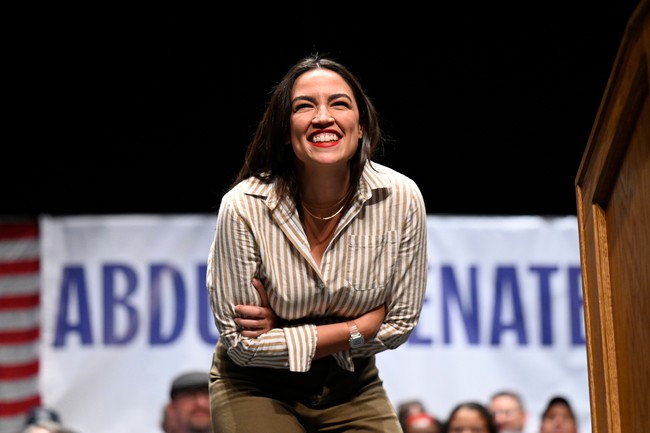
I’ll examine Alexandria Ocasio-Cortez’s pivot from radical positions to more moderate-sounding rhetoric, show how her record predates COVID, note the political math in New York and national polling, quote her exact responses, and highlight why Republicans still treat her as a potent target in 2028 calculations.
Alexandria Ocasio-Cortez built a national profile on loud, uncompromising positions and has spent recent interviews testing softer language. That shift looks like strategic repositioning with 2028 on the horizon, not genuine repentance. She is careful with definitive answers, and that caution is political theater anyone watching closely can read.
When pressed about running for higher office, she sidestepped specifics and kept the door open in a way that preserves momentum without committing. “I haven’t ruled out the possibility. … Anything is possible at this juncture.” Those exact words give her flexibility while fueling speculation across both media and donor circles. Politicians love ambiguity when it helps build options and donations.
Polling shows why she keeps those options open: she registers significant name recognition and support in broader Democratic primary tests. With a standing that can top other national figures in some surveys, she becomes both a fundraising magnet and a disruptor for established Democrats. The internal dynamics in New York, with insurgent progressive victories and visible unease from party elders, make her influence real even if she publicly downplays ambitions.
Ocasio-Cortez’s attempts to reframe past positions by blaming a brief era of pandemic excesses miss the timeline. Her political record began well before COVID, so saying that lockdown politics explains away calls for defunding police, abolishing agencies, or decriminalizing crossings does not fit the public record. Voters notice when the timeline is muddied to soften a radical past.
https://x.com/TVNewsNow/status/2086491622087205220
She has recently disavowed certain policy proposals in language that sounds less extreme, but specifics are missing when reporters press for clarity. Her office has declined to confirm whether older goals like defunding police or decriminalizing border crossings remain on the table. That kind of non-answer keeps her base hopeful and opponents wary.
Her earlier rhetoric is not theoretical; it was concrete and public. She pushed for deep cuts to policing budgets and argued that “Defunding police means defunding police. It does not mean budget tricks or funny math,” words that framed a clear policy stance. Those statements are archived and easy for critics to replay, so spin now can’t erase the originals.
She also supported legislation that moved toward decriminalizing crossings and rolling back mandatory detention, backing a package that would have altered enforcement and penalties. Those policy endorsements put her on record in ways that make later qualifications less persuasive. For many voters, the record—on video and in bills—carries more weight than rephrasing years later.
The Democratic establishment in New York looks vulnerable in places, and that instability benefits someone like her who can claim outsider credibility while teasing bigger ambitions. When party figures stumble or lose influence to insurgent rivals, it opens space for high-profile progressives to cast themselves as the future. Republicans see a dual opportunity: use her record to raise funds and make a broader case about where the party is headed.
Republican strategists remain focused on highlighting the contrast between her old rhetoric and her new language, because the contrast frames her as both dangerous and untrustworthy. That mix is politically useful: it makes her a useful fundraising and messaging target while reminding swing voters that radical ideas once had mainstream champions. In short, the cleanup efforts began before any formal campaign because the optics demanded it.
Her national popularity among younger Democrats doesn’t mean she is harmless or politically finished; it means she is a live force who can shape narratives and mobilize money. Republicans will keep pressing the tape of her past statements, and they have every reason to keep doing so. Her recalibration may smooth edges for some audiences, but it does not erase the record.

Add comment