
I’ll examine the candidate’s background, outline the allegations tying him to extremist figures and groups, note expert reaction from the 1995 trial, highlight endorsements and political implications, and place the issue in the context of the New Jersey 12th District race.
Democrat Adam Hamawy now tops polls and fundraising in New Jersey’s 12th District race, presenting himself as a board‑certified plastic surgeon and former U.S. Army Lt. Colonel who served as a combat trauma surgeon. Voters are being asked to weigh those credentials against a past that includes troubling encounters with violent Islamist figures and organizations. This story focuses on what those ties were and why they matter to central New Jersey voters.
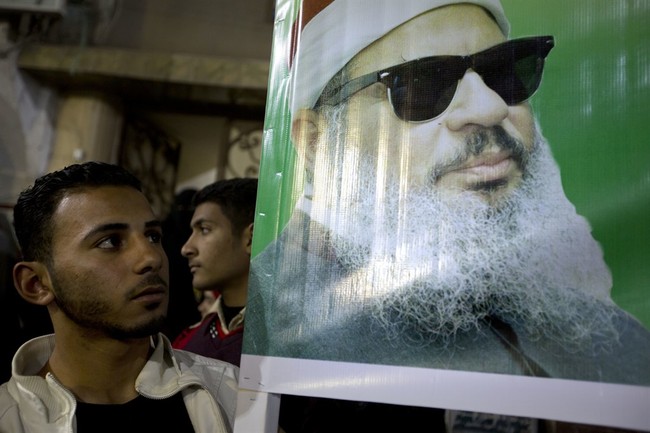
Reports describe a friendship and professional association between Hamawy and Sheikh Omar Abdel‑Rahman, known as the Blind Sheik, a man later convicted for plotting a campaign of terrorist attacks in New York City. Media reconstructions say Hamawy traveled with Abdel‑Rahman and worked as a translator at a press conference where the sheikh denied involvement in the 1993 World Trade Center bombing. Those events have stuck with observers and prosecutors from that period.
Adam Hamawy’s past relationship with terrorist mastermind Sheikh Omar Abdel-Rahman has loomed over his rapid rise in the race to succeed retiring Rep. Bonnie Watson Coleman (D-NJ).
Their relationship spanned a 1991 road trip the two took together to Detroit, Hamawy’s service as the sheikh’s translator for a press conference in which Abdel-Rahman denied any role in the 1993 World Trade Center bombing and Hamawy’s testimony on the sheikh’s behalf at his 1995 trial, where the Islamist leader was convicted of plotting to carry out a campaign of terrorist attacks in New York City.
That association is not the only concern. Accounts also say Hamawy volunteered in Bosnia in 1994 with a Chicago‑based nonprofit, Benevolence International, which later drew scrutiny for allegedly providing logistical support to Al‑Qaida. Investigations and official reports subsequently described the group’s Balkan operations as part of a broader network that funneled support to extremist causes in the 1990s.
But just one year before Hamawy took the witness stand to describe his travels with Abdel-Rahman, the now-Congressional candidate made a different journey with another party entangled in terrorist conspiracies: to Bosnia, with a group subsequently shut down for providing “logistical support” to Al-Qaida.
In a 1996 interview with the Newark Star-Ledger, according to a copy Jewish Insider recovered through an archive of print publications, Hamawy described volunteering in Bosnia during the summer of 1994 with a Chicago-based nonprofit called the “Benevolence International Foundation.”
Records from later probes show that the same two Bosnian cities Hamawy visited were where Benevolence International maintained offices, locations that were raided by Bosnian authorities in 2002. U.S. agencies worked with local officials at that time to dismantle a network identified as a front for Al‑Qaida, and the 9/11 Commission later cited those Bosnian offices among facilities that covertly supported terrorist activities in the 1990s.
Former U.S. Attorney and federal judge Mike Mukasey reflected on the case in a Wall Street Journal commentary, recalling Hamawy’s testimony during the 1995 trial. Mukasey highlighted that while Hamawy denied recounting a specific violent instruction attributed to Abdel‑Rahman, he did remember the sheikh characterizing the U.S. and Israel as enemies and speaking about jihad. That kind of testimony keeps the episode in the public eye.
The defense offered Mr. Hamawy’s testimony to rebut a prosecution witness’s testimony that, during a trip to Detroit, Abdel Rahman had urged that witness to point a rifle at Mubarak’s chest and kill him. Mr. Hamawy testified he recalled no such statement, although he did recall Abdel Rahman characterizing the U.S. and Israel as “enemies of Islam” and speaking of the need for Muslims to conduct jihad against the enemies of Islam: “Of course that’s what [he] always talked about.”
Mukasey closed his remarks with a dry invitation for voters to judge the record for themselves, noting he would be interested to see what central New Jersey residents concluded after considering a candidate who once stood in his courtroom. That legal perspective adds gravity because it comes from someone directly involved in the prosecution and adjudication of those events.
I will be interested to see what the voters of central New Jersey make of their opportunity to consider the credentials of this alumnus of my courtroom.
The political fallout is immediate: Hamawy has drawn endorsements from high‑profile progressive figures, which opponents argue signals the candidate is aligned with the national left rather than with mainstream New Jersey concerns about security and judgment. For Republican-leaning voters who weigh character and national security issues heavily, those endorsements will likely reinforce existing doubts rather than soothe them.
At the ballot box, central New Jersey voters will have to decide whether to focus on Hamawy’s military and medical service or on these associations from the 1990s. The episode will be pressed by opponents and scrutinized by independent observers, and that scrutiny is poised to shape debate as the campaign moves forward. The race is no longer only about policy and plans; it’s about judgment, associations, and how a candidate’s past aligns with the needs of the district today.

Add comment