
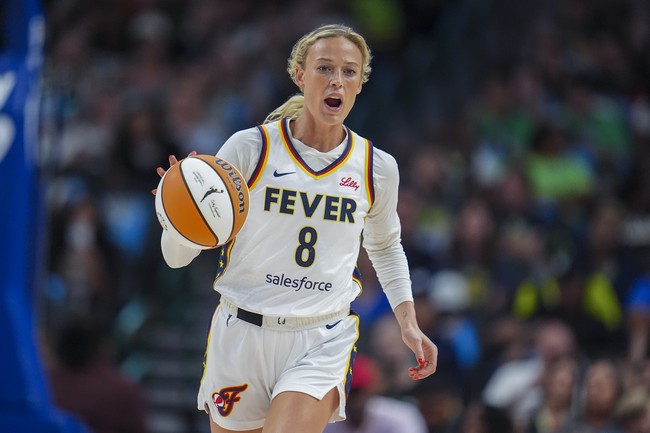
The WNBA showdown between Sophie Cunningham and Seattle Storm center Stefanie Dolson turned into a cultural skirmish as Dolson walked out wearing a tank top with the slogan “Trans Rights Are Human Rights,” a move meant to send a message but which ended up amplifying Cunningham and fueling fan support for her stance on women’s sports.
The pregame stunt was loud and deliberate, with Dolson — known in the league as “Big Mama Stef” — choosing a public display that framed the debate in stark terms. The shirt was intended to provoke and to align Dolson with a progressive position on gender and athletics. Instead of quieting dissent, it sharpened attention on the controversy and on Cunningham herself.
Cunningham’s comments in the days before the game were straightforward and grounded in concern for female athletes. “I want to protect young girls in a locker room, or young girls in sport who shouldn’t have to go against biological men,” she said. She made clear she claimed no personal hatred toward anyone but insisted on maintaining fairness and safety for women competing in women’s sports.
Fans picked up on that tone quickly, with signs in the stands echoing support for Cunningham’s position and underscoring the split between players and a growing segment of the audience. One sign read, “Thank you, Sophie, for speaking up for girls.” Those visible messages in the arena made the matchup feel less like a routine regular-season game and more like a referendum on policy and values.
On the court, the attempt to intimidate Cunningham didn’t translate into an edge for Seattle. Cunningham responded by hitting multiple long-range shots early and helping her team seize control. Sophie knocked down a trio of early threes and was a decisive part of a 105-95 victory that saw her and her teammates keep the Fever comfortably ahead. The scoreboard left little doubt about who handled the pressure better.
https://x.com/seattlestorm/status/2082265656586871242
Stat lines underscored the on-court reality: Sophie finished with 11 points and 5 rebounds, both above her season average, and the Fever were plus-15 with her on the floor. Caitlin Clark poured in 32 points and added 7 assists, delivering the kind of star performance that makes headlines. By contrast, Dolson — a backup center — produced 5 points, which is technically above her average but hardly the kind of response her pregame theatrics seemed to promise.
The incident also accelerated Cunningham’s visibility in the wider cultural conversation, and social media reacted fast. In just weeks the Fever guard added more than two million followers across Instagram and TikTok, turning a role player into a major talking point and a symbol for those who prioritize sex-based protections in sport. That surge in attention has reshaped how many fans and observers view her role in the WNBA ecosystem.
Supporters inside the arena and online framed Cunningham’s stance as defending fairness and protecting girls and women who compete. “Be like Sophie,” wrote one commentator who applauded her clarity and courage, arguing that politicians and commentators alike should learn from her direct approach. That refrain captured the mood among conservatives and many fans who feel the league has lost focus on women’s competition as a distinct category.
The matchup was also revealing about how progressive messaging plays in pro sports settings where the audience includes a broad mix of viewers. Dolson’s jersey slogan clearly energized some fans, but the overall reaction suggested that blunt displays do not automatically translate to persuasion on the floor or among ticket buyers. Instead, visible fan support for female-only competition became a louder statement than the shirt ever could be.
Beyond the final score, the game highlighted a growing disconnect between the WNBA’s cultural alignment and a portion of its fanbase that wants protections and clarity for women’s sport. The night saw both sides make their cases publicly, and the crowd’s reaction made it clear the debate is no longer just an internal league disagreement but a public fight over the rules and values governing competitive athletics for women.
Amid the noise, Cunningham kept her composure and let performance speak. Her blend of on-court production and a forthright public position has turned her into a focal point for conservative fans who want the WNBA to prioritize sex-based competition. The game’s outcome suggested that, for now, athletic results and visible fan sentiment matter more than protest apparel when it comes to winning hearts and headlines.



Add comment