
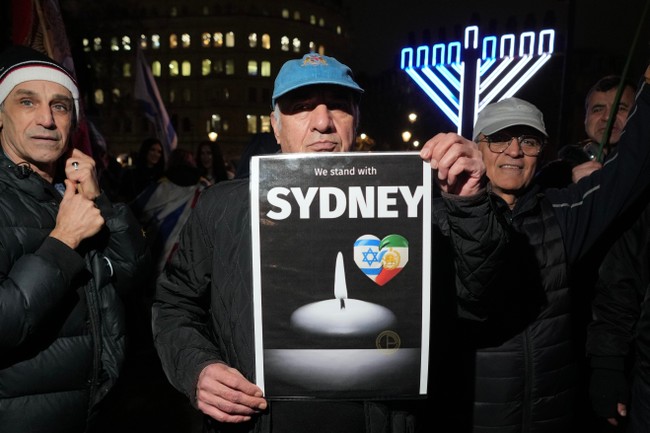
On New Year’s Eve in Sydney, organizers paused the usual spectacle and led a quiet, unified act of remembrance for the victims of the Bondi Beach attack, then returned to the fireworks that mark the start of 2026; this piece recounts the context, the public reaction, and the visual tribute that prefaced the celebration.
Sydney’s New Year’s fireworks are world famous, framed by the Harbour Bridge and the Opera House. This year, the familiar roar and color were delayed by a deliberate, solemn pause to honor those killed and wounded in the recent Bondi Beach massacre. The display of white lights and a collective lifting of phone torches created a simple, visible sign of unity across the harbor. For many watching, that quiet moment cut through the usual revelry with a weight that lingered long after the explosions resumed.
The Bondi Beach attack on Dec. 14 left 17 dead and more injured while people celebrated Hanukkah, a night meant for light and hope. Observers quickly labeled the violence as inspired by hate and antisemitism, and that assessment shaped the public response. Political leaders’ reactions became part of the controversy, with some critics saying authorities downplayed the motive and shut down fuller inquiries. Those complaints fueled anger among families of victims and conservatives who see a pattern of elites avoiding hard truths when it suits them.
In the days after the shootings, stories surfaced about ordinary people who stepped in and limited the damage with quick action and courage. Those accounts provided a human counterpoint to the political debate, spotlighting quiet heroism amid tragedy. Memorials and vigils cropped up across the globe, and communities looked for ways to mark grief while asserting solidarity with the Jewish victims. The contrast between small acts of bravery and big political statements made the public reaction feel uneven and raw.
Visitors and locals in Sydney experienced the tribute as a kind of public prayer made visible. First the Harbour Bridge was lit in white, then the words “unity” and “peace” appeared, followed by people turning their phone torches on across the water. The effect was simple and unmistakable: a moment meant to honor lives lost, to demand attention, and to remind viewers that even in the face of terror a city can choose compassion. That visual choice mirrored other symbolic remembrances happening internationally that same night.
The hush before midnight felt like a pact between strangers standing shoulder to shoulder, exchanging grief across a glittering harbor. At 11 PM, those gathered added their lights to the bridge’s display, creating a makeshift menorah of phone torches and white LEDs. It was an act of presence, one that refused to let the dead be swallowed by routine or reduced to political talking points. For many, it was the clearest, most honest expression of communal sorrow they had seen since the attack.
Exactly how governments respond to acts of terror matters, and critics argue the response from some leadership was inadequate. Frustration centered on a reluctance to call out antisemitic motives directly and to pursue a full investigation that families demanded. That reluctance intensified conservative critiques that powerful figures often prefer to avoid uncomfortable labels and clear attributions, especially when those labels force hard policy conversations. The public moment in Sydney, then, became both memorial and moral mirror.
Once the moment of silence passed, Sydney shifted back into celebration with the trademark countdown and a roughly 15-minute fireworks display that lit the skyline. The transition from silence to spectacle felt intentional: grief acknowledged, then life and joy tentatively reclaimed. Spectators who had witnessed the tribute said they would remember that quiet, communal minute more vividly than the bright but transient bursts that followed. The duality of mourning and celebration defined this New Year’s Eve in a way few expected.
The images from Sydney—white-lit bridge, phone torches like small beacons, crowds holding their breath—offer a reminder that public rituals can serve multiple purposes at once. They honor victims, communicate values, and expose political fault lines about how societies interpret and respond to violence. Whether the tribute brings lasting policy change or only a shared moment of dignity, it created a record of how a city chose to begin 2026: with both sorrow and solidarity.
Before Australia entered 2026, the Sydney Harbour Bridge was lit up in white as a symbol of peace and unity, and people turned their phone torches on to shine a light across the harbour in commemoration of the Bondi shootings.
Watch:



Add comment