
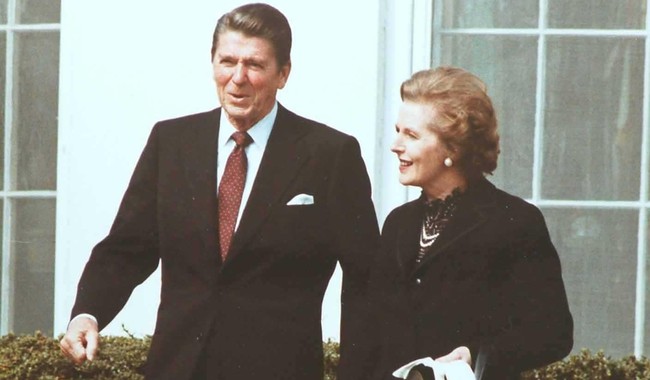
Margaret Thatcher’s legacy as the Iron Lady still resonates with conservatives, and Louisiana Sen. John Kennedy showed that with a humorous, folksy tribute to the former British premier by naming his elliptical trainer “Margaret.” This piece looks at Thatcher’s role on the world stage, Kennedy’s affectionate social media bit, and how that blend of tough-minded leadership and plainspoken charm connects across decades.
Margaret Thatcher earned the “Iron Lady” nickname in 1976, a label that stuck because she refused to bow to Soviet pressure and stood firm for Western values. Her time as U.K. prime minister from 1979 to 1990 reshaped the Conservative Party, tackled runaway inflation, and prioritized economic productivity. Conservatives still point to her Falklands victory and partnership with the United States as defining moments of resolute leadership.
That kind of backbone is something many on the right miss in today’s British politics, where leadership often seems tentative and distracted. Current Britain faces sharp debates about immigration, free speech, and the country’s role on the world stage, and Republicans see Thatcher as the standard for unapologetic governance. Her brand of conservatism remains a model for those who favor strong borders, economic clarity, and an unambiguous national interest.
Sen. John Kennedy captured that spirit in an amusing, human way when he introduced his elliptical trainer to followers and named it for Thatcher. The post was pure Kennedy: homespun, a bit self-deprecating, and pointedly reverent of hardy leadership. He put the machine front and center on his carport and used it as a platform to praise an iconic conservative figure while also giving people a laugh.
Kennedy’s tone is classic Republican plainspoken humor, reminding people that political figures can be both serious about principles and willing to poke fun at themselves. He called the machine Margaret because “both kick butt [and] take names,” a line that lands because it pays tribute while keeping things light. The comparison underscores how Thatcher’s toughness translates into a modern, accessible anecdote from a senator known for wisecracks and sharp one-liners.
Here is Kennedy’s introduction, exactly as he delivered it:
Hey, guys, John Kennedy here. I’ve got somebody I would like you to meet. This is Margaret. Margaret is my elliptical trainer. I named Margaret after Margaret Thatcher, because both kick butt [and] take names.
The background to that joke is straightforward: Thatcher was the first woman elected U.K. prime minister and the longest-serving prime minister of the 20th century, from 1979 to 1990. Her economic reforms and staunch anti-communism are credited by many conservatives with reviving Britain’s fortunes and reinforcing the transatlantic alliance. Those facts matter to policymakers and voters who favor clear principles over fuzzy politics.
Kennedy explained a few practical reasons for keeping “Margaret” where he does, and his account is as down-to-earth as his persona. He described the realities of life in Louisiana—why the trainer stays under the carport and how his wife factors into the domestic decision-making. The details make the whole exchange feel real, not staged, which is part of the charm for a Senator who speaks in plain terms.
As you can see, Margaret, my elliptical trainer, is out here under my carport in Louisiana, for three reasons: number one: Margaret is too heavy to get in the house.
Number two: [wife] Becky won’t let me bring Margaret in the house.
And number three: I like to break a good sweat. I keep Margaret under the carport, where I can do it, particularly in the summer. After Margaret kicks my butt, I lift weights, and there’s Margaret in the background.
That mixture of self-deprecating humor and admiration for a strong conservative icon is exactly what appeals to many on the right. It humanizes elected officials while reminding readers of the kind of leadership they respect. Kennedy wrapped up the clip in his signature breezy way, closing the moment with the same courteous exit he often delivers in public remarks.
Thanks for listening. My work here is done, and I can see myself out.
Moments like this do more than entertain; they connect political memory to everyday life and reinforce why historical leadership still matters. For Republicans who value firm foreign policy, clear economic principles, and a no-nonsense approach to governance, Thatcher remains a touchstone, and Kennedy’s tribute keeps that conversation alive in a way people can relate to. There’s a refreshing honesty to hearing a senator talk about fitness, family rules, and political inspiration without pretense.


Add comment