
The Republican-led legislative push and Trump administration actions have coincided with a sharp drop in fentanyl deaths and border smuggling, driven by new laws targeting cartel cash flows, stepped-up Customs and Border Protection seizures, and designations that broaden enforcement tools.
In April 2024, Republicans helped advance a bipartisan effort that targeted the financial networks behind opioid trafficking, and by mid-2025 Treasury used those new authorities to name Mexico-based banks as money-laundering concerns tied to illicit opioid trade. That move cut into the funding channels cartels rely on and set the stage for larger enforcement actions at the border. These financial measures are one pillar of a multifront approach that also includes expanded DHS resources and tougher executive actions.
Congressional action was paired with larger funding shifts for homeland security and border agencies, which enabled Customs and Border Protection to increase interception efforts at ports of entry across the southwest. CBP agents operating from dozens of ports have seized historically large quantities of fentanyl, depriving traffickers of product headed for American communities. Those operational successes reflect money-targeting laws finally translating into boots-on-the-ground results.
Political opponents who once declared the border crisis unsolvable are being forced to contend with measurable changes in cross-border flows and drug seizures. Critics had pointed to systemic challenges like precursor chemicals moving through foreign suppliers to underline the difficulty of stopping fentanyl. But targeting the financial and logistical underpinnings of that flow has shifted the balance and produced data-driven declines in deadly shipments.
The law directs the Treasury Department to use economic tools to target Chinese precursor manufacturers and Mexican cartels.
Using those authorities, the department in June 2025 identified three Mexico-based financial institutions—CIBanco, Intercam, and Vector—as primary money laundering concerns tied to illicit opioid trafficking.
At the same time, the Trump administration moved to label cartels and their chemical suppliers as national security threats, expanding the toolbox for disrupting production and distribution. The president designated drug cartels as Foreign Terrorist Organizations and classified fentanyl and its precursor chemicals as weapons of mass destruction, broadening the reach of sanctions and interdiction authorities. Those policy decisions were meant to make it easier for federal agencies to go after suppliers, payment channels, and distribution networks.
The seizures follow a series of actions by the Trump administration to escalate its response to the crisis. The president designated drug cartels as Foreign Terrorist Organizations and classified fentanyl and its precursor chemicals as weapons of mass destruction.
Those designations expanded federal authority to target the manufacture and distribution of fentanyl, which officials say is largely controlled by organized criminal networks and poses a growing national security threat.
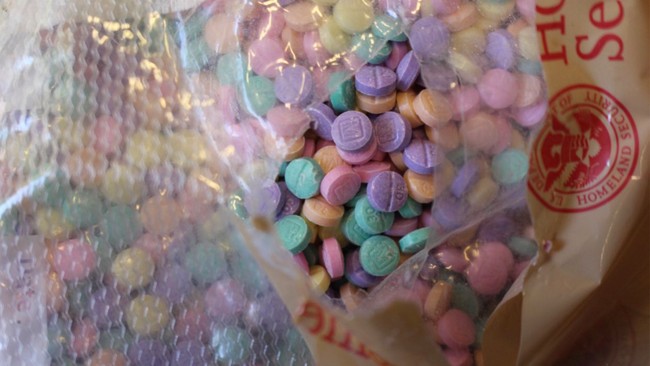
Customs and Border Protection reports show huge recent hauls that indicate the strategy is working on multiple levels, with agents seizing massive quantities of lethal doses at the southwest border. These interdictions happened across California, Arizona, New Mexico, and Texas and were the result of targeted operations at ports of entry and other choke points. The combination of financial pressure, legal tools, and operational focus created conditions for record-setting seizures.
Lawmakers are not finished, though. Several Republican-sponsored bills aim to further cut off money laundering channels and give law enforcement sharper tools to freeze assets and impose sanctions. The Stop Fentanyl Money Laundering Act, for example, is pitched as legislation that would let investigators trace and punish the financial flows that sustain cartel operations. Advocates argue that attacking profits is the most direct way to choke the supply chain that brings poison into American neighborhoods.
“My bill goes after the financial lifeblood of the fentanyl trade by giving law enforcement the tools to sanction, expose, and cripple the networks profiting off American deaths,” Ogles said. “Congress can either keep talking about the fentanyl crisis or finally cut off the money that fuels it.”
On the ground, Republican policymakers and federal agencies say the work continues because traffickers adapt, and supply chains evolve in response to enforcement pressure. Congressional leaders emphasize that sustained majorities aligned behind tougher policies will be necessary to maintain the pressure on cartels, foreign suppliers, and the banks and shell companies that move illicit proceeds. The argument is straightforward: the problem can be turned back only through a sustained campaign combining law, money control, and enforcement.
Advocates warn that any political backsliding or funding shortfalls could let traffickers regain momentum, so they press for persistent action from Washington. They point to data showing dramatic reductions in crossings and drug flows as proof the current mix of measures is effective when consistently applied. As policy, the approach favors cutting the finances and disrupting the logistics that enable mass poisonings, rather than treating the crisis as merely a public health problem without a security response.
“Every dollar laundered through Chinese banks, cartels, and shell companies is another dollar funding poison in American communities.”

Add comment