
This article examines Minnesota Senate candidate Peggy Flanagan’s recent mall appearance with a hijab, the political theater around her outreach to the Somali community amid a major fraud investigation, and the broader pattern of identity-driven campaigning that Republicans argue distracts from accountability and public safety.
Sen Candidate Practically Trips Over Her Hijab Running to Defend Somalis at the Heart of MN Fraud Scandal
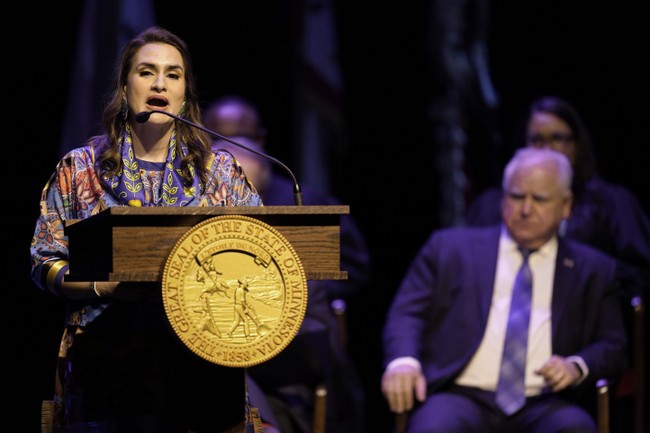
Peggy Flanagan showed up at a mall event, donned a hijab for the cameras, and delivered a perfunctory speech to a Somali audience on Christmas Day. The timing is notable because the Somali community in Minnesota is under scrutiny in what some observers estimate may have cost as much as $9 billion in fraud. From a Republican perspective, this looks less like leadership and more like a staged photo-op that ignores the very real consequences facing taxpayers.
Video of the visit made the rounds and highlighted how Flanagan walked through the market area without the hijab and then appeared to put it on for her address. That kind of selective solemnity reads as performance to many voters, not genuine solidarity. When community leaders were shown “welcoming” her support on camera, critics saw it as a scripted choice rather than a substantive attempt to address accountability or restitution.
The speech itself contained the exact language she used: “Salam Alaikum. My name’s Peggy Flanagan. I am the Lieutenant Governor of Minnesota, and I’m really honored and humbled to be here with all of you today,” she said, hijab firmly in place. “I am incredibly clear that the Somali community is part of the fabric of the state of Minnesota.” Those words sound fine on their face, but they do not explain why elected officials haven’t done more to stop alleged massive fraud schemes or to protect honest residents and businesses in affected neighborhoods.
There are several obvious questions that follow this display. Why signal solidarity with a community under investigation without pressing for answers and enforcing the law? How does showing up in cultural garb substitute for pursuing perpetrators or securing restitution for victims? Voters who care about public safety and fiscal responsibility see a mismatch between symbolic gestures and tangible action.
The stunt also exposes an uncomfortable double standard when it comes to cultural sensitivity and political convenience. Flanagan touts immigration stances informed by her Catholic faith in other contexts, yet in this moment she adopted a visible symbol of a different faith community for political gain. To many conservatives that looks like opportunism rather than respect.
Critics point out other episodes that, combined with the hijab appearance, create a pattern of seeking identity headlines. She has been photographed in provocative political apparel supporting other causes, and she has emphasized firsts and titles — including being a member of the White Earth Nation and the first Native American woman to chair a national party committee — in ways that some voters view as credential stacking. Those claims and props are useful in a campaign, but they do not answer tough questions about competence and priorities.
- The Somali mall footage shows the hijab only appears for media-facing moments; off-camera she walked without it, suggesting a staged appearance.
- Flanagan serves as lieutenant governor alongside a governor who selected her as a running mate, raising questions about the team’s judgment when optics substitute for policy.
- Her campaign rhetoric about faith-based immigration positions stands in tension with wearing symbols from a different faith for a photo-op.
- Her use of identity markers and promotional language has become central to how she presents herself to voters, which can overshadow clear plans for tackling crime and fraud.
The Democratic Senate primary field in Minnesota has leaned heavily into identity politics, and Flanagan is not alone in that style of campaigning. Opponents and conservatives argue this approach squeezes out debates about prosecuting fraud, tightening oversight, and protecting families who lost money during the alleged scams. For voters focused on law and order, the spectacle feels like a distraction designed to steer attention away from failures of governance.
One more point worth underscoring is the optics of cultural appropriation applied to campaign theater. When a politician borrows religious or tribal symbols for a brief appearance without demonstrating a sustained commitment to addressing community harms, many see it as disrespectful. That concern is independent of party and has resonated with voters who expect authenticity from their leaders.
The video and surrounding coverage will likely become a defining image for critics and a talking point for political opponents. For Republicans watching the race, the incident confirms a broader critique: that left-leaning candidates too often prioritize identity signaling over enforcing the rule of law and protecting taxpayers. That debate will continue as Minnesota voters weigh who can deliver results rather than just perform for the camera.
While campaigns inevitably include outreach and messaging, the contrast between symbol-driven appearances and the scale of alleged fraud in the Somali community raises legitimate questions about priorities. Voters concerned with accountability will be watching to see whether promises are followed by investigations, prosecutions, and reforms that prevent future abuse.
Ultimately, the episode reveals more about political theater than about meaningful problem-solving, and that will matter at the ballot box for those who want leaders focused on results, not just optics.


Add comment