
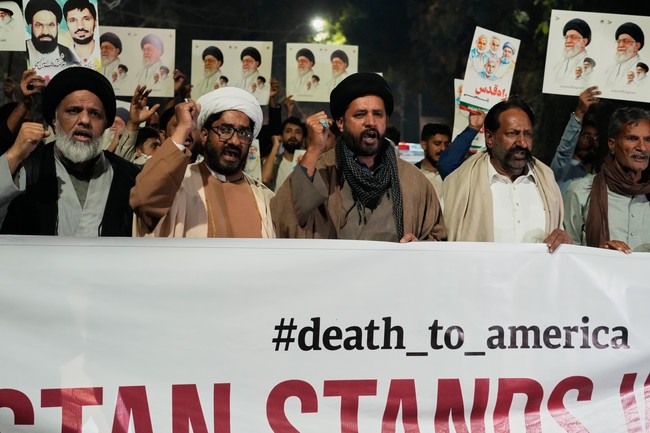
The Karachi consulate assault shows how quickly local unrest can turn deadly when mobs challenge American sovereignty abroad. Hundreds of pro-Khamenei protesters forced their way toward the U.S. mission, breaching outer barriers and pressing into the compound until defensive fire stopped the advance. Confusion reigned over who fired, and reports list multiple fatalities and dozens injured amid chaotic scenes. The incident underscores the hard reality that protecting American personnel and property abroad sometimes requires decisive, lethal force.
With strikes against Iranian targets ongoing, sympathizers of Tehran have been emboldened in several countries, and Pakistan experienced a sharp escalation. Hundreds gathered outside the Karachi consulate after reports that Ayatollah Khamenei had been killed, and those protests quickly turned violent. Video footage and eyewitness accounts show protesters using tools and makeshift weapons to batter through gates and push deeper into the diplomatic compound. That kind of aggression against an American diplomatic mission crosses a line that cannot be tolerated.
Once the mob penetrated the perimeter, defensive measures were taken to stop the intrusion and protect lives. Both Pakistani security forces and U.S. Marines were present, and gunfire erupted when the siege reached the inner compound. Authorities on the ground were clear that protecting the consulate was paramount, and the use of force was aimed at halting further breaches. The result, according to reporting, was multiple deaths and many wounded as chaos unfolded in the streets outside the mission.
Scenes from the compound show protesters forcing the main gate and then turning to the inner defenses with lumber and tools in hand. The attackers chanted and targeted the consulate with anti-American slogans while attempting to overwhelm guards and breach inner perimeters. Those actions made the situation more dangerous for everyone on site, including nearby civilians who were caught up in the crush. When a diplomatic compound is violated, the response must be immediate and firm to prevent a wider catastrophe.
Some observers tried to draw historical comparisons to past attacks on U.S. diplomatic posts, but the differences matter. Unlike prior fiascos where preparedness and posture were in question, this response involved well-armed Marines and local security personnel ready to defend the facility. No American deaths were reported in this episode, which suggests the defensive posture prevented an even worse outcome. The simple takeaway is that when the United States protects its diplomats robustly, attackers face real consequences.
Reports indicate the death toll reached into double digits, with dozens more injured during the skirmish. Those figures reflect how rapidly chaos can escalate once a mass of enraged protesters gains access to a mission’s outer grounds. Pakistani officials publicly condemned parts of the violence, even as some domestic leaders expressed sympathy for Iran. But sympathy from foreign officials does not excuse violence against American property and personnel.
The moment the mob pushed beyond a tolerable threshold, force stopped them. That point was reached when attackers moved past the outer gate and threatened the inner compound and lives inside. The use of defensive fire—whether by Pakistani forces, U.S. Marines, or both—was a painful but necessary step to restore control. Accepting that reality is uncomfortable, but defending American citizens and diplomats requires clarity about when force becomes unavoidable.
Let this incident be a clear signal to any external groups considering similar attacks: striking at American diplomatic posts invites a harsh response. This is not a partisan quibble; it is a basic rule of sovereignty and self-defense. The current administration is not going to tolerate unchecked assaults on U.S. facilities, and deterrence depends on demonstrating the willingness and capability to act decisively when necessary.
At least nine people are dead and more than two dozen injured after violent clashes outside the U.S. Consulate in Karachi, Pakistan.
Hundreds of protesters stormed the diplomatic compound in a sharp escalation of anti-American demonstrations.
The unrest followed reports that Iran’s supreme leader, Ayatollah Ali Khamenei, was killed in a joint U.S.-Israeli strike, sparking anger among Shiite Muslims in Pakistan.
Witnesses told The Associated Press that many of the protesters were Shiite Muslims who expressed outrage over Khamenei’s reported death and alleged U.S. involvement. Protesters chanted anti-American and anti-Israel slogans, and attempted to breach the consulate’s perimeter.
Local governments in places where anti-American sentiment runs high have to choose whether to defend order or to stand with mobs. In Karachi, the Pakistani state demonstrated mixed responses—some officials condemned the violence while others expressed political sympathies that complicate the picture. That ambivalence can leave U.S. missions vulnerable unless the U.S. posture is unmistakable. Our diplomats deserve clear protections and rules that prevent a repeat of these deadly scenes.
The lesson for hostile groups is straightforward: attacking an American consulate brings consequences, potentially permanent ones for those who carry out the assault. Protecting U.S. interests abroad requires resolve and superior preparedness. When violence is aimed at American personnel or property, deterrence must be credible and immediate to avoid encouraging further attacks.
Upholding the safety of diplomats and the sanctity of embassies is not optional. It is a cornerstone of American power and policy, and it requires acting decisively when that safety is threatened. Every government that tolerates attacks on U.S. missions risks diplomatic rupture and severe repercussions. That is the blunt reality shown by what happened at the Karachi consulate.
Going forward, foreign missions will be on heightened alert, and countries hosting our facilities should demonstrate they will prevent attacks, not facilitate them. Any state that allows mobs to breach diplomatic compounds invites a hard response from Washington. The world should understand that assaults on American posts will be met with firm defense and political consequences for anyone who stands aside.
About time the US take a solid defensive position against those who would attack our embassies! This is and has been long overdue. With this President, they (protesters) are going to learn about the FO part of FAFO. Thank you, President Trump and Secretary Hegeseth for making this happen. America First!