
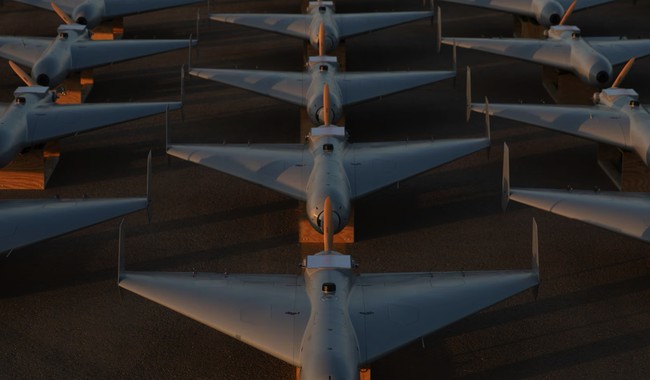
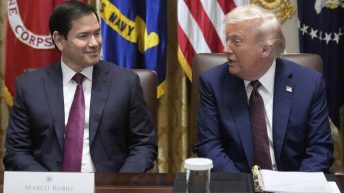
President Trump told NBC News the recent campaign against Iran is delivering decisive blows, reporting destroyed naval assets, strikes on hardened missile facilities, and the systematic targeting of senior enemy leaders. Casualties among U.S. service members were acknowledged, and CENTCOM confirmed major combat operations are ongoing. Trump framed the operation as necessary to eliminate a network of killers and to restore strength to American forces. The campaign, called Operation Epic Fury, is being presented as precise, forceful, and in line with reasserting U.S. military dominance.
Hours after the announcement that three U.S. service members were killed in action, the president said, “We expect casualties with something like this. We have three, but we expect casualties, but in the end it’s going to be a great deal for the world.” Those words underscore a sober realism about the costs of high-intensity conflict while keeping focus on the strategic aims. CENTCOM reported five more wounded and cautioned that identities of the fallen would be withheld until families are notified. Two sources mentioned Kuwait as a possible location for the deaths, but that detail remains unconfirmed.
CENTCOM also announced that U.S. B-2 stealth bombers struck Iran’s hardened ballistic missile facilities, a move aimed at degrading Tehran’s ability to threaten regional and global security. President Trump said nine Iranian navy ships were destroyed and sunk and that Iran’s naval headquarters were struck, statements meant to signal American reach and lethality. These actions reflect a commitment to neutralize threats before they can strike American forces or allies. The operation has been described publicly as running with urgency and precision.
In his NBC interview the president said Operation Epic Fury was progressing “ahead of schedule, and obviously, when we get 48 leaders, that’s a big event.” He told Fox News’ Jacqui Heinrich earlier that he “knows how many targets are left to hit.” That level of blunt talk comes from a commander-in-chief framing the campaign as focused on decapitation of the leadership who ordered attacks and sponsored terrorism. The emphasis is on removing those who pose the most danger to U.S. troops and regional stability.
The Israeli Defense Forces added to the chorus of decisive announcements, stating that “all senior terrorist leaders of Iran’s Axis of Terror have been eliminated.” Such coordination between partners on the ground and in the air demonstrates a unified front against a regime that has long funded proxies and fomented instability. For Republicans and conservatives watching, these developments are portrayed as a return to clear deterrence and firm consequences for aggression. Messaging stresses that weakness invites more attacks, while strength can restore order.
When asked about potential outcomes of the campaign, the president told NBC News, “There are many outcomes that are good. Number one is decapitating them, getting rid of their whole group of killers and thugs. And there are many, many outcomes. We could do the short version or the longer version.” That stark language leaves no mystery about the administration’s appetite for decisive results. It also signals flexibility: limited, surgical strikes or a broader campaign depending on how Tehran responds.
Officials say diplomatic channels remain open even as kinetic operations continue, with U.S. contacts talking to Iranian counterparts who survived the strikes. Trump reported that talks have begun but described them as not very productive so far, adding, “I have to go; I’m with the generals.” That line reinforces the view that political and military leadership are acting in sync, keeping options on the table but prioritizing mission success and force protection.
The Pentagon’s decision to withhold the names of the fallen for 24 hours after next-of-kin notification is standard practice, and it underscores the human cost amid strategic gains. Acknowledging casualties while pressing on with the mission reflects a judgment that the threats posed by Iran and its proxies justified a sustained response. Supporters argue this approach deters future attacks and protects American lives in the long run by disrupting hostile networks today.
Public confidence in the military’s effectiveness is central to the administration’s message, tying battlefield action to a broader promise of rebuilding U.S. strength. The campaign is presented not as reckless adventurism but as a targeted effort to remove leadership, degrade capabilities, and restore stability for allies and Americans alike. Clear, forceful action is cast as the necessary remedy after years of perceived weakness on the global stage.


Add comment