
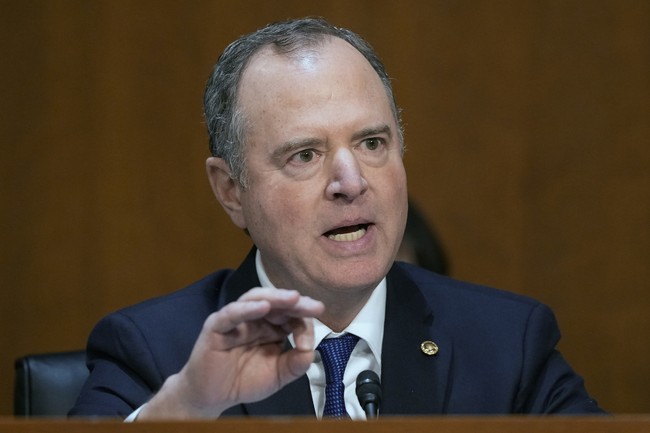
This piece argues that Senator Adam Schiff dismissed a justified strike on Iran, critiques his view that the attack lacked imminent threat, and defends recent military actions and popular Iranian unrest as necessary steps toward removing a brutal theocracy.
California Senator Adam Schiff has been vocal about the recent strike on Iran, and his reactions follow a familiar pattern for critics of decisive action. He told ABC’s This Week that the removal of Iran’s leader did not meet the bar of imminent threat and that the administration failed to make its case to the American people. That stance frustrates many who see a coherent strategy to dismantle an aggressive regime that has funded terrorism and threatened regional allies.
Schiff’s tone suggested caution and concern about unintended consequences, and he repeatedly emphasized the need for congressional involvement. He insisted the president should have sought authorization and warned that regime change could unleash unpredictable forces across the region. For Republicans and national security hawks, that argument can sound like paralysis at a moment when clarity and strength are required.
Here’s what Senator Schiff put out, expecting us to take him seriously:
George Stephanopoulos: And we are back now with a view from Congress. I want to start with Democratic Senator Adam Schiff of California. Senator Schiff, thank you for joining us this morning. Ayatollah Khamenei led a regime that brutalized its own people, launched attacks around the world for almost 40 years. So was the president right to take him out?
Senator Adam Schiff (D-CA): No. You’re right about the ayatollah. He was a brutal dictator. This is a murderous regime. But at the same time, it posed no imminent threat of attack to the United States. They had not reconstituted their nuclear program, which the president just months ago said had been obliterated. They do not have ballistic missiles capable of hitting the United States.
That block of quoted exchange is central to the debate: did the administration have sufficient evidence of an imminent threat? Schiff says no, pointing to nuclear program status and missile reach, while opponents point to decades of Iranian aggression and proxy networks. The practical reality is Iran has long supported militias, supplied weapons, and orchestrated attacks that killed and injured thousands. Ignoring that history makes policy blind to patterns that led to the current confrontation.
Senator Schiff also warned about raising Iranian hopes that the United States would commit ground forces and argued that promising support risked bloodshed if uprisings failed. He urged a return to Congress to take up a war powers resolution and criticized the administration for breaking promises on regime change and domestic priorities. Those are procedural and political points that resonate with some voters but leave national security advocates unconvinced.
There was simply no basis to go in with this massive military campaign, with the goal of regime change. And the concern here is that we have unleashed factors in the region now that we cannot control. If the Iranian people do rise up, as the president has called upon them to do, maybe they’re successful. Maybe they get slaughtered in reliance on the president’s implicit promise that we will be there to help them.
Maybe the regime just takes a new form, an equally depraved regime. And then what have we accomplished? Maybe our service members are killed, as the president pointed out that risk. And I hope and pray they remain safe. Both those that are carrying out the mission and those that are in bases in the region.
There is a persuasive counterargument: the regime’s internal enemies are already mobilized, and outside pressure can accelerate change without boots on the ground. Millions of Iranians have demonstrated for freedom, and targeted military pressure can tip the balance toward those pushing for reform. Critics like Schiff worry about chaos, but many members of the region and their people see decisive action as the catalyst for a democratic transition.
GS: So what do you say to those Iranians celebrating in the streets today?
SCHIFF: Well, look, I would say, I’m glad the regime is gone. At least the leader of that terrible regime is gone, and we are supportive of them. But I would also say that we cannot fight this war for you, that you should not expect American boots on the ground, that we hope you’re successful. But I would not want to raise expectations among the Iranian people that if they rise up, that American troops will be there on the ground to support them.
Now, maybe they have the wherewithal to topple this regime. I hope and pray that’s the case. But maybe they don’t, and if they don’t and make that attempt and it ends in a bloody massacre, then the president will bear responsibility for that loss of life. So it’s a very difficult situation, I think, for the Iranian people. They will have to determine their own destiny. And I certainly hope that they’re successful. There would be nothing better than an end to this terrible, you know, century or decades long dictatorship. But there is no imminent threat to the United States that would justify exposing U.S. troops to that kind of risk.
Schiff’s caution about ground troops is reasonable, but it should not be used to block strategic measures that protect allies and punish state sponsors of terror. Iran has been a top state sponsor of terrorism for years and has been linked to deadly attacks across the Middle East. A firm response that combines pressure and support for democratic forces aligns with long-term American and allied interests.
Political leaders should explain strategy clearly and seek appropriate congressional consultation, while also recognizing that waiting for perfect certainty is not always an option when hostile regimes threaten regional stability. The debate over this strike will continue, but many conservatives see it as a necessary step to confront an enduring threat and empower those inside Iran fighting for freedom.


Add comment