
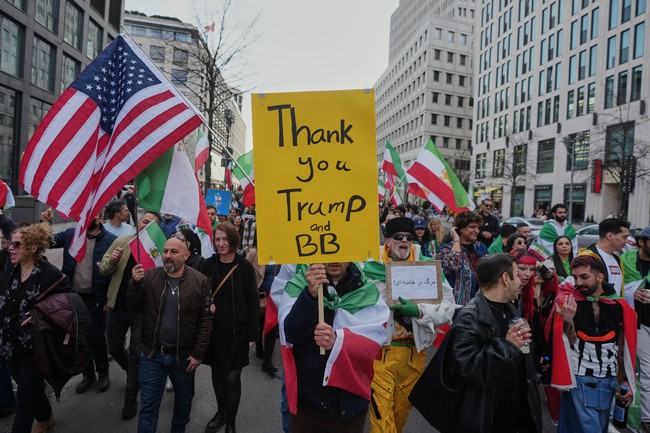
The shock and consequences of recent strikes on Iran are unfolding fast, and the central story is clear: these actions are being seen by many Iranians as a path to liberation from a repressive theocracy. Coverage from mainstream outlets now acknowledges public celebration among Iranians, and voices from the diaspora are calling for decisive change. This piece reports on those reactions, highlights exact quoted remarks from media interviews, and frames the moment from a Republican viewpoint that emphasizes national security and global stability.
There is no mistaking why this matters: the goal is to free the Iranian people from an oppressive regime that has exported violence and terror for decades. The strikes hit the hard targets of the regime’s leadership, and Tehran’s attempts to rearrange its command structure will be met by pressure that keeps them off balance. The result is a rare opening where popular sentiment inside and outside Iran could finally align with a policy aimed at removing a malignant actor from the region.
Even outlets that have long hesitated to credit American or Israeli military action are reporting visible joy among Iranians. Weekend broadcasts featured on-air reactions from Iranian expatriates and reporters who have direct contact with people in the streets. Those interviews make one thing obvious: many Iranians saw these strikes as a blow against theocratic rule and a potential first step toward something different.
One such segment captured that mood plainly.
In that exchange, host Tony Dokoupil asks directly about public feeling, and the reporter replies with a blunt assessment of the moment. The words that followed are stark: they frame gratitude toward the United States and Israel, a rejection of regime slogans, and a desire for a secular future. Those sentiments matter because they come from people who have lived under the regime’s weight and risked so much to speak about wanting change.
The Iranian people, what are you hearing from them tonight, we know they’re celebrating, what’s the feeling?
Middle East reporter Courtney Kealy then describes the reaction with blunt clarity. Her words should be left as they were said, because they speak to the human reality on the ground and the urgency many feel for a different future. It is early, she cautions, but the tone of celebration is unmistakable and meaningful.
It’s a terrible dissonance that they had to choose war over a regime. But they were willing to do it. Thank you Donald Trump, thank you Benjamin Netanyahu, thank you America, it’s not death to America after they killed the leader, the Americans and the Israelis did it, it’s not death to Israel, it’s not death to America, it’s thank you. It’s a new day dawning. But, very early days. Very, very early days. So we’ll have to see what comes, but the Iranian people that have been telling me over and over, and over again, we want this. We’re not regimeists, we’re not Islamic. I don’t even say “Oh my God” to my Iranian friends, because they don’t want God to be any part of this.
Voices from the diaspora are also telling a consistent story: this moment could be transformational, not just for Iran but for the region and the world. The people who fled the regime or whose families remain inside have a perspective shaped by years of repression and a long memory of the regime’s reach. Their calls for decisive action are rooted in a belief that theocratic power must be broken to protect both regional partners and broader American interests.
Moj Mahdara: It is imperative the Democratic Party wake up and get past their dislike of President Trump, President Trump, and their feelings of their national conflicts going on. This is about national security. This is about what it possible in the Middle East. This is about being a good neighbor, a good partner towards the Gulf States and what their aspirations are. This is about supporting the people of Venezuela, this is about dismembering our relationship with, uh, well not dismembering but resetting our relationship with China. Right now 55 percent of the oil production that Iran produces goes to China despite sanctions. You want to support the people of Ukraine? You want to end that war? You have to… There is no getting around dismembering this Islamic republic. It is non-negotiable. It is not a want to have. They have to have it. And not just for the Iranian people. I think you have to trust the Iranian people. We know this government better than anyone else. When you dismember and decapitate this regime, you are going to see a change in the Middle East, in Venezuela, in China, in Ukraine, and I think quite frankly their ideology has really… it’s caused a lot of problems for us worldwide. We need to take it seriously, and I think at this point we have a tremendous opportunity. This will be like ending the Soviet Union. The Berlin Wall. This is a transformational moment for humankind. For security, and as an American, as an American, this is in our interest. It is. So, I am a Democrat. I have been a huge Democrat. I am incredibly disappointed with my party. I do not see myself in them at this moment.
That interview reflects a Republican perspective on the geopolitical stakes: removing or neutralizing a regime that threatens neighbors and fuels global tension is in America’s interest. The strategy is not about endless occupation; it is about targeted action to open a pathway for self-determination and for partners in the Gulf to feel secure. Americans should view the current window of opportunity as a chance to strengthen regional security and deny adversaries a base of operations.
There are risks and unknowns ahead, and responsible policymakers must plan for contingencies. Still, the human dimension is central: ordinary Iranians who have suffered under clerical rule see a moment of hope, and their voices deserve to be heard. For conservatives focused on national security, the clear-eyed takeaway is that decisive action, allied with diplomatic clarity, can protect American interests while supporting people who want liberation.

Add comment