
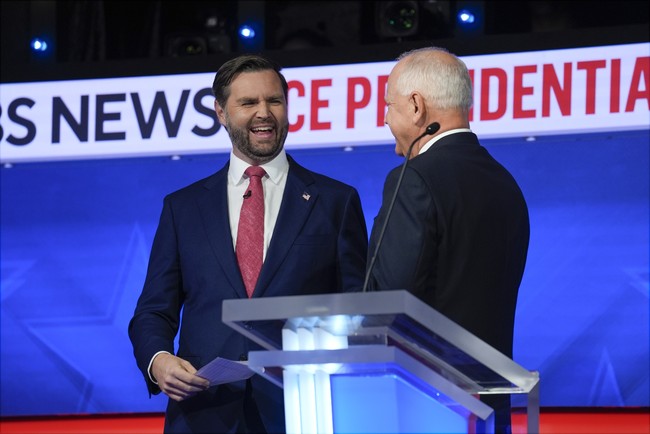
The federal raids in Minnesota focused attention on alleged child care fraud and set off a political spat when Gov. Tim Walz appeared to take credit for the actions; Vice President J.D. Vance and others pushed back, arguing federal and local law enforcement did the heavy lifting while criticizing state officials for failing to act. The story threads together the raid on the so-called Quality Learing Center, social media reactions from the DOJ Rapid Response account, Walz’s absence from a state fraud hearing, and strong comments from Vance about accountability and denaturalization in immigration-related fraud cases. Below are the key developments, notable quotes left unchanged, and the political context driving the dispute.
Federal agents executed multiple raids in Minnesota connected to alleged child care fraud, and one targeted site was the notorious Quality Learing Center, which has been widely discussed in reporting. The location has since been reported abandoned following the law enforcement action, underscoring the dramatic nature of the enforcement sweep. That physical closure served as a visible sign that the investigation is serious and active on the ground.
After the raids, Governor Tim Walz publicly framed the developments in a way that some saw as claiming credit for federal work; that stance provoked a quick public reaction from other officials. FBI Director Kash Patel publicly refuted Walz’s attempt to claim the outcome, making the disagreement visible beyond Minnesota. The exchange highlighted tensions between state political messaging and the federal investigative process.
Online reactions were swift, and the Department of Justice Rapid Response account weighed in with a pointed post, using sharp language to call out perceived inconsistency in cooperation. The message called for sharing data like SNAP enrollment and voter rolls, and for access to records about criminal aliens in custody, all framed as necessary to combat fraud and protect citizens. That post crystallized the broader argument: cooperation and transparency from state officials can matter a great deal in rooting out large-scale schemes.
Meanwhile, Walz did not appear at a state hearing convened to probe the same fraud questions, and legislators publicly criticized his absence. One lawmaker said the governor’s behavior looked like arrogance and suggested Minnesotans deserve answers about billions in lost taxpayer dollars. The no-show intensified scrutiny about whether state leaders were taking the scandal seriously at home.
Minnesota Gov. Tim Walz was absent from a state fraud hearing on Tuesday, and the Republican lawmaker leading the hearing believes he was in the building at the time — and the reason for his absence, according to the lawmaker, was the governor’s “arrogance.”
“I think he just feels above it all and doesn’t need to answer to the people of Minnesota,” state Rep. Kristin Robbins, chair of the House Fraud Prevention and State Agency Oversight Committee, told Fox News Digital after Walz was a no-show at the committee’s hearing on Tuesday seeking more answers in the massive fraud scandal that has enveloped the state in recent years.
“The only reason he testified in D.C. is because he was under subpoena. And, you know, he doesn’t have to come to our committee. I expected him to. I really did, because Minnesotans are owed an explanation of how billions of our tax dollars could be stolen on his watch.”
Vice President J.D. Vance, who chairs the White House Task Force to Eliminate Fraud, pushed back forcefully and offered a stark critique of the governor’s response. Vance used strong language to frame the situation and to emphasize federal and local law enforcement contributions to the investigation. His comments aimed to shift credit away from state leadership while promising continued federal pursuit of fraudsters.
“This is like the arsonist trying to claim credit for the work of the fire department!” Vance declared. He said Walz “let this fraud happen under his watch.” He added that some state and local officers assigned to the federal task force did help, because “the state government wasn’t doing anything.”
Vance made clear that recognition belongs to those doing the investigative work rather than to political officeholders seeking favorable headlines. “So all credit goes to people on the ground, the federal officers, the state officers, who are working to uncover this fraud,” he said, putting emphasis on operational results over political spin. That line framed the dispute around competence and accountability instead of mere optics.
Vance’s remarks went further into potential remedies and consequences, including criminal inquiries and immigration-related actions tied to fraud cases. “The fact that they turned a blind eye towards it for so long is a scandal, [but] we’re also going to find out whether it was criminal,” he vowed. He also noted that the administration would pursue denaturalization in cases where immigration fraud produced ill-gotten status, signaling that the federal response could include aggressive legal steps.
“The fact that they turned a blind eye towards it for so long is a scandal, [but] we’re also going to find out whether it was criminal,” he vowed .
Vance also noted that the Trump administration would “absolutely” seek to denaturalize people who committed immigration fraud to gain legal status. In a statement, a spokesperson for Vance said the federal fraud task force “has had unprecedented success in eliminating fraud across the United States.”
“The President’s War on Fraud is working, as the task force and the entire Trump Administration continue to work tirelessly to expose Fraudsters who have scammed the American people out of billions of dollars,” the spokesperson added.
The exchanges underline a political fight over who gets credit and who bears responsibility as federal probes continue to uncover alleged fraud networks. State-level hearings, public statements, and federal enforcement actions are all unfolding in parallel, and each will affect how the story plays out politically. For now, the raids and the rhetoric have intensified demands for answers and for concrete results from investigators.


Add comment