
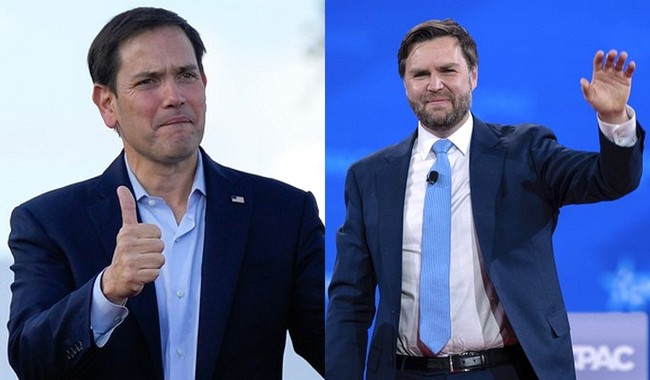
Vice President JD Vance gave a terse, direct answer to questions about 2028 ambitions and a possible Vance-Rubio ticket, insisting he’s focused on the job he already has and not angling for future offices while carrying out the administration’s work on Medicare and Medicaid fraud enforcement.
At a White House press event focused on cracking down on Medicaid and Medicare fraud, reporters pressed Vance about speculation that surfaced after President Trump mentioned a potential Vance-Rubio ticket. Vance did not dodge the question; he pushed back on the idea that he’s planning his next move years in advance. The moment stood out because it broke with the usual Washington habit of immediate jockeying for the next campaign.
Before getting into the details of the fraud actions, Vance praised Marco Rubio personally but made a point about priorities. He drew a line between friendship and political posturing, saying both men are concentrating on governing. That tone appealed to conservatives who want leaders focused on performance rather than promotion.
“There are a few topics that I want to talk about less than what office I’m going to run for years down the road, when I’m having a good time and trying to do good work in the job that the American people already elected me to do,” Vance said.
“I love Marco. I think he’s a great Secretary of State. He’s become a very, very dear friend. But I think both of us are very much focused on accomplishing the American people’s business right now.”
“If I was the American people, there are a few things that I would hate more than a person who’s barely been in one office for a year and a half, who’s angling for a job two and a half years down the road. Let’s do a good job now. We are. We just got to keep at it.”
The exchange cut through the usual spin because it sounded like someone who actually wanted to do the work, not audition for something else. Reporters and commentators quickly circulated the clip, praising the straightforward refusal to treat public office like a stepping stone. That viral reaction underscored a wider appetite among voters for officials who prioritize governing over self-promotion.
A follow-up question asked whether President Trump was intentionally prodding Vance and Rubio by floating succession scenarios, and Vance sharpened his response. He framed the President’s comments as playful rather than a serious contest, pushing back on the idea of televised rivalries for succession. His words suggested that such public speculation is more a media story than a genuine political struggle among the principals.
“I just don’t think it sounds like the President of the United States to have a televised competition for who would succeed him as his apprentice,” Vance said.
“I think the president has always been fascinated by politics. If you talk to him, he was fascinated by politics 30 years before he ever ran for office, so I think it’s natural for him to joke around with us a little bit, to play around with the idea.”
“But I can tell you, the president is as focused as any of us on making sure we do as good of a job now for the American people.”
That pushback reframed the chatter: it wasn’t a brewing rivalry so much as a media-driven storyline that both men declined to nourish. Vance made clear he views such speculation as a distraction from concrete work, especially when the administration is taking high-profile actions. He emphasized that governing day to day is what should matter to elected officials and to voters.
The press conference itself centered on substantial enforcement moves against fraud in federal health programs, with the administration announcing steps to withhold significant reimbursements and suspend problematic providers. Vance’s team highlighted efforts aimed at recovering taxpayer dollars and shutting down bad actors in the Medicaid and Medicare systems. Those policies, he argued, were the real agenda and the reason for the event, not an early campaign tease.
Vance’s tone and timing were calculated: address the curiosity, shut it down, and bring attention back to policy. In a political environment where the next cycle is often treated as inevitable theater, his remarks intentionally broke that script. For many on the right, the plainspoken refusal to play along signaled a welcome focus on delivering results.
The broader implication: elected officials can respond to career-focused speculation without feeding it, by repeating a clear commitment to their current responsibilities. Vance used his platform to remind both the press and the public that governing comes first, and he backed the words with concrete enforcement actions announced the same day. The message was simple, aimed at shifting attention from rumor to remedy.


Add comment