
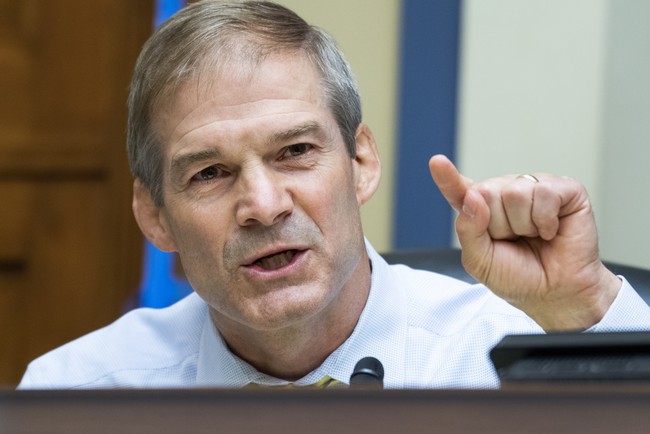
The House Judiciary Subcommittee on Immigration Integrity, Security, and Enforcement held an explosive hearing focused on Fairfax County’s sanctuary policies, where prosecutors and law enforcement clashed over cases, priorities, and public safety. Testimony ranged from grieving family members to sharp questioning from Republicans about prosecutorial choices, and the exchange featured fiery moments between Rep. Jim Jordan and Fairfax Commonwealth’s Attorney Steve Descano. This article walks through the key confrontations, the evidence presented, and the political fallout now under federal review.
The hearing titled “Fairfax County, Virginia: The Dangerous Consequences of Sanctuary Policies” drew national attention because it put local prosecutorial decisions under a microscope. Witnesses included Steve Descano, the recently embattled Fairfax Commonwealth’s Attorney, and Stacey Kincaid, the county sheriff, both called to explain office policies that critics say prioritize sanctuary protections over public safety. Testimony also included a victim’s family member, adding a tense human element to the legal and policy debate.
Cheryl Minter spoke about her daughter, Stephanie Minter, who was murdered while waiting for a bus, and her testimony framed the hearing around real-world consequences. The accused in that case is described in testimony as an immigrant from Sierra Leone with an extensive arrest record, and critics say Descano’s office failed to prosecute repeatedly. Those details set the stage for pointed Republican questioning about selective enforcement and accountability.
Republican members pressed hard on patterns they say show Dearborn-like leniency toward illegal aliens, while Democrats largely shifted to criticizing federal immigration enforcement and national politics. One striking moment came when Republicans highlighted a passage that had appeared on Descano’s campaign website for years but was later removed, suggesting a disconnect between campaign rhetoric and prosecutorial practice. Local reporters provided screenshots and testimony about the disappearance of that language, which became a focal point of the committee’s skepticism.
The deleted campaign text was presented exactly as preserved: “If two people commit the same crime, but only one’s punishment includes deportation, that’s a perversion of justice and not a reflection of the values of Fairfax County.” The passage drew blunt questioning about whether immigration status influenced charging and plea decisions, and it fueled the assertion that office policy intentionally treated immigration as a separate penalty factor.
Jim Jordan led a high-energy back-and-forth with Descano about the website language and its sudden removal, forcing Descano to explain the edit amid audible reactions in the room. When pressed about whether his campaign rhetoric matched his policy, Descano responded dismissively, calling anyone who thought those words reflected his policy “obtuse.” That answer reportedly surprised observers and became a viral soundbite during and after the hearing.
Brutal exchange for Descano here. Jordan pins him down on his website saying for years that he will consider immigration status when making prosecutorial decisions, then suddenly being deleted weeks before the hearing.
Descano says anyone who thought his campaign rhetoric would actually be his policy is “obtuse”.
@NickMinock reports there were gasps from Descant’s supporters when he said this.
Former Virginia Attorney General Jason Miyares sat beside Descano and methodically traced a pattern of prosecutorial decisions that, he argued, repeatedly favored noncitizen defendants. Miyares summarized a succession of cases and charging choices, asserting they were neither random nor accidental. “This is not incompetence. This is not coincidence. This is policy,” he concluded, framing the issue as systemic rather than individual errors.
Sheriff Stacey Kincaid appeared visibly frustrated about being summoned and seemed eager to deflect attention back to Descano’s office. Her testimony underscored tension between local law enforcement tasked with public protection and a prosecutor’s office accused of declining to pursue charges in ways that complicate investigations. The debate highlighted a fundamental clash over whether prosecutorial discretion should account for immigration consequences at all.
Committee members also played video and screenshots to underscore the point that language about immigration had been publicly available and then removed, which raised questions about transparency. The evidence presented by members included long-form timelines of incidents and specific examples where critics say a different charging decision might have produced different outcomes. That compilation became a central plank of the GOP argument that Fairfax policy put political priorities ahead of safety.
In the wake of the hearing, federal scrutiny increased: the Department of Justice announced it would open an investigation into whether the Fairfax Commonwealth’s Attorney’s Office discriminated against U.S. citizens by offering preferential treatment only to illegal-alien defendants. The existence of a federal probe elevates the local dispute into a national legal and political controversy, with implications for how prosecutors nationwide balance immigration and criminal justice concerns.
The hearing left clear political lines: Republicans demanded explanations and evidence of discriminatory practices, while Democrats emphasized broader immigration policy and criticized federal enforcement. The exchanges, soundbites, and deleted campaign language now form the paper trail that investigators and voters will examine as the debate over sanctuary policies and prosecutorial discretion moves forward.


Add comment