
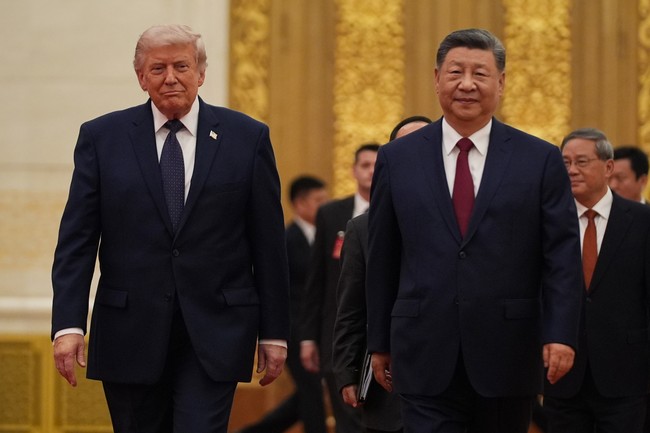
President Donald Trump wrapped a high-profile visit to China with a polished state banquet where both he and President Xi Jinping traded compliments, outlined cooperation on strategic issues, and publicly framed tensions as manageable for now. The evening mixed big-picture agreements on security and trade with ceremonial moments, toasts, and a lavish menu that highlighted the diplomatic theater of the visit. For one night, protocol and cordiality dominated headlines, even as deeper competition and unresolved disputes remain in the background. What followed were clear public statements, shared commitments, and a display of mutual respect meant to stabilize ties between the two powers.
Trump’s itinerary in China has included meetings that reportedly produced concrete pledges on matters ranging from investment to countering fentanyl precursor flows. The leaders also discussed maritime security and keeping the Strait of Hormuz open, and public remarks underscored a mutual vow on nonproliferation: “Both countries agreed that Iran can never have a nuclear weapon.” Those lines set the tone for a conciliatory diplomatic narrative that accompanied the ceremonial dinner.
After the formal business of the summit, the tone shifted to celebration as hosts staged an elegant state banquet. The formalities gave both men a chance to craft the story they wanted to tell about Sino-American relations: cooperation is possible and stability is preferable to confrontation. The dinner became a platform for each leader to cast bilateral ties in positive terms while signaling that strategic competition will be managed through engagement rather than escalation.
At the banquet, President Trump offered a toast that tied historical connections to contemporary cultural links between the nations. He referenced shared cultural exchanges going back to colonial times and highlighted the contributions of Chinese immigrants to American infrastructure and commerce. He pointed to modern affinities like sports and consumer culture as everyday proof that the bond between the peoples of each country runs deep.
“From the beginning, our citizens have shared a deep sense of mutual respect. Founding Father Benjamin Franklin published The Sayings of Confucius in his colonial newspaper and today a sculpture recognizing that ancient Chinese sage is carved into the face of the United States Supreme Court very proudly,” Trump said.
He continued to tout the two countries’ ties, highlighting Chinese immigrants’ labor on U.S. railroads and the modern day Chinese population’s love of American exports like basketball and blue jeans.
“Chinese restaurants in America today outnumber the five largest fast food chains in the United States all combined. And that’s a pretty big statement,” Trump continued.
Trump also used the occasion to extend a reciprocal invitation, naming September 24 as a proposed date for Xi and his wife to visit the White House. That gesture is symbolic: state visits work best when they create openings for ongoing diplomacy and visible follow-up, not just one-off optics. An invitation like this signals an intent to keep channels open and episodic tensions contained.
Xi’s remarks echoed the same theme of shared responsibility and strategic caution, framing China-U.S. ties as consequential for well beyond the two countries themselves. He underscored the demographic heft involved and argued that mutual gains from cooperation far outweigh the costs of confrontation. Xi positioned the relationship as one that should be built on partnership rather than rivalry.
“Both China and the United States stand to gain from cooperation and lose from confrontation. Our two countries should be partners rather than rivals. President Trump and I also agreed to build a constructive China-U.S. relationship of strategic stability to promote the steady, sound and sustainable development of China-U.S. relations and bring more peace, prosperity and progress to the world,” Xi said…
China-U.S. relations concern the well-being of the over 1.7 billion people of both countries and affect the interests of the over 8 billion people of the world. Both sides should rise up to this historic responsibility and steer the giant ship of China-U.S. relations forward steadily and in the right direction.”
Public niceties aside, the strategic competition between Washington and Beijing remains real and multifaceted. Issues like Taiwan, technology competition, and intelligence concerns are still unresolved and will continue to test this thaw. National security analysts and policymakers watching will want to see whether the substance behind the rhetoric holds up in follow-through and enforceable arrangements.
That said, for the duration of the state visit the optics were unmistakable: two leaders staging a public moment of rapprochement and mutual respect. It read as a tactical reset of sorts—one that aims to buy breathing room and clearer rules of engagement even while rivalry continues. For the moment, the summit produced pledges, toasts, and the trappings of diplomacy designed to manage rather than magnify friction.
On a lighter note, the banquet menu drew attention and social chatter, offering a mix of classic and contemporary dishes meant to honor both traditions and tastes. The public menu listing brought a moment of levity amid the serious diplomatic themes, reminding observers that statecraft often includes carefully choreographed cultural gestures. The combination of political theater and culinary display capped a visit intended to show respect and to open lines for future negotiation.


Add comment