
This review looks at Iron Lung, a low-budget, self-financed film by Mark Fischbach (Markiplier) that turned a $3 million investment into a $21.7 million return, examines its single-location storytelling and cosmic horror, and assesses why a YouTuber-led project connected with audiences despite elite critical resistance.
Iron Lung Review – Cosmic Horror in a Metal Tube
I went to see Iron Lung after hearing the buzz and because I wanted to judge the hype for myself. The film was written and adapted from a game, and its success has raised questions about how independent creators can disrupt traditional Hollywood models. Watching it felt like witnessing both a bold experiment and a passionate tribute to its source material.
Mark Fischbach bankrolled the picture with $3 million of his own money, and he didn’t just finance it—he directed and stars in it as well. The box office return of $21.7 million surprised a lot of people, including many industry insiders who underestimated a creator-driven release. That financial story is impressive, but the more interesting part is how the film performs artistically in such a constrained setup.
From the outset, Fischbach’s performance surprised me; he disappears into the role quickly, and within minutes you stop seeing the YouTuber and start watching the character. He cycles through confusion, terror, rage, and grief with an honesty that anchors the film. While he is not an award-season powerhouse, his work here proves he can carry a demanding, intimate role without the usual YouTuber awkwardness leaking through.
The setting is the real star: a rusted metal submersible that is the only stage for almost the entire movie. The story places “Simon” in a cramped iron tube, sent into an ocean of blood as part of what is framed as an execution rather than an expedition. That choice to confine the action intensifies every moment, making scarcity—of air, of light, of information—feel like a direct threat to the audience.
Worldbuilding is economical but effective. In this future, humanity colonized countless worlds until an event called the “Quiet Rapture” made celestial bodies vanish, leaving only humans on space stations. Simon is a convict from Eden, the station with the last tree, accused of destroying it. Those sparse details are enough to set stakes and drive survivors’ motives without sprawling exposition that would break the film’s claustrophobic spell.
The central visual gimmick—navigating undersea darkness with an X-ray still-camera and proximity warnings—creates a sustained sense of blindness and guesswork. You rarely see the outside world directly; instead, you get brief, grainy images and sensor pings. That limited perspective makes every sound and every shadow feel loaded, and it turns every decision inside the sub into a tense scenario.
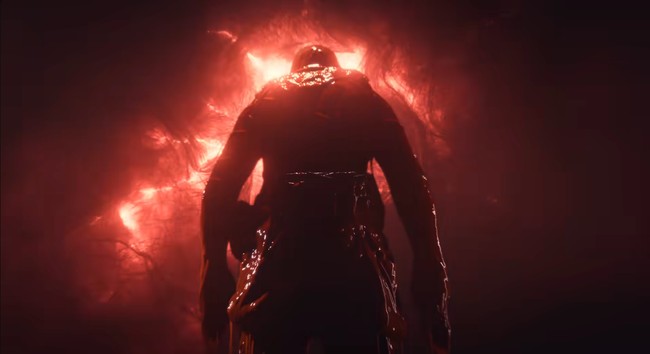
Horror in Iron Lung leans hard into the cosmic: there’s a gigantic presence beneath the blood ocean that occasionally slams into the sub and makes itself known. Sometimes it communicates through hallucinations or garbled interfaces, and the film treats that contact as something malevolent and inscrutable. The movie doesn’t aim to explain everything, and that refusal to hand-hold preserves the existential dread at its core.
Claustrophobia and curiosity work together here: secrets stack up and force the viewer into close attention. The film borrows a lesson from minimalist dramas like 12 Angry Men by offering only small windows to the outside, which magnifies the emotional pressure on the single protagonist. When the sub’s systems falter, the small details—breath, flicker, a stray memory—become the things that matter most.
There are moments where a touch more clarity would help; a few hints and plot threads feel like they deserve fuller payoff. Even so, those gaps mostly fuel interest rather than frustration, nudging the audience to puzzle things out after the credits roll. The tone and pacing maintain tension without collapsing into cheap jump scares or explanatory monologues.
Beyond the film itself, the way it reached audiences matters. This wasn’t a studio tentpole with a massive marketing budget; it was a creator-led release amplified by a devoted fanbase. That grassroots engine helped Iron Lung break through, and it suggests a model where passionate creators can shepherd niche material to mainstream success without depending on traditional Hollywood machines.
Artistically, Iron Lung earns its praise by turning a single-location premise into a full-bodied experience of dread and wonder. It’s a movie made with care for its source and respect for the audience’s imagination, and that craftsmanship shows in the small, well-realized choices throughout. Whether you’re drawn to cosmic horror or intrigued by creator-driven cinema, this film makes a strong case for both approaches.
The film’s momentum didn’t come from a corporate push; fans and creators carried the word of mouth. That dynamic mattered to its box office and to the cultural conversation around who gets to make movies and how.



Add comment