
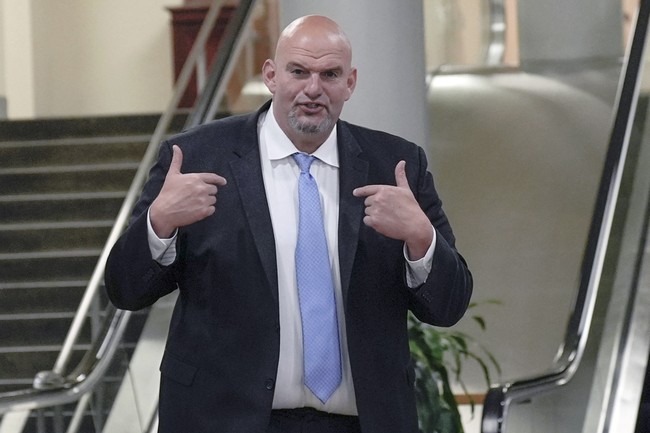
Senator John Fetterman’s recent op-ed throws a sharp light on how the Democratic Party has shifted away from positions that used to be routine among its members, and his decision to stay inside the party while openly criticizing its direction forces a debate about who the party is trying to be and who it is losing.
The 2026 midterms are looming, and Republicans are watching a Democratic Party that still hasn’t explained why it keeps losing working-class voters across the Rust Belt. Instead of addressing the drift, the party’s activist wing has doubled down on ideological purity tests and internal policing, pushing away the very voters Democrats need to win competitive states like Pennsylvania and Michigan.
Fetterman stepped into that controversy with a blunt op-ed titled “I haven’t changed. Here’s what has,” making the case that his positions on border security, fiscal responsibility, and support for Israel were once mainstream Democratic stances. He says the party moved and he did not, and his piece reads like an urgent message from a Democrat who thinks the party is hurting itself more than helping the country.
“My party cannot simply be the opposite of whatever President Donald Trump says,” he wrote. “The president could come out for ice cream and lazy Sundays, and my party would suddenly hate them.”
Fetterman’s track record is central to his argument. He led on the Laken Riley Act after a tragic killing, supported bipartisan border reform in 2024, and voted to keep the government funded rather than play shutdown politics that would have harmed federal workers and security operations. Those are tangible policy choices that undercut the idea he’s out of step on matters of safety and governance.
“The demand to keep the lights on weighed more heavily than partisan games,” he wrote.
On foreign policy, he has backed Israel during the conflict with Hamas and even praised aspects of the Trump administration’s posture toward Iran. He pointed out that these stances used to be ordinary for a Democrat, but they are increasingly labeled toxic within today’s party environment. That labeling creates real political consequences for officials trying to hold onto swing voters.
“These once-common views have become increasingly toxic in the Democratic Party, a result of catering to the fringe and agitated parts of our base.”
The reaction from elements of the left has been swift and vindicating of his critique: party officials and activists have publicly scolded him, local party organizations have called for his resignation, and some leaders have branded him a traitor for refusing to fall in line with the new orthodoxy. That internal pressure makes it harder for Democrats to present a broad, practical appeal to voters who prioritize security and economic stability.
Fetterman insists he is not defecting. He repeatedly notes his voting record remains overwhelmingly aligned with Democratic priorities on abortion rights, labor, social safety nets, and LGBT protections. He makes the case that he is still a Democrat in policy but not in the performative posture of the party’s activist wing.
“Plus, I’d be a terrible Republican who still votes overwhelmingly with Democrats.”
Republicans have taken note. Pennsylvania Republicans publicly welcomed the idea of working with him and suggested they might embrace him if he ever broke with his party. That reaction signals a larger political reality: the GOP sees an opening when Democrats ostracize figures who could appeal to swing voters in key states.
Contrast that with stiff responses from some Democratic officials who argue he must “reflect the will of the people,” language that curiously came from a governor whose party apparatus had already attacked the senator for keeping government functioning and supporting an ally. Fine-grained policy debate is being crowded out by tribal signaling, and that’s a problem when elections are decided by persuadable voters, not the loudest activists.
The core question Fetterman’s piece raises is whether the Democratic Party can self-correct before another election cycle. If mainstream policy positions provoke accusations of betrayal, the party will continue to shrink to a narrower base. That leaves Republicans positioned to win the moderate, working-class voters who are focused on border security, economic common sense, and a credible national defense.
Fetterman says he will remain in the party while making his case publicly, and his stance is forcing Democrats to confront a choice: double down on purity tests and risk electoral decline, or broaden their appeal to recapture the voters who matter in general elections. How the party answers will shape the political map well into the next cycle.



Add comment