
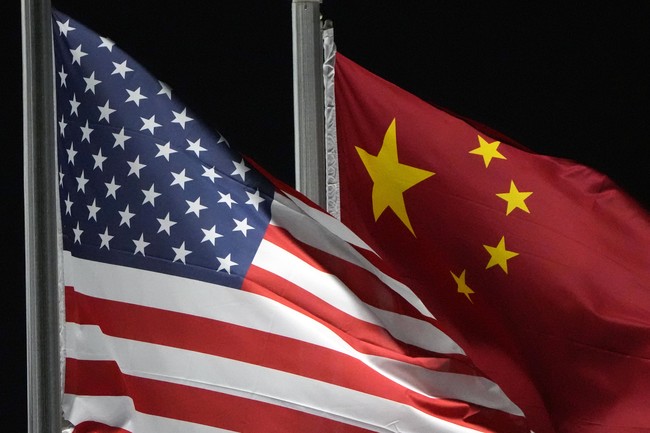
I’ll examine why Beijing is jittery as top Chinese diplomats court U.S. senators, why President Trump’s visit matters, how Nixon’s China opening offers a strategic lesson, and why a position of strength paired with pragmatic engagement best serves American interests.
China’s foreign minister recently met a bipartisan group of U.S. senators in Beijing and described bilateral ties as broadly stable despite a turbulent year. That carefully timed message arrives as President Trump prepares to meet President Xi Jinping, and it reads like a diplomatic effort to manage expectations. In Washington, it is being watched as a test of whether leverage can be turned into concrete results for American workers and security.
The relationship is layered with real friction: trade deficits, technology controls, and Taiwan’s status are persistent flashpoints. Still, Beijing’s measured tone suggests it wants predictable channels of communication while avoiding escalation. For Republicans who favor a clear-eyed, leverage-driven foreign policy, that posture is an invitation to press for reciprocity rather than return to old habits of deference.
The historical parallel keeps coming up for a reason. In 1972, Richard Nixon took a bold, unexpected trip to Beijing, and the line that endured was, “Only Nixon could go to China.” That phrase captured a paradox of credibility: a leader perceived as tough can open new ground without abandoning core principles. The same logic applies now to a president who built political capital on confronting unfair Chinese practices.
Trump’s first term was marked by tariffs, export controls, and an effort to rebuild American manufacturing. Those moves were criticized by some as disruptive, but they also forced a strategic reset that acknowledged competition without pretending the relationship was purely cooperative. That record gives this president a bargaining posture many previous administrations lacked, and it matters at the negotiating table.
Present diplomacy is not naive engagement for its own sake. The lead-up to the summit includes discussions on trade, fentanyl precursors, technology access, and regional security—areas where Americans demand results. A negotiator with a credible track record of confronting bad behavior is more likely to secure enforceable commitments rather than vague assurances.
Strength matters in diplomacy. When U.S. policy rests on economic and military leverage, agreements are more likely to include concrete protections for national interests. That does not mean turning every interaction into a confrontation. It means using leverage to reduce vulnerabilities in supply chains and critical technologies while keeping open channels for predictability and crisis management.
The old, deeply entangled status quo left the United States exposed in ways that now seem obvious—overreliance on foreign supply lines, ceded technological ground, and strategic blind spots. Reversing that requires policy that fortifies domestic production and partners with allies in the Indo-Pacific. At the same time, pressure must be maintained on issues such as intellectual property theft and unfair industrial practices.
Pragmatic conservatism calls for competing where necessary and engaging where useful. That balance aims to prevent a slide into unnecessary conflict while securing American economic sovereignty. If summit diplomacy yields enforceable steps that curb illicit flows, ease supply vulnerabilities, or level the playing field in trade, those are tangible wins for American workers and national security.
China remains a formidable strategic rival with clear ambitions, especially on Taiwan and regional influence. Stability in rhetoric does not equal alignment of values or objectives. Responsible U.S. policy accepts that reality and focuses on shaping circumstances so that competition is managed without surrendering core security interests.
History will judge whether the forthcoming meetings produce more than diplomatic theater. But the core principle is straightforward: credible toughness gives bargaining power, and that power should be used to secure real protections for the United States. That is a conservative foreign policy that prioritizes results over posturing.
Editor’s Note: Thanks to President Trump and his administration’s bold leadership, we are respected on the world stage, and our enemies are being put on notice.
For now, the task is clear: push for reciprocity, shore up domestic resilience, and keep allies close. If those elements are present in any deal struck in Beijing, the engagement will be judged on effect, not on whether it looked conciliatory. Only a leader with both credibility and resolve can extract value from a difficult partnership without appearing weak.



Add comment