
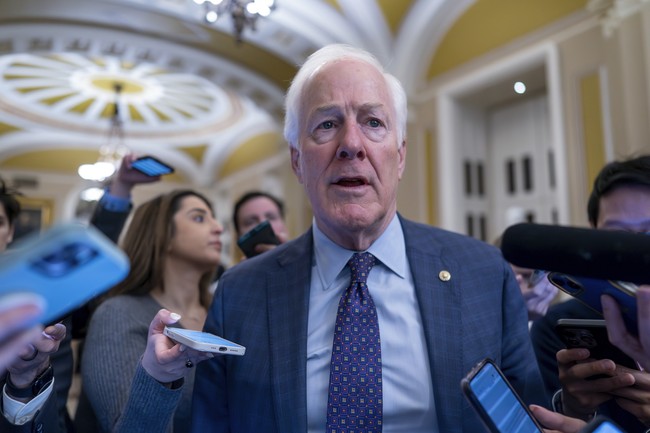
Senator John Cornyn has shifted his stance, declaring the SAVE America Act—a measure requiring proof of citizenship and photo ID to vote—more important than preserving the Senate filibuster, a move timed with his bid for President Trump’s endorsement in a heated Texas primary runoff.
Sen. John Cornyn (R-TX) publicly said the SAVE America Act matters more than defending the filibuster, framing it as necessary to protect election integrity through proof of citizenship and voter ID. The change comes while he seeks an endorsement from President Trump in a primary runoff that has drawn heightened attention. Observers see the timing as politically charged, given the stakes for both Cornyn and his opponent.
Cornyn explained his shift in an op-ed, noting that he once defended the 60-vote threshold but now fears Democrats will “nuke” the filibuster if they regain control. He argued that the opposition is weaponizing Senate rules to block the SAVE America Act and other priorities. That argument frames the choice as a defensive move to stop what he calls an extreme agenda.
“When the reality on the ground changes, leaders must take stock and adapt,” writes Cornyn. “Today, Democrats are weaponizing the Senate’s rules to block the SAVE America Act, defund the Department of Homeland Security, and hurt the American people — all to spite President Donald Trump.”
Supporters of the bill say it would “make it easy to vote but harder to cheat” by requiring basic verification like proof of citizenship and photo ID. Cornyn emphasized the act’s popularity with voters and used that popularity to justify his willingness to back changes to Senate procedure. He presented the measure as common-sense reforms that would reduce fraud while preserving access to the ballot.
Critics were quick to point out the political timing, especially Ken Paxton, who has been vocal about the SAVE America Act and willing to stake his campaign on it. Paxton mocked Cornyn on X with a sharp jab, saying, “John Cornyn did exactly what I predicted.” The back-and-forth underscored how election policy and campaign dynamics are now tightly linked in the Texas race.
Sen. Mitch McConnell has expressed opposition to using the “talking filibuster” to pass the bill, creating another fault line within GOP ranks. Cornyn has defended his position and insists his openness to procedural change is consistent and thoughtful. He said he wanted clarity to counter misrepresentations of his stance and to ensure voters understand his reasoning.
“I’ve always been open to it,” he said in an interview, addressing the talking filibuster. “I think, because there were people misrepresenting my position, I felt like it would be good to just be very clear.” Those words aim to settle doubts about whether Cornyn’s pivot is sincere or purely strategic.
Ken Paxton has maintained an unambiguous position on the SAVE America Act and tied his political future to its passage, declaring he would consider exiting the race if leadership lifts the filibuster and the bill becomes law. He has urged a firm, uncompromising approach and used this stance to cast Cornyn as inconsistent. That contrast fuels the narrative that Cornyn’s move is as much about winning an endorsement as about policy.
Cornyn wrote that he supports whatever Senate rule changes prove necessary “for us to get the SAVE America Act and homeland security funding past the Democrats’ obstruction, through the Senate, and on the president’s desk for his signature.” Those words place the bill above procedural orthodoxy in his hierarchy of priorities. He framed the choice in stark terms: act now to secure election integrity or risk losing the opportunity.
Donald Trump has repeatedly stressed the urgency of the SAVE America Act, saying he is “not happy it’s (the Act) not moving” and that he has “expressed that to everyone.” He also stated, “It supersedes everything else.” Such endorsements from the former president add pressure on GOP senators weighing the political and institutional costs of changing Senate rules. The interplay between presidential priorities and congressional procedure is central to how this debate will unfold.
Opponents of any filibuster change warn about long-term consequences for Senate norms and minority rights, while proponents argue extraordinary times call for extraordinary measures. Cornyn’s recalibration signals how those arguments are being weighed against immediate political realities in a key primary. The tension between principle and practicality now plays out both in policy terms and as campaign strategy.
As the fight continues, Cornyn’s statement and Paxton’s counterattacks have turned the SAVE America Act into a focal point of Republican intra-party conflict. The dispute highlights questions about leadership, timing, and the best route to secure an outcome supporters call essential to election security. How the Senate responds will shape both the law and the political landscape going forward.



Add comment