
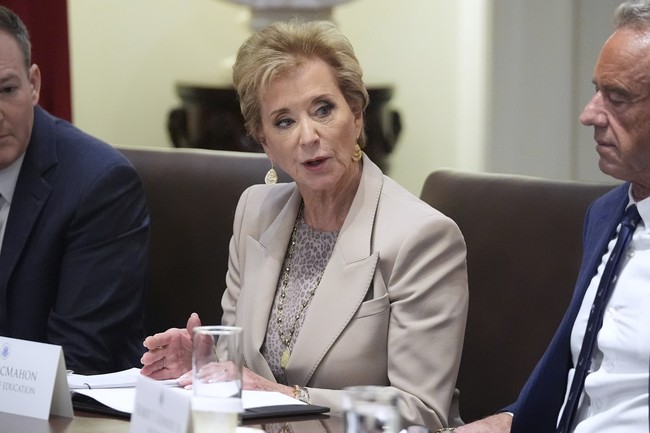
This piece looks at how recent changes at the Department of Education exposed wide-open fraud in the federal student aid system, what Secretary Linda McMahon said about the fixes, the scale of money stopped from fraudsters, and why some see the overhaul as proof the department needed tough scrutiny.
Americans have watched the student aid system unravel in ways that left taxpayers on the hook for billions. For years the FAFSA process was easy to exploit, and the result was bots, ghost applicants, and even payments tied to people who were no longer alive. That reality created outrage and a political case for stronger identity checks and better coordination with other agencies.
Education Secretary Linda McMahon described a sweeping revamp that aimed to stop fraud in real time, and she singled out specific problems that plagued the old setup. She said the FAFSA changes included new identity checks and photo ID requirements when applicants complete their forms online. McMahon also highlighted that the department prevented a large sum from being diverted to criminals after cleaning up the verification process.
When asked about the program changes in a recent televised interview, McMahon was blunt about what used to happen. She said there were automated BOTS submitting applications, fabricated students in the system, and cases where deceased people were listed as recipients. Those details helped explain why tighter controls were introduced and why officials shifted resources back to fraud prevention.
READ MORE: Return of the DOGE: United States Digital Service Stops Over $1B in Student Loan Fraud
During that same interview McMahon stated:
“I’m really proud of one of the things we’ve done, and that is we’ve just really totally revamped the FAFSA program, which is the application that students fill out for student aid as they are going to college. But as like many things in the government, we found there was a lot of fraud going on, that there were BOTS that were applying for these loans, there were ghost students, there were dead people who were getting these loans, et cetera. So, we really did enforce and tweak this entire system so that we have this real time fraud identity now.”
The practical result is that applicants must now show a photo ID to access federal aid forms, a change that was not standard previously. McMahon reported the department stopped roughly $1 billion from reaching fraudsters in 2025 and said early returns after the revamp saved about $60 million in just the first two weeks. Those figures are now central to debates over whether prior policies invited abuse and whether stricter verification is the right response.
The COVID-19 years accelerated many of these problems by reducing oversight and cutting back on verification safeguards. The pandemic response relaxed checks at the same time fraud opportunities multiplied, so less than one percent of applicants faced identity checks on their FAFSA submissions. That gap provided fertile ground for organized rings and automated schemes to file fraudulent claims at scale.
Part of the fix involved closer data sharing with other federal agencies to close loopholes that let benefits flow to ineligible recipients. Officials tightened exchanges with the Social Security Administration to catch deceased-person matches and resumed screenings aimed at preventing overpayments. They also coordinated with immigration and homeland security officials to clamp down on improper access to student aid.
The department announced a one-time review using the new screening tools to revisit previously submitted FAFSA applications for the upcoming school year. That effort is meant to identify past abuse and recover misspent funds, while preventing future overpayments that skirt lifetime Pell Grant limits. These moves are being used to make the case that stronger verification can both protect federal dollars and restore public confidence.
Public reaction is split along predictable lines: critics argue the Department of Education was dysfunctional and invite downsizing, while supporters say the fixes are overdue and show the agency can correct course. For those who already question the department’s footprint, finding that dead people and phantom applicants received aid only reinforces the argument for deeper reforms or even elimination of certain federal roles in higher education finance.
One reaction circulating online captured the shock many feel about how lax the system became. It read in part:
HOLY SMOKES. Trump Education Sec. Linda McMahon just found out that DEAD PEOPLE were getting student loans from the federal government
BILLIONS of dollars are now being saved.
“There were BOTS, ghost students, dead people getting these loans. We enforced and tweaked the entire system so we have real-time fraud identity now.”
Finally, you have to actually PROVE you’re a real person.
Unbelievable this was not already the case!
The story raises hard questions about accountability and taxpayer protection, and it underscores why smarter verification, better interagency cooperation, and constant oversight matter. While the immediate numbers show meaningful savings, the deeper issue remains whether past laxity will be fixed for good or return under pressure from policy shifts.

Add comment