
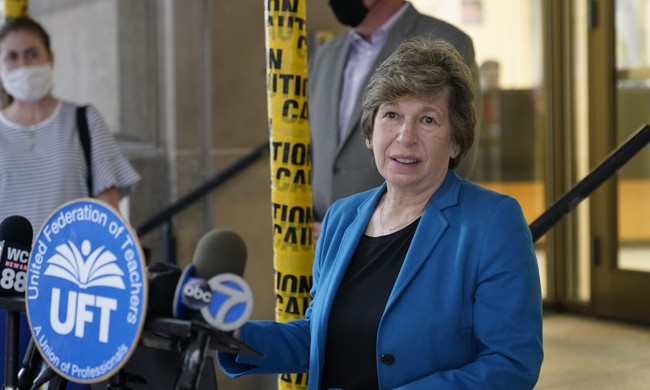
This article examines how Randi Weingarten’s 2025 book, Why Fascists Fear Teachers, was funded and how proceeds were handled, highlighting more than $1.4 million in union expenses tied to the project, payments to outside collaborators, and a Delaware LLC that received royalties intended for charity.
Randi Weingarten framed her book as a defense of public education, but records show the AFT covered a striking amount of the work behind it. Federal filings reveal more than $1.4 million in expenses linked to the book’s development and promotion during 2024 and 2025, raising questions about the use of members’ dues. Critics point out big-ticket invoices that coincided with the manuscript’s timeline and promotional push.
One of the largest outlays was nearly $1 million paid to a law firm while an attorney from that firm is thanked in the book for reviewing the manuscript pro bono. Another notable payment of over $400,000 went to a progressive commentator who advertises ghostwriting among her services and is called “indispensable” in the acknowledgments. Those line items look like paid help on a high-profile book, but the bills were paid by a union funded by 1.8 million dues-paying members.
Additional line items included thousands for book-related services that feel unusually personal for a member-funded expense. The filing lists a fact-checker who displays the book on her portfolio and a photographer paid for a single black-and-white headshot. A literary agency that represents Weingarten also received a six-figure payment during the book’s production window. Nearly 30 AFT staff members are credited in the acknowledgments, and the cost of a nationwide book tour remains undisclosed in the filings that were examined.
Weingarten publicly promised that half the book’s proceeds would benefit two union-affiliated charities, but the advance royalties tell a different story. The AFT received $375,000 in advance royalties from the publisher, yet only $125,000 went to the named charities combined, which is one-third of that advance rather than half. A separate $125,000 payment went to a Delaware LLC created just as the book project began, an entity with no public presence other than being set up to receive funds.
The novel appearance of a Delaware LLC named to receive a payment right when the book was started raised eyebrows, since the union confirmed the payments were ultimately for Weingarten. The union retained the remainder of the advance and other proceeds. Members who pay dues to fund collective bargaining and support for classrooms were instead footing the bill for a project that produced royalties routed through an opaque corporate vehicle.
“This desperate fishing expedition by a far right group that refuses to disclose its donors only proves my book’s point — that Fascists Fear Teachers,” she told the New York Post, adding that “any and all proceeds from the book are shared equally.”
The quote above is Weingarten’s public rebuttal. It repeats her claim that proceeds are shared equally, even as documentation shows advance payments that were divided in ways that differed from her promise. From a Republican perspective, this mismatch looks like a classic case of leaders using member funds for projects that primarily boost their own profile and income.
Weingarten’s reported annual compensation from the AFT is $469,442, a figure that critics contrast with classroom salaries earned by the teachers the union purports to represent. That level of pay, combined with member-funded spending on a personal book project, deepens concerns about priorities. The pattern here is less about defending schools and more about the conflation of institutional resources with personal advancement.
The book itself doesn’t avoid provocation: it mentions Hitler early on and draws comparisons between modern education policy and occupation tactics used by totalitarian regimes. The publisher called the work “a manifesto for our time,” language that underscores the personal and political nature of the project. For many members and outside observers, the controversy is about transparency and accountability in how collective funds are used.
Ultimately, the issue hinges on who decides how union money is spent and whether members were properly informed about the scale and purpose of these expenditures. When dues pay for legal bills, ghostwriting-style assistance, and promotional efforts tied closely to one leader’s book, skeptical taxpayers and union members want clear answers about oversight and priorities. The record as presented raises those very questions.



Add comment