
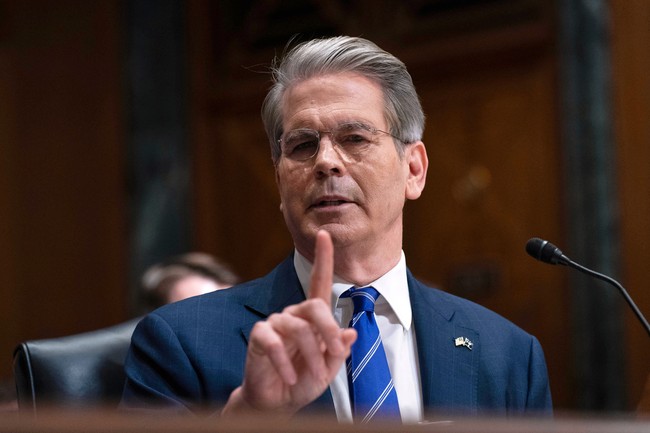
This article reports on Treasury Secretary Scott Bessent’s blunt assessment of Iran’s economic collapse and the Trump administration’s steps to squeeze Tehran, including sanctions on the Persian Gulf Strait Authority, threats to choke off crude exports, and warnings to Oman about any toll scheme for the Strait of Hormuz. It outlines Bessent’s claims about unpaid troops, disrupted policing, internet blackouts, and how U.S. measures under Operation Economic Fury have driven Iran’s currency and commerce into free fall. The piece preserves Bessent’s quoted remarks and places the administration’s stance in a Republican framing that emphasizes decisive action to protect global commerce and U.S. interests.
Treasury Secretary Scott Bessent described Iran’s economy as unraveling under pressure. He said the situation looks dire, noting that basic state functions have been disrupted, payments are not reaching personnel, and key infrastructure is idled. The administration frames these results as the predictable fallout of a strategy meant to force Iran back to the negotiating table on terms that protect American security and regional stability.
Bessent stressed that the U.S. is taking concrete steps to stop Iran from monetizing control of shipping lanes. He criticized Iran’s attempt to set up a toll for passage through the Strait and announced sanctions aimed squarely at the Persian Gulf Strait Authority. The move is presented as a way to deter companies and states from legitimizing any pay-for-access scheme that would reward Tehran for coercive behavior.
Their troops are not getting paid, the police are not reporting for work, and Kharg Island is shut down. The Iranian economy and currency are in free fall.
Bessent mocked the idea that Iran could lawfully charge fees for transit through the Strait and made it clear the U.S. would not tolerate such extortion. He highlighted a package of measures designed to choke off Iranian oil sales and restrict aviation services, so crude shipments and airline operations would be severely constrained. Those moves are intended to translate diplomatic leverage into tangible economic pain until Tehran accepts a durable, verifiable agreement.
The Treasury statement escalated warnings to third parties that might facilitate tolls or aid the scheme. It called out anyone considering payment for passage or disguising tolls as humanitarian or other forms of assistance. The message was unambiguous: involvement would invite aggressive targeting and penalties from U.S. authorities, which undercuts Iran’s ability to corner the market on regional maritime control.
https://x.com/SecScottBessent/status/2059981297468989607
The United States Government will not tolerate any effort to impose a tolling system in the Strait of Hormuz. Oman, in particular, should know that the U.S. Treasury will aggressively target any actors involved – directly or indirectly – in facilitating tolls for the Strait and any willing partners will be penalized. All nations should reject outright any efforts by Iran to disrupt the free flow of commerce. Tehran’s days of terrorizing the region and the world are over.
Bessent also made clear at the White House briefing that free transit through the Strait is nonnegotiable. He recounted a discussion with the Omani ambassador who reportedly denied any plans to impose tolls and emphasized Oman’s desire for stable relations. Bessent said he labeled any proposal to charge ships as a “non-starter,” making diplomatic pressure part of the toolkit alongside sanctions and naval posture.
The administration asserts that a naval presence and financial penalties have already driven a historically low volume of Iranian crude into the market. That squeeze is meant to be felt not just by the regime’s elites but across its economic base, contributing to shortages, currency instability, and social strain. Officials argue that these pressures give the United States leverage to demand meaningful changes in Iran’s behavior without committing to endless concessions.
Reports also note Iran has partially lifted internet restrictions in response to escalating economic strain, a sign of social and governmental stress. The Treasury frames this as evidence the regime is struggling to maintain normal governance while trying to resist international pressure. Republican messaging around these developments emphasizes firmness over appeasement and credits the administration with taking decisive action rather than mere rhetoric.
From this vantage, the combination of sanctions, maritime denial, and targeted diplomacy is portrayed as designed to force Tehran into a better outcome for regional security. Officials make clear that only a “satisfactory outcome in negotiations will end the downward spiral.” Until then, the United States will continue to use its economic and military tools to prevent Iran from profiting off coercion and to protect the free flow of commerce through one of the world’s most critical chokepoints.


Add comment