
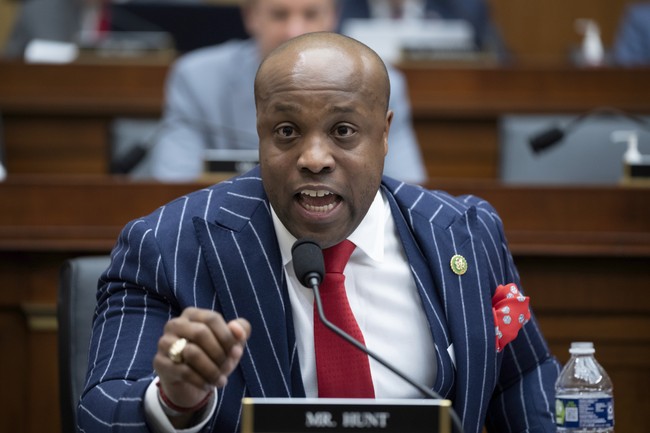
The 2026 campaign season is heating up in Texas, with Rep. Wesley Hunt and Rep. Jasmine Crockett both angling for the same Senate seat; this piece outlines why Hunt is betting on a debate, why Crockett’s candidacy is surprising to some, and how that matchup could shape the state’s politics moving forward.
Republican Rep. Wesley Hunt has openly challenged Democrat Rep. Jasmine Crockett to a public debate after Crockett announced a bid for the Texas Senate seat Hunt is also pursuing. Hunt’s call for a head-to-head forum is a direct move to force contrasts on record, policy, and temperament in front of voters. In a state where retail politics and clear messaging matter, debates are low-cost, high-impact opportunities for candidates to define each other.
Crockett’s decision to seek statewide office drew immediate attention because her current district work is rooted in a different political landscape than a statewide Senate campaign requires. Observers note that moving from a congressional district to a statewide race demands broader coalitions and clearer pitch to the median Texan. That shift makes the prospect of a public debate especially consequential for both campaign trajectories.
From a Republican standpoint, Hunt’s background and public presentation are strengths he can lean on in a statewide contest. His service, record, and messaging appeal to the current Texas electorate, and conservatives see him as a candidate who understands how to translate district-level success into a larger coalition. Republicans argue that if Hunt wins the nomination, the general election could favor the GOP given Texas’s political environment.
Democrats, by contrast, are taking a gamble by nominating someone like Crockett for a statewide contest where name recognition alone may not be enough. The national party has tried a range of strategies in red states, but the central challenge remains: can a candidate with a strong urban base pivot and win a wider audience? Crockett’s campaign will need to answer that question quickly if she accepts the debate challenge and steps onto a larger stage.
A Hunt/Crockett debate would be entertaining indeed. Jasmine Crockett’s debate performance is liable to be one of the worst since Joe Biden’s sole 2024 debate against now-President Trump, in which old Joe was so befuddled that he was defenestrated by the Democratic Party shortly afterward. But Jasmine Crockett doesn’t have the convenient excuse of being senile, just ill-informed and, honestly, not very bright.
Wesley Hunt, on the other hand, is the opposite: Well-read, well-informed, and smart as a whip. I’ve spoken with him, interviewed him, and he is impressive. Assuming he lands the nomination, he will likely be a shoo-in for election – this is Texas, after all – and even more so if Crockett wins the Democrats’ nomination. Of course, that last part remains to be seen. Giving Jasmine Crocket the nod to run for the Senate from Texas would be the greatest political miscalculation since the Dukakis campaign thought their candidate would look like a real manly bad-a** if they stuck him in a tank.
That quoted assessment, outspoken and personal, captures the tone of a faction of conservative commentary: confident about Hunt, skeptical of Crockett. Whether voters respond to that kind of rhetoric or reject the tone is a variable that both campaigns must consider. Campaigns that rely too heavily on attack lines without substantive contrast risk alienating swing voters who want practical solutions.
Beyond personality and debate performance, policy differences will matter, especially on issues Texans care about: energy, border security, the economy, and local control. Hunt is expected to emphasize conservative stances on those topics and make the case that his record aligns with statewide priorities. Crockett will need to present a persuasive alternative that addresses rural and suburban concerns as well as urban ones if she hopes to compete statewide.
Political operatives on both sides are already circling resources and strategy. Republican strategists see an opening to nationalize the race in a way that benefits Hunt, while Democratic strategists will likely push Crockett to build a coalition that can offset GOP advantages. Either way, a public debate would compress many campaign dynamics into one decisive moment for voters to evaluate competence and clarity.
If the face-off happens, media coverage and turnout will be key determinants of the race’s direction. High-profile debates attract attention and press scrutiny, and a strong performance can alter momentum almost overnight. For Hunt, the calculation is straightforward: force contrasts, showcase strengths, and make Crockett answer tough questions on a stage Texans watch closely.
The coming months will reveal whether Crockett accepts the challenge and whether both campaigns choose to settle the immediate question of who can persuade a broader Texas electorate. For now, the invitation stands and the debate over whether this matchup favors Republicans is in full swing.

Add comment