
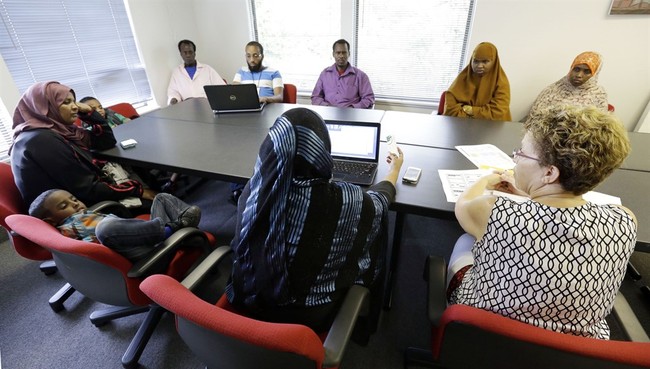
This piece examines allegations from an Ohio whistleblower that a long-running Medicaid fraud scheme has been operating inside parts of the Somali community, outlines claims about how the scam allegedly worked, includes direct quotes from the attorney raising the alarm, and contrasts reactions from political figures while arguing the issue is criminality, not an entire community.
The whistleblower narrative centers on an attorney who says insiders told her of pressure on providers to enroll in a network that generated large Medicaid payouts for home care services that were never actually needed. The claim is that the scheme ran for years, possibly more than a decade, and mirrors the scale of problems being investigated in Minnesota. The allegation is specific: payments of up to tens of thousands per year per individual were directed to family members purportedly providing care.
The attorney framed the problem bluntly, saying the Minnesota scandal was “just the tip of the spear.” She describes an organized pattern where home health providers were enlisted and doctors approved conditions without proper oversight, creating a flow of taxpayer dollars tied to fabricated or exaggerated needs. This account pins the failure on a combination of criminal actors and a system with vulnerabilities that can be exploited.
She said that providers within the Ohio Somali community have confided to her that they have been pressured to join in a “massive” Medicaid fraud scheme that involves doctors “rubber stamping” home healthcare payouts to the family members of elderly individuals for fake medical conditions.
She explained that scammers in the community have been exploiting a loophole in Ohio’s Medicaid program that allows individuals to receive Medicaid payments, totaling as much as $91,000 per year per individual, for care they are supposedly providing to a family member. Doctors who approve these payments in turn receive kickbacks themselves, according to Cooke.
Those details, if true, represent a systemic breakdown that reaches beyond a few bad actors. The whistleblower’s description points to coordinated recruitment, fabricated diagnoses, and financial incentives that could sustain the scheme for extended periods. That pattern raises hard questions about oversight, auditing, and why such practices would persist if undetected for so long.
They’re just rubber-stamping a lot of these. And then that same individual, a week later, that’s supposed to be bedridden, is all over social media, whether they’re out dancing at a party or something like that. So, the symptoms aren’t really adding up at the end of the day.
Say I want to take care of my elderly aging parents at some point. I can become a home health provider, and this is where the Somali community has been really clever. They’ve been able to find loopholes in Ohio law to provide for care for family members, even when they don’t need it.
The attorney emphasized the distinction between an entire community and the criminals exploiting it, stating that the issue is “not the community; it’s actually the criminals within the Somalian community that have exploited Ohio’s Medicaid program because we have a system right now that’s one of the easiest in the Midwest to game.” That line attempts to steer the focus toward culpability and regulatory fixes instead of cultural or ethnic blame. It also frames the problem as fixable through policy and enforcement rather than as an indictment of neighbors.
Following the claims, the story points out how partisan reactions often unfold, with opponents quick to cast suspicion on those who publicize wrongdoing. Here, defenders of the institutions and political allies have at times labeled those who raise alarms as bigoted, which shifts the conversation away from verification and enforcement. The result can be defensive posture rather than a concerted effort to root out fraud and recover taxpayer losses.
Concrete answers require audits, subpoenas, and careful law enforcement work to establish whether the allegations match documented billing patterns and provider behavior. If investigators confirm inflated or false claims tied to home health payments, those responsible should face prosecution and restitution. At the same time, officials need to tighten rules that allow large payments to flow with minimal checks and balances.
Public policy must balance access to legitimate care for elderly and disabled people with safeguards that prevent exploitation. Fixes could include more robust vetting for home health providers, audits of high-dollar claims, and penalties that deter coordinated schemes. The priority should be protecting vulnerable patients and taxpayers, while ensuring that genuine family caregivers are not shut out by overcorrection.
Ultimately the allegation is stark: a lengthy, organized fraud could be bleeding public health funds and eroding trust in care programs designed to help those in true need. The whistleblower’s account demands investigation, and the political debate around it should not distract from establishing facts, holding criminals accountable, and fixing legal loopholes that make this kind of abuse possible.

Add comment