
Checklist: explain Spirit Airlines’ collapse and its link to the blocked JetBlue merger; note Elizabeth Warren’s prior praise for the action and her later criticism; present how social media and Community Notes exposed the contradiction; show Republican perspective on regulatory overreach and its consequences.
Spirit Airlines has ceased operations after a rocky stretch that included two bankruptcies and a failed merger plan with JetBlue. The merger was stopped by the Department of Justice and regulators, a decision many conservatives now point to as a turning point that reduced competition in the budget-airline market. This piece revisits that sequence and highlights how Senator Elizabeth Warren, who helped create the CFPB, shifted her tone once Spirit folded.
Before Spirit’s final collapse, the company had sought a tie-up with JetBlue that supporters argued could have strengthened both carriers and preserved low-fare options for travelers. Instead, regulators and a federal court blocked the deal, and the merger was abandoned rather than fought in protracted litigation. Critics say the intervention reflected a broader anti-merger stance coming from the Biden administration’s regulatory apparatus.
Although neither Spirit nor JetBlue could be considered major airlines, the Biden administration – in the midst of a “whole-of-government” anti-merger mania led by political appointees such as Federal Trade Commission Chair Lina Khan and Consumer Financial Protection Bureau Director Rohit Chopra – blocked the merger through a Department of Justice lawsuit. A federal court sided with the Biden DOJ in blocking the merger, and the airlines eventually scuttled their merger plan rather than footing the bill for a costly legal fight.
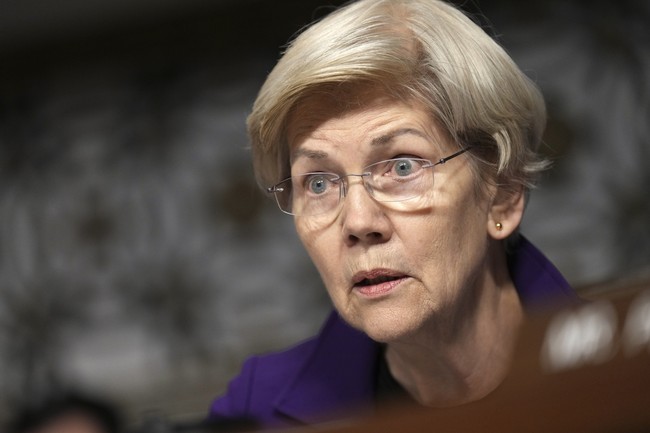
The Consumer Financial Protection Bureau was originally championed by Elizabeth Warren, and she publicly hailed the merger block in 2024 as a “Biden win for flyers.” That earlier praise makes her recent complaints look like convenient backtracking as the economic fallout becomes visible. From a Republican viewpoint, this is predictable: regulators who boast about protecting consumers often end up shrinking choice and raising prices when their policies push firms out of the market.
Warren and the Biden administration had argued the deal would raise prices and reduce competition among airlines. That was their rationale at the time, and it framed the legal strategy that followed. But when Spirit failed and passengers faced fewer routes and potentially higher fares, the talking points suddenly shifted toward blame and regret.
Spirit had filed for bankruptcy twice in 2024 after the merger fell apart, an outcome that underscores how fragile low-cost carriers can be without strategic options to scale or merge. The loss of a budget competitor doesn’t just hurt a company; it hurts everyday travelers who relied on cheaper flights to visit family, commute, or tour the country. Conservatives argue the administration’s posture against consolidation ignored practical realities of an industry where scale can be necessary for survival.
When Spirit folded, Warren complained about reduced choices and tried to pin blame on others. That move did not sit well on social media, where users dug up her earlier lines celebrating the merger block. The result was a swift and public correction from the crowd, amplified by Community Notes that emphasized the contradiction in her stance.
She even tried to blame the judge who denied the merger, seemingly forgetting what she had said before. Social platforms and users highlighted the inconsistency, showing how political messaging can unravel quickly when facts are reintroduced. For those skeptical of regulatory activism, the episode is another example of political officials celebrating power in the abstract while ducking responsibility when consequences hit real people.
Warren was shredded on X for her shameless spin. Public responses piled up and Community Notes called out her earlier claim that it was a “Biden win for flyers,” pointing out the current reality of fewer flights and less competition. Safe to say, she was ratioed into oblivion.
Current Transportation Sec. Sean Duffy weighed in with a message aimed at his predecessor and the broader regulatory mindset. Republicans view this as a teachable moment: aggressive anti-merger policies can backfire and strip consumers of low-cost alternatives. The practical takeaway for conservative policymakers is to favor market-driven solutions and avoid reflexive interventions that can decimate competition instead of preserving it.



Add comment