
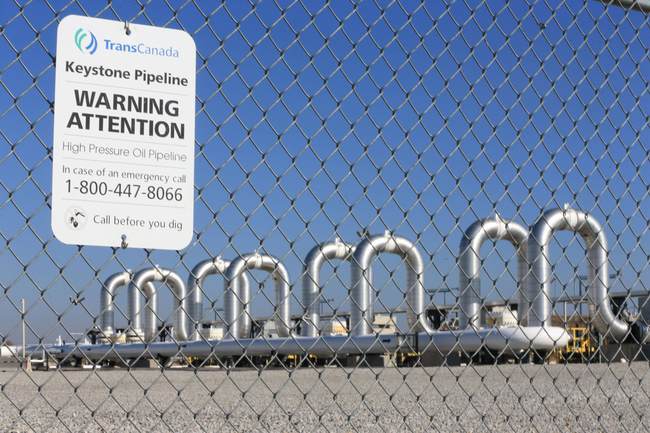
President Trump approved a cross-border permit for the Bridger Pipeline Expansion, dubbed “Keystone Light” by critics, a move that reopens a major Canada-to-U.S. oil route and reignites debates over energy, the environment, and national priorities.
On Thursday, the administration authorized the international crossing for a pipeline project that will carry up to 550,000 barrels of oil per day from Canada through Montana and Wyoming. The permit clears a key federal hurdle that previously stopped similar projects, and company officials expect construction to move forward pending state and other federal clearances. This decision shifts the conversation from stalled projects to practical questions about how oil is transported in America.
The Bridger Pipeline Expansion is proposed as a roughly 650-mile conduit that would link into existing systems, moving a substantial share of North American crude. That volume is significant—about two-thirds of what the long-contested Keystone XL would have carried at peak capacity. Supporters frame this as restoring sensible energy infrastructure and supply reliability for the United States.
Opponents argue the move repeats past controversies and threatens land and water near pipeline routes, with communities, conservation groups, and Indigenous leaders speaking out in force. Those critics say the project mirrors earlier fights and warn of potential spills and long-term environmental harm. Their protests are likely to continue as state-level permits and environmental reviews proceed.
President Donald Trump granted a key approval Thursday for a major new oil pipeline from Canada into the U.S. that’s been dubbed “Keystone Light” over its similarities to a contentious project blocked by the Biden administration.
The three-foot-wide (1 meter) Bridger Pipeline Expansion would carry up to 550,000 barrels (87,400 cubic meters) of oil a day from Canada through Montana and Wyoming, where it would link with another pipeline.
The pipeline needs additional state and federal environmental approvals before construction, which company officials expect to start next year. Environmentalists hope to stop the project over worries that the pipeline could break and spill.
At peak volume, the 650-mile (1,050-kilometer) pipeline would move two-thirds as much oil as the better-known Keystone XL pipeline that got partially built before President Joe Biden, citing climate change, canceled its permit on the day he took office in 2021.
There is a practical case for pipelines: they are statistically safer for moving large volumes of oil than rail or truck, based on incident rates per billion ton-miles. Pipelines typically show fewer spills and lower injury rates for workers when compared to other transport modes, which is a core argument from industry and many energy policy experts. For a resource that fuels heat, transportation, and countless industrial products, the efficiency question matters.
Beyond raw numbers, the broader economic angle is that petroleum remains embedded in modern manufacturing, medicine, and consumer goods. Plastics, lubricants, adhesives, and pharmaceutical precursors all trace back to hydrocarbons; disruptions to supply chains have ripple effects across the economy. Those connections shape why many policymakers see pipeline capacity as strategic infrastructure, not just fuel logistics.
Environmental concerns are real, and opponents are right to press for rigorous oversight, emergency response planning, and strong spill prevention measures. The debate is often cast in stark moral terms, but the technical controls and monitoring systems for pipelines have improved over decades. That said, regulators and companies will face intense scrutiny as permitting continues and construction planning advances.
Public reaction mixes protest camps and local resistance with industry optimism and political backing. Some activists warn of lasting damage to land and water, while supporters emphasize jobs, energy security, and lower transport risk compared with truck or rail. Expect legal challenges and state-level hearings to shape the project timeline in the months ahead.
Politically, the permit signals a broader shift in federal posture toward energy development and cross-border infrastructure. For supporters, it’s a corrective to previous cancellations and a move toward greater domestic control over energy flows. For critics, it resurrects an old fight and highlights the ongoing tension between resource development and environmental stewardship.
What happens next will depend on state approvals, environmental reviews, and how aggressively opponents pursue litigation and public campaigns. Construction is not immediate and will require more permits and compliance checks, which gives both sides time to make their case. Meanwhile, the reality remains: oil will be transported whether by pipeline, rail, or truck, and policymakers must weigh risks, costs, and national interests.
“We know that if this project goes through, our land and our water are in danger. Our future is in danger,” warned Krystal Two Bulls, one of many community, conservation, and Indigenous group leaders speaking out after President Donald Trump granted a cross-border permit to what critics called “nothing more than an attempt to resurrect the unpopular Keystone XL pipeline.”
Voices on both sides will now argue over how to proceed, what safeguards must be required, and how to balance energy needs with environmental protection. The permit clears a major federal step, but it does not end the fight; it simply moves the controversy to the next stage of permitting and public debate. As regulators and local officials weigh additional approvals, the project’s fate will depend on a mix of legal, technical, and political outcomes.


Add comment