
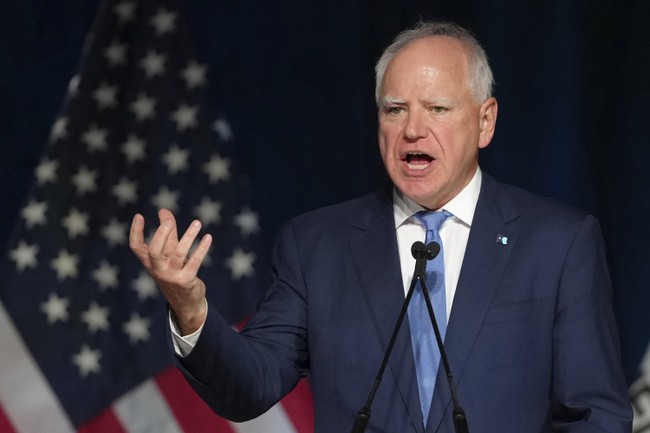
Governor Tim Walz addressed the public after an anti-ICE attack in Minneapolis that left a woman who allegedly tried to run over an agent shot and killed, and he tied the incident to broader protests, the National Guard, and federal immigration enforcement.
Minnesota Governor Tim Walz held a press conference Wednesday afternoon to respond to a violent incident targeting Immigration and Customs Enforcement agents. He framed the situation as an expression of public “anger” and discussed the state’s plans for the National Guard if demonstrations turn violent. His remarks mixed sympathy for protestors with criticism of federal enforcement and invoked controversial comparisons to past unrest. Republicans will point out that his rhetoric risks excusing violence while shifting blame onto federal authorities.
Walz repeatedly emphasized that he shares the “anger” some Minnesotans feel, but he also took aim at unnamed actors he said “want a show.” At the same time he praised people who “always” protest peacefully. Those choices of words matter because they shape whether protests are treated as legitimate dissent or excuses for lawlessness.
He also attempted to reframe the chaotic summer of 2020 by portraying those events as nonviolent, a claim many on the right call revisionist. The governor’s description of past unrest as peaceful clashes with the public perception of burned businesses and attacks on officers. That disconnect fuels distrust between state leaders and residents who felt unsafe during those months.
Walz urged Minnesotans to “speak up to this administration of how wrong this is,” calling protest a “patriotic duty” while insisting it remain “a peaceful resistance.” Those words are politically calculated, appealing to voters who value civil protest while simultaneously trying to distance his administration from criminal acts. Republicans argue that praising protest in the abstract is different from taking responsibility when protests escalate into assaults on federal officers.
The governor warned that the Minnesota National Guard could “be deployed” if rallies turn violent, and he made a point of stressing that the Guardsmen answer to his command rather than federal control. That assertion is meant to reassure locals worried about federal intervention, but it also underscores a standoff over jurisdiction and authority. For conservatives, the practical concern is protecting law-abiding citizens and officers, not enabling mobs to test law enforcement limits.
Walz described part of the Guard’s role as potentially shielding residents from what he called “a rogue federal agent” and said he “want[s] to be very careful” in how he uses state forces. Using that phrasing shifts attention away from the perpetrator’s actions and onto who should wield power. Republicans worry this framing could encourage political theater instead of concrete protection for victims and enforcement personnel.
South Dakota Secretary Kristi Noem publicly pushed back against Walz, accusing him of ridiculing ICE and pointing to the broader costs of federal programs and what she described as vilification of law enforcement. Her message resonated with voters who believe leadership should defend officers and enforce the law without bowing to political pressure. Conservatives view the current rhetoric as part of a pattern that blames federal agencies while minimizing violent acts against them.
Walz went further in his criticism of the Trump Department of Homeland Security and ICE, placing blame for the woman’s death squarely on federal policy choices and paraphrasing a line from the McCarthy hearings. That rhetorical move links modern enforcement disputes to historical battles over authority and oversight. Republicans are likely to see it as theater that distracts from accountability for attacks on agents.
He also declared Minnesota had had enough “help from the federal government,” a blunt statement that signals a deeper push for state control over immigration and public safety decisions. For those favoring a stronger federal role in border and immigration enforcement, this signals a growing divide in how states and Washington interact. The practical consequence could be a clash over resources and who carries legal responsibility for protecting both residents and officers.
The governor’s remarks leave open the question of how Minnesota will balance protecting peaceful protest with preventing violence against federal personnel. Republicans will argue that defending law and order, supporting officers, and ensuring accountability should come before political narratives that shift blame. As the situation develops, the tension between state control and federal enforcement will remain central to debates over public safety and responsibility.

Walz knows that his days are coming to a end investigations are going to show corruption that he created.
This renegade Criminal Politician Walz has the gall and outright insanity to make this remark as stated here and I quote; “At the same time he praised people who “always” protest peacefully.”
The Summer of 2020 RIOTS in Minneapolis when buildings were burned and people actually got attacked, beaten, raped and even murdered; which at the time Walz did absolutely NOTHING about, as he didn’t even activate the National Guard to prevent or quell any violence! But yet he also just said “the National Guard answer to him” which proves definitively that he wanted the violence to ensue and is no leader, but is rather a puppet for the Radical Left and Globalist Cabal! I go by track records when it comes to public figures or athletes! This Clown Act has a most dismal and anything but successful record, proving he can’t be trusted with running and maintaining the order in a barroom let alone an entire state!
Hurry and arrest him for his numerous crimes and preferably place him before a Military Tribunal at GITMO to try him for Treason!