
U.S. special operations forces seized a Russian-flagged supertanker in the North Atlantic after a weeks-long chase, a decisive action that signals Washington will enforce sanctions and protect maritime order even when Moscow pushes back. The operation followed an earlier Coast Guard attempt in the Caribbean and involved coordinated air and naval assets, shadows by Russian vessels, and tense diplomatic exchanges. This article lays out what happened, how partners and adversaries reacted, and why the move matters for U.S. strategy and deterrence.
The incident began when U.S. forces tried to board a stateless supertanker that had been implicated in moving sanctioned Iranian oil. The vessel had changed names and claimed different registrations while trying to evade inspection and enforcement, creating a three-week run that ended with U.S. special operators taking control. This was not a random interdiction; it was the end of a planned, patient effort to stop a ship that was playing games with flags and paperwork to mask illicit activity.
The ship’s registration had expired and it then carried a flag the U.S. Treasury had sanctioned for transporting oil that benefited hostile actors. Attempts to board in the Caribbean were thwarted when the vessel fled at low speed, a suspicious maneuver that only heightened concern about who was on board and what its true mission was. That history set the stage for the more assertive action taken later in the North Atlantic, where U.S. assets finally closed in and executed the operation.
While some details remain classified, open reporting makes clear this was a joint, multi-platform effort that included naval cutters, maritime patrol aircraft, and special operations aviation. Aircraft and gunship support provided overwatch and control of the scene, while maritime units executed the boarding and seizure. The coordination and lack of leaks reflect an operational discipline designed to achieve a quick, clean outcome while minimizing diplomatic fallout and operational risk.
The British role in providing staging and surveillance support appears to have been important, even if the United Kingdom learned details after the fact. U.S. forces practiced fast-rope and rescue drils on allied bases, and strategic airlift and special operations helicopters were in theater. Those preparations underscored a clear message: the U.S. was ready to act decisively and had the reach to do so in cooperation with willing partners.
American forces have been training for extractions after amassing military aircraft in Britain, as President Trump threatens strikes and annexations across the globe.
Special operations soldiers were seen rappelling from CV-22B tilt-rotor Osprey aircraft in a fast-rope and rescue exercise at a British airbase on Tuesday.
The drill took place shortly after a fleet of at least 14 C-17 Globemaster transport aircraft and two heavily armed AC-130J Ghostrider gunships landed at three RAF bases in Suffolk and Gloucestershire since Saturday.
The Globemasters are rumoured to have been carrying at least five MH-60M Black Hawk helicopters and one MH-47G Chinook, which are used for special forces operations. The helicopters have been spotted in British hangars, according to unconfirmed reports.
Russia responded to the situation by dispatching surface vessels and a submarine in an attempt to escort the tanker, a show of force that Moscow hoped would deter intervention. Russian state media even circulated footage suggesting close shadowing by a U.S. Coast Guard cutter, a narrative intended to paint the encounter as confrontational. Those moves did not stop the U.S. from completing its mission, but they did raise the political temperature and underscored the risks of maritime coercion.
Russian officials issued statements demanding humane treatment for any Russian crew members and warning about interference, a predictable diplomatic posture that tried to frame the seizure as an affront to sovereign rights. At the same time, unofficial reactions were louder and sharper, reflecting the domestic political theater in Moscow. The mix of restrained official language and strident unofficial commentary highlighted how Moscow uses both diplomatic channels and propaganda to shape the story.
A spokesman for the Russian Ministry of Foreign Affairs told the official TASS news agency it was “closely following” the situation.
“Taking into account reports that there are Russian nationals among the crew, we demand the American side ensure proper and humane treatment of them, strictly observe their rights and interests, and put no obstacles for their soonest return to the motherland,” the ministry said.
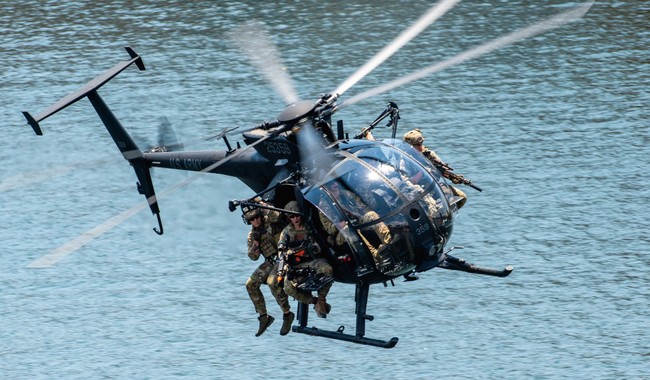
Images and video emerging after the action showed aviation assets and small helicopters approaching the vessel, consistent with a classic special operations insertion and maritime interdiction profile. The presence of certain rotary-wing types points toward elite aviation units that routinely support high-risk boardings and extractions. That technical detail matters because it signals the capability used and the seriousness with which commanders pursued this target.
Strategically, the seizure sends a clear message to the “dark fleet” and the regimes that enable it: the United States will enforce sanctions and act against illicit oil networks, even when adversaries attempt to hide behind flags or national posturing. This was a demonstration of will and capability designed not only to stop a single shipment but to deter future attempts to exploit the maritime domain for malign purposes. It shows that decisive action, backed by coordinated assets and allied support, can preserve the integrity of sanctions and international norms.
Domestically, this episode reflects a policy of muscular enforcement and refusal to be intimidated by Russian or Iranian posturing. The operation was structured to avoid public leaks and to deliver results, a model that supporters argue restores credibility to U.S. deterrent action. For those concerned with lawless energy networks and geopolitical coercion, the message was unmistakable: America will act when necessary to defend its sanctions and strategic interests.



Add comment