
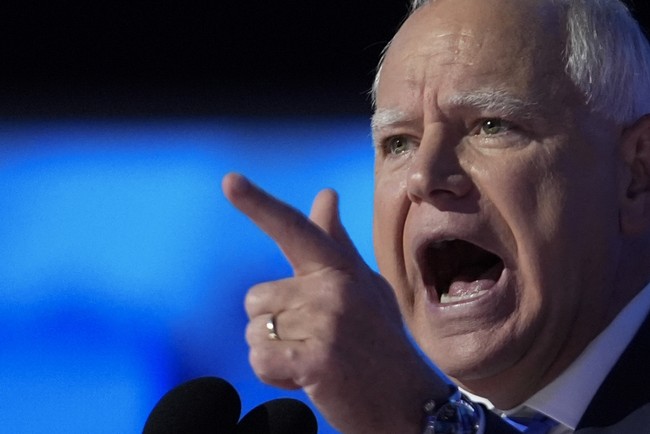
It’s Official – Tim Walz Won’t Seek Reelection As His Political Career Goes Down in Flames
Quick summary: Governor Tim Walz announced he will not run for reelection amid an expanding fraud scandal tied to state social services, viral independent reporting highlighted empty, funded daycares, the Associated Press confirmed his decision, and speculation is growing about potential Democratic replacements such as Sen. Amy Klobuchar.
Minnesota Governor Tim Walz has quietly ended his campaign plans, citing an “extraordinarily difficult year for our state” and saying he “can’t give a political campaign” his all. The decision follows intense scrutiny of social services programs and a wave of reporting that put a spotlight on alleged misuse of taxpayer funds. Conservatives and many voters see this as the natural fallout from failed oversight and accountability in state government.
Independent video reporting drove much of the outrage, showing purported daycare sites that appeared nonoperational despite receiving government money. The footage drew huge attention and raised tough questions about how funds were distributed and who was held accountable. That kind of media spotlight can force political leaders to choose between fighting a campaign and confronting an unfolding scandal.
Statewide probes into fraud in social services have intensified, and the optics were devastating. Millions in taxpayer funds tied to programs serving immigrant communities have come under scrutiny, sparking a debate about program integrity and administrative competence. Critics argue the administration should have had stronger safeguards to prevent bad actors from gaming the system.
Walz has been reeling for weeks now from ongoing fraud probes plaguing Minnesota’s social services programs. That alleged fraud exploded after a viral video, extensively covered here, reportedly showed empty “daycare” facilities with misspelled signs, locked doors, and no trace of children.
Numerous daycares in the 42-minute video from independent videographer Nick Shirley—which has been viewed over 137 million times—appear to not be operational, despite millions in taxpayer funds flowing to them.
The Associated Press reported Walz’s announcement and quoted his explanation that he could not devote the time and energy a campaign demands while the state faces these problems. For voters focused on results, that admission reads like a concession of misplaced priorities and a tacit acknowledgment that the administration was overwhelmed. Republicans point to this as evidence that accountability matters and that mismanagement has real political costs.
Walz framed part of the blame externally, pointing fingers at national figures and opponents. He said, “Donald Trump and his allies – in Washington, in St. Paul, and online – want to make our state a colder, meaner place,” accusing them of attacking neighbors and politicizing relief efforts. To many on the right, that rhetoric reads like deflection instead of recognizing the root failures that allowed fraud to occur.
Walz also insisted that his choice was driven by a desire to defend Minnesota residents rather than pursue political ambitions, saying, “Every minute I spend defending my own political interests would be a minute I can’t spend defending the people of Minnesota against the criminals who prey on our generosity and the cynics who prey on our differences.” That line aims to position him as focused on service, but it does not answer why oversight failed under his watch.
Political consequences kicked in fast. Within hours of confirmation, Democratic circles started speculating about possible replacements and who could steady the ticket. Sen. Amy Klobuchar’s name surfaced as a potential candidate, with one person close to her saying she is considering a run but has not made a final decision. That kind of scramble highlights how quickly party calculations shift when an incumbent withdraws.
The governor is expected to hold a press conference to address the situation publicly and explain next steps for his office and the state. That event will be closely watched for details about investigations, administrative changes, and any personnel moves designed to restore public confidence. For opponents, it’s a moment to press for firmer reforms and clearer accountability measures.
What voters will remember most is the sequence: whistleblowers and independent journalism raised concerns, a viral video amplified the issue, and investigators and the press followed with scrutiny that ultimately shaped political choices. That dynamic underlines a broader lesson for public programs: transparency and oversight matter more than rhetoric. Republicans will argue this episode proves the need for tougher controls and strict audits of taxpayer-funded programs.
The fallout is not merely political theater; it affects trust in government and the real people served by these programs. As investigations continue, lawmakers will face pressure from constituents demanding answers and solutions. The state’s next moves—whether legislative fixes, administrative shakeups, or criminal prosecutions—will determine if Minnesotans can regain confidence in how public funds are managed.
Walz still should be investigated