
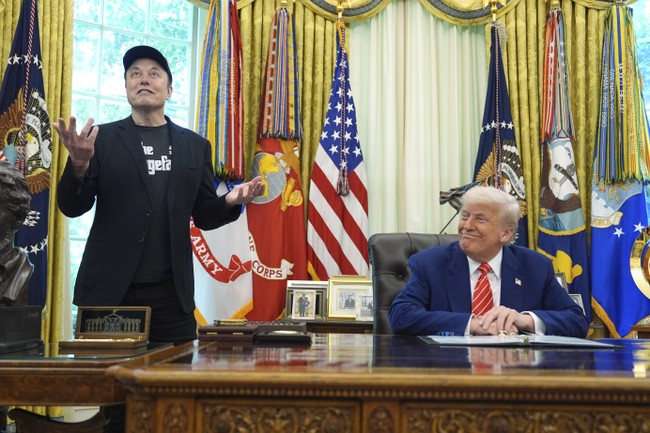
President Donald Trump met with Elon Musk for what was called a “lovely” dinner at Mar-a-Lago during a weekend of major U.S. activity related to Venezuela, and that meeting has already produced policy moves and political momentum, including Musk’s pledge to provide Starlink service to Venezuela and indications of increased support for Republican candidates in 2026.
The timing of the dinner stood out because it happened amid a high-stakes moment on the international stage. That Trump and Musk took the time to meet signals the relationship matters to both the administration and the tech CEO. For conservatives, the pairing reads as a strategic alignment between political leadership and a high-profile private-sector actor who has shown willingness to back the GOP publicly.
Observers note the meeting seems to be more than photo ops and small talk; it has real consequences. Musk has openly criticized the political left before, including the line “America was toast if the radical left wins.” Those comments underscore why his overtures to Republican figures matter: his influence and resources can shift narratives and help campaigns.
After the dinner, Musk made a tangible announcement: he committed to providing Starlink internet service free in Venezuela until Feb. 3. He posted that move as “In support of the people of Venezuela,” which will likely help opposition forces and civilians who need reliable communications. Delivering connectivity during crises has been part of Musk’s pattern of deploying Starlink to areas in need, and this instance fits that playbook while aligning with U.S. interests in the region.
In private and public comments since the meeting, both men have reinforced a friendly, productive tone. President Trump praised Musk as “great” and described him as “80 percent super genius, 20 percent he makes mistakes.” Trump added that Musk was “well-meaning,” language that reads as both personal endorsement and a nod to Musk’s occasional public missteps.
For Republican strategists, the visit and Musk’s subsequent moves are welcome signs. Reports indicate Musk is financially supporting Republican candidates and plans to increase that support across the 2026 cycle, which bolsters the party’s ability to compete in competitive districts. The potential of significant private funding from a figure like Musk changes campaign math and media conversations, especially when paired with high-profile presidential backing.
The political value is both symbolic and practical. Symbolically, a sit-down at Mar-a-Lago paints a picture of unity between a top GOP figure and a billionaire who commands global attention. Practically, free Starlink service in Venezuela helps real people and improves information flow at a pivotal time, creating tangible benefits that align with a policy aim to support democratic forces and humanitarian needs abroad.
Parts of the coverage have focused on how the renewed rapport rebuts narratives that tech leaders must side with the left. Musk’s public posture and private actions suggest a different reality, especially when he uses his platform to back candidates or provide infrastructure for populations under strain. For Republicans, that combination of media reach and concrete support is a strategic advantage heading into the next election cycle.
The aftermath of the meeting also included light moments that humanized both men, with Musk sharing memes and playful exchanges that filtered into the public sphere. Those moments reduce the distance between political leadership and influential private-sector figures, making cooperation more publicly palatable. They also serve a political purpose by reinforcing a narrative of allies coming together against common ideological opponents.
Beyond politics, the Starlink pledge has real-world implications for Venezuelans trying to maintain communications amid unrest. Reliable internet can provide vital access to news, coordination for aid, and a lifeline for citizens cut off by infrastructure failures. Actions of that kind are easy to explain to voters and can translate into political capital for those associated with the effort.
All of this suggests a renewed alignment between a sitting president and a high-profile tech executive, one that blends policy impact and electoral strategy. The dinner was brief but consequential, and the resulting announcements look set to reverberate in both Washington and Caracas. For Republicans watching the 2026 cycle unfold, this is a development worth tracking closely.


Add comment