
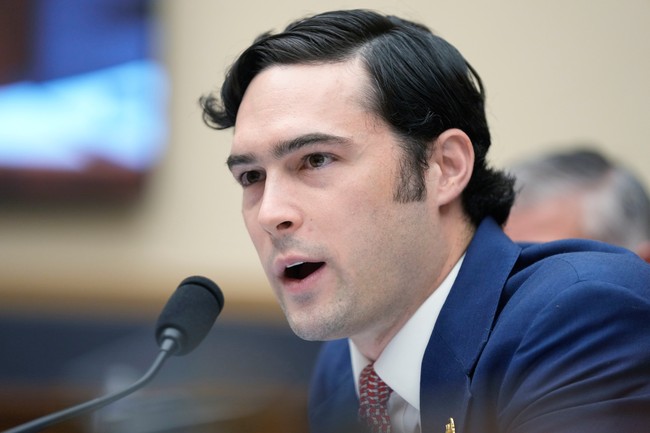
The House Oversight hearing exposed staggering weaknesses in Ohio’s Medicaid home‑health program, showing patterns of billing that auditors say amount to billions in questionable payments and systemic failures that let bad actors profit at taxpayers’ expense.
Ninety‑four Medicaid companies registered to a single Columbus address billed roughly $66 million, according to testimony, and one woman allegedly renamed a janitorial business before billing Medicaid $100,000 in its first month and ultimately peaking near $650,000 a month before leaving the country. Those examples were central to a new task force’s first hearing, convened to examine what investigators and witnesses described as potential fraud on a massive scale. The tone from Republican members was firm: this is not innocent confusion, it’s a pattern that demands accountability. Lawmakers painted this as a failure of systems and will, not just isolated bad actors.
Reporters and auditors who traced the transactions reported storefronts with piles of unopened mail and signs saying “stepped out to lunch” while federal Medicaid payments flowed in. Investigators flagged companies tied to people with prior fraud or theft convictions receiving and directing large Medicaid payouts. Witnesses described a pattern where companies were created, billed for home‑health services, and in many cases never actually provided legitimate care at scale that would justify those sums.
https://x.com/GOPoversight/status/2062170675268276437
Ohio’s auditor testified his office identified more than $9 billion in unsupported or fraudulent public expenditures since taking office, and his State Single Audit highlighted a 15.6 percent ineligibility rate with up to $4.4 billion in fraud exposure tied to Medicaid programs. He also said his team found more than $455 million paid to ineligible recipients in 2020 and another $118.5 million in improper or duplicate payments tied to inmates and deceased individuals in 2022. Those figures framed the hearing: this is not anecdote, it’s data pointing to systemic waste.
Part of the intent behind federal law required an Electronic Visit Verification system, or EVV, to confirm home‑care visits before payments are made, but auditors found widespread circumvention. “Our audit found that approximately 56 percent of home care services were not processed through the EVV system, representing an estimated $1.1 billion of nearly $2 billion in paid claims that were not matched to an EVV visit.” That single finding crystallizes how simple technical safeguards can be ignored when oversight is weak or absent.
Auditors also uncovered troubling enrollment issues, including more than 124,000 Ohio residents concurrently enrolled in another state’s Medicaid program for three consecutive months, which generated over $1 billion in payments to managed‑care organizations. The gaps auditors pointed to include poor interstate data sharing, delayed reporting, and lack of real‑time monitoring—weaknesses that make it easy for duplicate or improper claims to slip through. From a conservative perspective, taxpayers deserve a system that enforces eligibility and prevents waste without expanding benefits or bureaucratic reach.
Republican lawmakers at the hearing emphasized accountability and concrete fixes like increased auditing, better data sharing, and stricter enforcement of EVV requirements. One legislative change highlighted was a law requiring expanded auditing and data sharing between the state’s Medicaid agency and the auditor, a measure born from a state‑level response to apparent failings. The message from the hearing was consistent: uncovering problems is only the start; the harder task is fixing incentives and closing the loopholes that allow abuse to flourish.
Testimony included sharp exchanges over political responsibility, with the lone Democratic witness arguing Republicans had long controlled state government and therefore bore some blame. Republicans pushed back, arguing that pointing fingers should not stop immediate action to clean up the program and stop continued waste. The political back‑and‑forth underscored that policy fixes will require both political will and structural change to be effective.
Even as auditors have been issuing repeated reports since 2019, the state continued to pay, a pattern that frustrates conservatives focused on stewardship of public funds. Lawmakers warned that without stronger enforcement and real‑time verification, the program will remain vulnerable to those seeking to exploit it. The hearing made clear that identifying fraud is necessary, but the priority must be turning those findings into lasting reforms that protect taxpayers and ensure Medicaid serves the people it is intended to help.

Add comment