
Checklist: present the ODU shooting account, highlight cadets’ actions and injuries, include exact quoted testimony, note legal and policy context, and preserve the original video embed token.
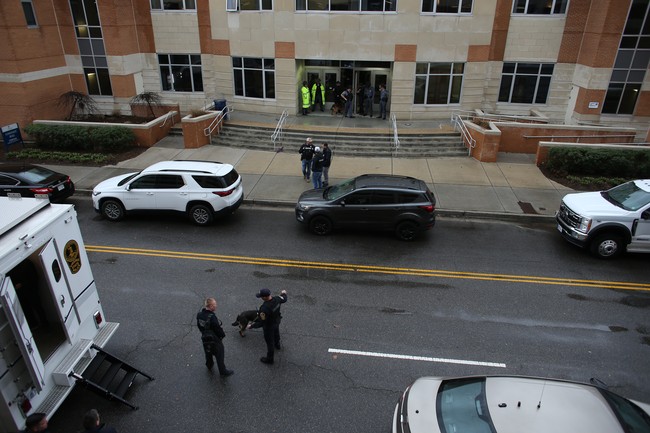
The Old Dominion University classroom attack unfolded fast and brutal, and the cadets and their instructor reacted faster. Their military training showed in decisive moves that stopped a shooter who entered during an Army ROTC session. Several were wounded, one died later, and the classroom became a scene of emergency care and restraint. This article recounts what the cadets and witnesses described and keeps their words intact.
The class was finishing presentations when a man forced his way in and asked if it was an ROTC class. When they confirmed it was, he produced a gun, shouted “Allahu Akbar,” and opened fire, targeting Lieutenant Colonel Brandon Shah. The instructor immediately engaged the attacker physically, and that confrontation drew several cadets into the struggle. Their training and instincts pushed them into action instead of freezing.
In a 17-minute video posted to the official Army ROTC channel, the cadets describe the melee and their response in close, sometimes blunt detail. Their accounts show training translated into split-second decisions under fire, from disarming to administering combat care. The footage and interviews document the chaos, the bravery, and the injuries that followed the assault.
The instructor, Lieutenant Colonel Shah, lunged and began wrestling with the gunman, and cadets quickly moved to assist him. Cadet Louis Ancheta described running up with a pocket knife after Shah had been shot, and Cadet Jeremy Rawlinson said he followed another cadet across the room to back him up. The struggle included multiple students grappling with the assailant until the firearm was controlled. The cadets turned from students into first responders on the spot.
“With my pocket knife, I open it,” said Cadet Louis Ancheta, who was awarded a purple heart and meritorious service medal, describing what happened after Shah had been shot. “I run up, and as I’m running up, Colonel Shah lunges at the guy and starts wrestling with him upright.”
Cadet Jah-Ire Urtarte, a Military Science IV classmate who had been sitting in the front row, said that, if Shah hadn’t lunged at the shooter, “I wouldn’t be here right now.”
[…]
Cadet Jeremy Rawlinson, also awarded a meritorious service medal, said he “saw a cadet in front of me, I saw his feet jump over a table and rush up, and so I said to myself, ‘well, if he’s going, I’ve got to back him,’ and so, next thing I know, I pop up. I run around the table, and then all I see is, I see Col. Shah grappling with the guy, some other cadets with the gun, so I rush up there, help.”
Reineberg said that by the time he got up there, three to four cadets were on top of the gunman, but they were on his upper torso, so he had his hand on the firearm pointing straight up and away from him, “so I grabbed it and pushed it in the direction of the wall.”
Rawlinson and Ancheta used knives during the struggle and helped to subdue the attacker while another cadet wrestled the gun away. Once the attacker was restrained, the cadets shifted into medical roles and began treating wounds. Ancheta later realized he had himself been shot and asked for help; the cadets administered care amid the emergency until paramedics arrived.
Paramedics found Lieutenant Colonel Shah still alive and talking, according to one of the cadets who carried him, but his injuries proved fatal days later. Reineberg said he had caught Shah when he fell and located a gunshot wound to the upper right thigh. Shah, who engaged the attacker to protect his students, is described repeatedly by cadets as heroic.
Reineberg went to Shah, who he said was still alive when paramedics arrived. Shah had tried to stand up but fell back into the wall.
“I caught him on the way down and I found a gunshot wound to the upper right thigh,” Reineberg said.
“I gave Col. Shah over to paramedics alive and talking,” Reineberg said. “The next few days following this were hard, really, really hard.”
The cadets now report going to therapy to process the attack and their responses. One described the counselor’s observation that none of them froze under pressure, and another reflected on the determination they felt in the classroom that day. The emotional and physical toll is ongoing for students who faced an active shooter in what had been a routine lecture.
Cadet Oshea Bego described talking to a counselor, who noted that, in the face of tremendous adversity, they all took action.
“He said the most important thing is that none of us froze,” Bego said. “We all got help, aided Col. Shah, subdued the assailant, started calling numbers, getting people to their homes. I think there’s a level of determination, and in talking to a lot of my classmates, even that day, we all kind of looked around and was like, ‘We’re still down for this.’”
In the wake of the shooting, questions were raised about how the attacker had enrolled despite a past federal conviction for providing material support to ISIS. The debate turned to state policy that limits what public colleges can ask about applicants’ criminal history. That policy, passed in 2022, has been cited as a factor in how his background went unnoticed.
The cadets consistently point back to their instructor as the catalyst for stopping greater loss of life, saying he put himself in harm’s way. “He’s a hero,” Ancheta said. “He lunged at him, he wrestled with him. He tried to save us.” Their testimony and the available video make clear how quickly ordinary students were thrust into combat and emergency care, and how their actions shaped the outcome that day.

Add comment