
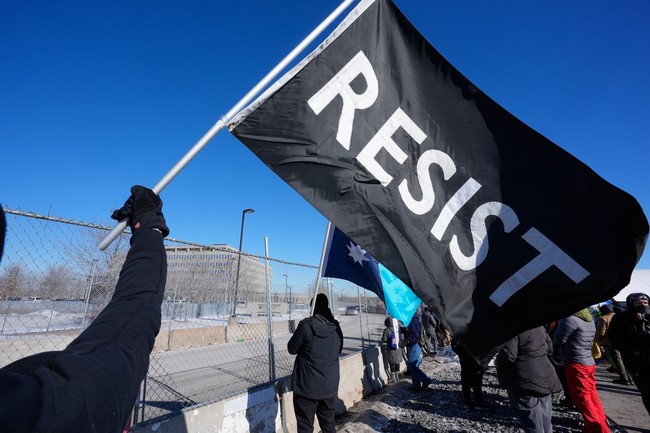
The latest clashes between anti-ICE protesters and Minnesota law enforcement show a shift in how authorities are handling demonstrations, with more decisive removals, arrests at a federal building, and a tense protest at the governor’s mansion aimed at Tim Walz. Video from street confrontations and the Whipple federal building incident captures chaotic actions by the demonstrators and a forceful response from police and state patrol. The crowd’s rhetoric and tactics, including attacks on vehicles and verbal assaults on officials, fueled a crackdown that supporters of law and order view as overdue. This piece walks through the key moments, what unfolded on the ground, and how protesters reacted to the governor’s cooperation with federal border enforcement.
In Minneapolis, activists tried to establish a so-called checkpoint in an intersection, and officers moved to dismantle it with a firm approach. Video shows officers pulling chairs away as protesters attempted to sit in the roadway, creating a scene of shouted accusations and chaos. Protesters hurled epithets and compared police to “KKK,” while officers maintained control and cleared the intersection for public safety and traffic flow. The interaction suggests local police are no longer tolerating street blockades that disrupt neighborhoods and endanger motorists and pedestrians.
The pattern of escalation continued at the Whipple federal building, where demonstrators engaged in bizarre and provocative behavior aimed at law enforcement and their vehicles. People in the crowd threw explicit objects at officers and the parked cars that often accompany defensive perimeters, turning a protest into an assault on property and personnel. Body camera and bystander footage caught crude, targeted attacks that crossed from civil disobedience into criminal conduct. That kind of behavior left law enforcement little choice but to treat the scene as a public safety emergency and move in to protect federal property.
Amid the melee at Whipple, protesters even attacked the car of someone they claimed was on their side, a striking example of the confusion and poor coordination within the crowd. As the wrongly targeted person protested he was part of the group, rioters continued to affix and throw objects at the vehicle, turning internal chaos into a spectacle that undermined any political message. These misdirected assaults embarrassed organizers and highlighted the risk of letting volatile crowds act without clear leadership or restraint. The footage of that mistaken attack underscores how unruly demonstrations can harm allies as easily as opponents.
The State Patrol’s response at the federal building was decisive: an unlawful assembly declaration followed by mass arrests when the crowd refused to disperse. Officers executed coordinated moves to detain numerous participants, breaking up what had become a dangerous and unlawful situation. Those arrests send a message that repeated violations, property attacks, and threats to public order will be met with enforcement rather than permissive oversight. The swift action contrasts with earlier, more permissive approaches and reflects a tilt toward restoring order in the face of escalating tactics.
After those confrontations, a faction of the protesters gathered at the governor’s mansion to criticize Gov. Tim Walz for cooperating with federal border enforcement efforts led by the administration. The demonstrators accused him of betraying immigrant advocates by allowing Operation Metro Surge to operate locally and demanded sweeping policy changes. The crowd’s rhetoric was blunt and confrontational, including a speaker with a megaphone pressing the governor to refuse political compromise on the operation.
One speaker leveled a crude challenge at the governor when they shouted, “We hope this is the moment you finally grow a pair,” a line that captures the anger and contempt many in the crowd expressed. That sort of diction and public shaming are aimed at forcing a political posture rather than offering a constructive path forward for policy or public safety. From a law-and-order perspective, such confrontations reveal the tension between activists demanding open borders or amnesty and elected officials who must balance public safety, legal enforcement, and local responsibilities. The clash at the mansion is part of a broader debate over the proper role of state cooperation with federal immigration operations.
The events in Minneapolis and at Whipple show how unruly demonstrations can spiral quickly from protest into criminal conduct, prompting a stronger police response. For residents and businesses near protest sites, the shift toward decisive enforcement offers immediate relief from blockades and property attacks. Supporters of firm enforcement argue that protecting public order and upholding the rule of law are essential, and that cooperation between state and federal authorities is a legitimate and necessary tool. These incidents have already reshaped expectations about how similar demonstrations will be handled in the future.

Add comment