
Checklist: call out hypocrisy, explain the ID requirement at the event, quote the opposing statement accurately, note the broader policy fight over voter ID, and flag political implications for the Georgia Senate race.
The story here is simple and sharp: Senator Jon Ossoff, a vocal opponent of voter ID laws, is asking attendees to show government-issued identification to enter his own campaign event. That requirement came in an emailed RSVP that told people to be ready to show ID matching the RSVP list, either printed or on a phone. The contrast between public opposition to voter ID legislation and insisting on ID for access to a political rally has prompted ridicule and criticism from Republicans watching the 2026 Senate race. This piece lays out the facts, quotes the critics verbatim, and places the episode in the larger fight over election security.
Democrats often argue against voter ID on grounds they say involve access and fairness, but actions speak loudly in politics. Ossoff’s campaign announcement about event security requires an ID check, which is standard at many events but notable when the same politician opposes ID safeguards for voting. Voters and opponents are treating this as a textbook example of saying one thing on policy while doing another in practice. It’s worth watching how this plays in a swing state where election integrity is a front-burner issue for many voters.
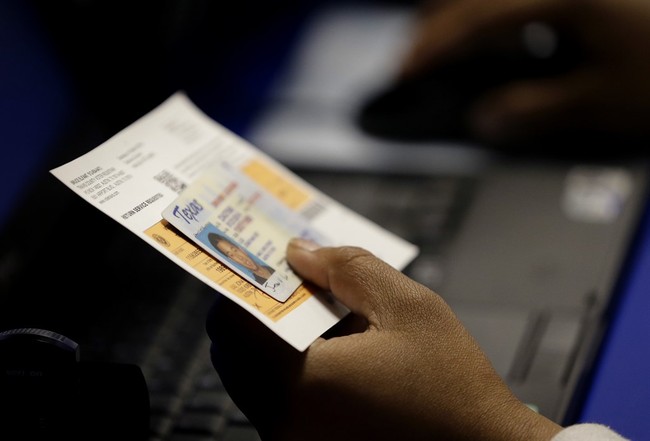
The requirement itself was straightforward: the invitation instructed attendees to have an ID that matches the RSVP list and arrival instructions. That kind of checkpoint is common for ticketed or list-based events, and campaigns often cite security as the reason. But when the public position of the officeholder explicitly resists government-issued ID as a voting requirement, that difference becomes political fuel. Opponents are seizing the moment to argue that this is not merely a harmless security step but an illustrative contradiction.
Republican candidate Mike Collins, who is running in the GOP primary for the seat Ossoff holds, has pointed out the mismatch between words and practice. Collins released a statement criticizing the requirement and framed it as typical behavior from Ossoff, suggesting voters should be skeptical of such double standards. The criticism aims to shift attention from policy nuance to character and consistency, which is often decisive in campaigns. That strategy plays to voters who care about both security and plain-speaking accountability.
“Typical Jon Ossoff to say one thing and do another. It’s ridiculous that Jon Ossoff would require a government ID to listen to him speak about why you shouldn’t need a government ID to vote,” Collins said in a statement to Fox News Digital.
Ossoff has publicly opposed the Safeguard American Voter Eligibility Act and similar proposals that would require government-issued identification for voting. He introduced what he called the Right to Vote Act, a measure described by critics as making it harder for states to implement voter ID rules. The senator framed those efforts as protection against disenfranchisement, claiming the legislation in question is a partisan move to keep eligible voters from casting ballots. His rhetoric on that front has been forceful and consistent in public remarks and filings.
In 2025 Ossoff said about the measure: “This is a nakedly partisan, totally unworkable, bad-faith bill cynically intended to disenfranchise millions of eligible voters.” That quote captures his stance and underlines why the ID requirement at his event is drawing pointed commentary. Opponents are not disputing his right to set security rules at a private campaign event, but they are highlighting the political optics. For many voters the optics matter as much as the policy, especially in a tight Senate contest in Georgia.
The wider debate over voter ID ties into broader conversations about how elections are run and how to protect both access and integrity. Supporters of voter ID argue it prevents fraud and protects confidence in outcomes, while opponents warn certain ID regimes can create barriers for some groups. That disagreement is at the center of federal and state proposals, and it is one reason a single high-profile episode like this can escalate into sustained political friction. Expect both sides to use this moment to reinforce their larger narratives going into key primaries and the general election.
Campaigns across the board will gauge how voters respond to perceived inconsistencies between public policy positions and private practices. In Georgia, where margins have been tight and voter sentiment about election security runs high, small incidents can have oversized effects. Republicans will press the point that asking for ID at a political rally while opposing it for voting is evidence of a double standard. Democrats will defend their policy arguments on access and inclusion and insist on the security justification for event checks.
Either way, this is now a story that could stick in the minds of voters deciding between competing visions for how elections should be run and who is best suited to represent Georgia in the U.S. Senate. Watch how both campaigns shape the narrative and whether the episode shifts any undecided voters’ views as the 2026 cycle progresses.

Add comment