
The Supreme Court’s 6-3 decision declared that former President Trump exceeded his authority by using the International Emergency Economic Powers Act to impose global tariffs, sparking dissent from three conservative justices and raising messy questions about refunds and next steps for the administration.
Read It: Kavanaugh Goes Off on Fellow Justices in Blazing Dissent, Calls Tariff Decision ‘Illogical’
The Court held that the tariff program enacted under IEEPA was invalid, with a 6-3 majority finding the statute did not authorize the kind of duties the administration imposed. That ruling leaves open whether importers who paid those tariffs will receive refunds, and if so, how the refund process will be managed. The potential for a cascade of lawsuits and complex restitution claims worries conservative critics. From a policy standpoint, this raises immediate questions about presidential tools to respond to unfair trade practices.
The reaction from the political right was swift and pointed, with the former president and his team saying they will pursue other legal authorities to accomplish their trade objectives. Treasury leadership also signaled they would not abandon efforts to address trade imbalances despite the setback. On the ground, businesses and importers now face uncertainty about assessments and potential repayment claims. That uncertainty is what many commenters call a legal and logistical headache for lower courts and agencies.
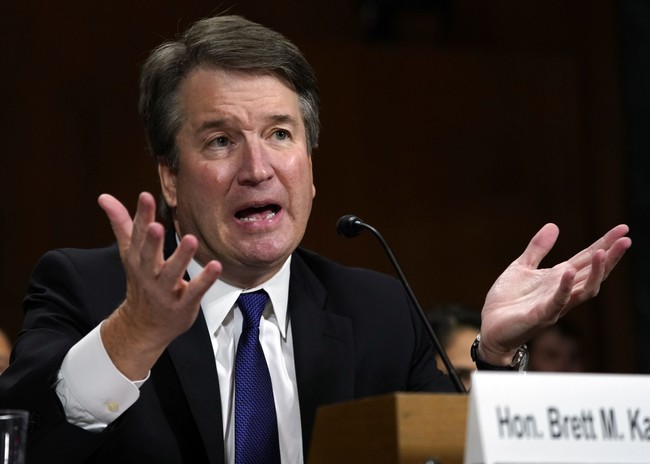
Three conservative justices—Samuel Alito, Clarence Thomas, and Brett Kavanaugh—issued dissents, and Kavanaugh’s opinion was particularly sharp. He argued the majority picked and chose among forms of import regulation in a way that created an arbitrary distinction between tariffs and other measures like quotas or embargoes. Kavanaugh’s approach leaned on a textualist reading of the statute and a historical view of how import regulation has been treated legally. His view is that the law plainly covers tools to regulate imports, and tariffs are within that family of measures.
Kavanaugh, a Trump appointee, said the 6-3 majority cherry-picked ways in which Trump could regulate imports under the International Emergency Economic Powers Act, making what he said was a textualist case that the law already allows similar forms of regulation on imports, including quotas and embargoes. Tariffs are not just in the same category as those but are a “far more modest” alternative to them, Kavanaugh said.
“If quotas and embargoes are a means to regulate importation, how are tariffs not a means to regulate importation? Nothing in the text supports such an illogical distinction,” Kavanaugh wrote.
The Federalist’s Sean Davis added commentary that echoed Kavanaugh’s broader complaint about inconsistency in the Court’s reasoning. His remarks underscored a sense among conservatives that the majority’s logic is hard to reconcile with prior rulings that affirmed broad executive authority in other contexts. That critique is part of a larger conservative frustration with what they see as uneven standards. Below is a related embed of commentary that captures those reactions:
Kavanaugh’s dissent did not stand alone; Alito and Thomas joined him, and Thomas also produced a separate opinion emphasizing similar themes. The dissenters focused on the text, history, and precedent that, in their view, support the use of tariffs under IEEPA in certain emergencies. They warned that the majority’s limiting interpretation creates odd outcomes, such as allowing a total import ban but forbidding even modest duties. That edge-case result is what the dissent calls an incoherent judicial line drawing.
As the [majority of justices] interpret the statute, the President could, for example, block all imports from China but cannot order even a $1 tariff on goods imported from China.
Kavanaugh emphasized practical consequences, flagging the “serious practical consequences” the ruling could unleash when it comes to refunds and litigation. He predicted lower courts will see an influx of suits from importers seeking repayment, and he quoted the oral argument line that the refund process would likely be “a ‘mess.’” That blunt assessment underscores the immediate administrative scramble that could follow a requirement to unwind the tariff regime. It also feeds into a political narrative that the Court’s approach unsettles predictable governance tools.
Kavanaugh said of the “serious practical consequences” of outlawing Trump’s ability to use IEEPA to levy tariffs that the refund process could be a “mess” as lower courts are likely to see an influx of lawsuits from business owners looking for their money back.
“The United States may be required to refund billions of dollars to importers who paid the IEEPA tariffs, even though some importers may have already passed on costs to consumers or others,” Kavanaugh wrote. “As was acknowledged at oral argument, the refund process is likely to be a ‘mess.’”
In response to the ruling, the administration moved quickly to invoke another statutory authority to impose a 10 percent global tariff, signaling this legal fight is far from over. Expect the political and legal battles to continue, with the Left ready to challenge policies the administration pursues and conservatives arguing for broader executive leeway on trade. This back-and-forth will play out both in courtrooms and in the court of public opinion as policymakers and business leaders adapt to the decision. The immediate landscape is one of contested authority, shifting strategies, and mounting legal work for courts and agencies.

What a Bunch of Supreme Assholes in that Supreme Shit Court!
As Trump came back after the TOTAL DISASTER Demoncrap Biden/Harris administration when 20 Million Illegal Aliens were allowed to pour into this country and all the New Green Deal BS Pack of Lies and with the Economy in a shambles; some idiots in that court don’t get it how the Nation was in a State of Crisis and Emergency the likes of which has never been seen before; and they can’t admit that is a absolute appropriate time for the President to step in with Executive Powers to straighten the MESS out before its too late!!! I actually hate many of these so called judges and many of the politicians that think they are rulers when all they are is Hack Lying, Conniving Dirt Bag Criminals!