
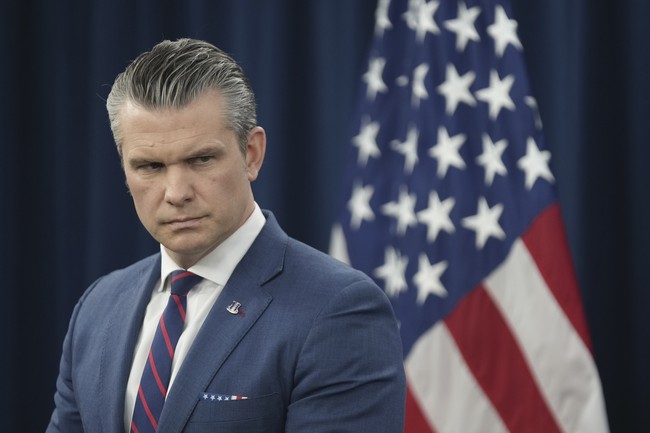
I’ll explain how Secretary Pete Hegseth handled a congressional gotcha on the Iran ceasefire, lay out the exchange with Representative Pete Aguilar, show Hegseth’s clear national-security stance, include the exact hearing quotes, and note the political double standard driving Democrat criticism.
Secretary of War Pete Hegseth walked into a budget hearing with a mission and came out teaching a civics lesson. He faced Democrat Representative Pete Aguilar, who fired a series of confusing questions about Operation Epic Fury and the nature of the ceasefire with Iran. Hegseth responded directly, clarifying what a ceasefire is and why the War Department is focused on stopping Iran from getting a nuclear weapon. The exchange exposed how some questioning leans toward political theater instead of policy clarity.
Aguilar’s line of questioning tried to trap Hegseth on technicalities—pages, points, and paperwork—rather than on the core goal of the effort. Hegseth repeatedly returned to the basic fact: a ceasefire means the shooting stops while talks continue. That plain answer frustrated Aguilar, but it was the honest and practical response needed in a security hearing. Americans deserve straightforward answers about national defense, not a maze of procedural complaints.
Here’s the exact exchange that crystallized the moment. The verbatim transcript below shows Aguilar pressing for documentation and Hegseth refusing to be drawn into evasive ambiguity. The quote lays bare the difference between theater and substance in congressional oversight.
Secretary Hegseth just shut down Democrat Rep. Pete Aguilar’s stuttering gotcha questions with a simple lesson on what the word “ceasefire” actually means.
AGUILAR: “Mr. Secretary, on that same day, April 29th, you testified that the current ceasefire meant that 60 day calendar with the War Powers Resolution was paused. Who were the parties to the ceasefire?”
HEGSETH: “Well, right now we are in that same ceasefire, as of right now.”
AGUILAR: “That wasn’t the question. Who are the parties to the ceasefire?”
HEGSETH: “That would be the United States and the regime in Iran.”
AGUILAR: “How many pages is the ceasefire? What deal points? How do we know that the ceasefire is active or… not active without any documentation?”
HEGSETH: “We know. It’s evident, and the ceasefire is in effect.”
AGUILAR: “But…you…is it pages…is it…15 points? There’s been different points that have moved around. Is there any other…How do we know?…You just trust that President knows whether the ceasefire is active or not active?”
HEGSETH: “As you know, for the most part, a ceasefire means the fire is ceasing, and we know that has occurred while negotiations occur.”
That exchange was followed by Hegseth making the policy objective crystal clear: prevent Iran from obtaining a nuclear weapon. He left no room for equivocation about how the Department of War will act if diplomacy and other tools fail. The message was simple and decisive, which is exactly what voters expect from defense leadership in perilous times. Clarity beats political grandstanding every day when national security is at stake.
Hegseth also addressed accusations the Department was using ceasefires to dodge the War Powers Act, cutting through the insinuation with blunt reality. The secretary explained the full-of-government approach: diplomatic channels, economic tools, and military readiness all play roles. That trio is how you keep Tehran off balance and stop nuclear progress without necessarily launching a broader war. It’s practical, incremental, and designed to protect American lives and interests.
Secretary Hegseth just put Democrat Rep. Pete Aguilar in his place, after Aguilar tried to accuse him of using ceasefires to EVADE the War Powers Act.
AGUILAR: “Is the theory to create more ceasefires or more projects, just to evade the War Powers Act?”
HEGSETH: “The ‘theory’ of the entire case is to prevent Iran from having a nuclear weapon, and if that has to be done kinetically and militarily, the Department of War is locked and loaded and ready to do that.”
“If it happens through Project Freedom, where you move commerce through, if it happens through a negotiated deal.”
“The president was very clear even yesterday, this is actually quite simple, Iran will never have a nuclear weapon one way or another.”
“And we’re here to support as one tool of the whole of government to make that happen.”
Predictably, partisan priorities shape the reaction instead of policy merits. Too many Democrats fixate on whether the current administration gets credit instead of whether the strategy protects the nation. That shows how political identity can override strategic thinking, leaving voters to sort through rhetoric for actual outcomes. The country needs leaders who put results ahead of party loyalty.
President Trump added his own blunt take on the ceasefire’s durability, signaling skepticism about Tehran’s commitments. His language was direct and colorful, reflecting the urgency of the moment and the lack of confidence in Iran’s response. The president’s posture matters because it sets the tone for how strictly the U.S. will enforce red lines. In these high-stakes moments, posture and policy mix to deter hostile actors.
BREAKING: President Trump says the Iran ceasefire is on MASSIVE life support after their dismal response to his offer
“I would say the ceasefire is on MASSIVE life support, where the doctor walks in and says, sir, your loved one has approximately a 1% chance of living.”
“Right now after reading that piece of garbage they sent us. I didn’t even finish reading it.”
Behind the sparring, Hegseth runs a large, complicated operation aimed at neutralizing a brutal regime. He is managing kinetic and non-kinetic tools with the same eye people expect from seasoned leadership. The progress has forced Iran onto the defensive and created leverage for the U.S. and its partners. That leverage is what negotiators and commanders use to keep a dangerous regime from crossing existential lines for the region and the world.
Democrat critiques that focus on optics miss the operational reality on the ground. When the goal is stopping a nuclear Iran, procedural quibbles do not protect the homeland. Leadership that combines toughness and clarity is what the moment requires, and Hegseth delivered both in the hearing. The exchange with Aguilar was a reminder of the difference between governing and grandstanding.
Finally, Hegseth’s back-and-forth with Congress covered both substance and posture, showing how accountability should work without sliding into political theater. He kept his answers short, direct, and tied to mission outcomes, which is exactly what Americans expect from defense leadership. That confident clarity is the right approach when dealing with a regime that cannot be allowed to obtain nuclear weapons.



Add comment