
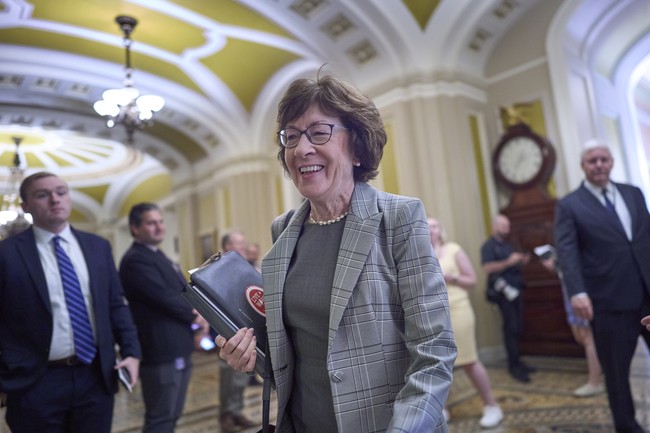
Susan Collins called out Graham Platner for a misleading attack that claims she “voted to send me to Iraq,” and the exchange highlights bigger concerns about his record, past online remarks, and the gap between his messaging and the facts of his enlistment and post-service choices.
Graham Platner has climbed to frontrunner status among Maine Democrats, drawing support from the party’s left flank despite a long trail of offensive Reddit posts and controversial claims. Those posts included deeply troubling comments about sexual assault victims, racial slurs, insults toward rural Americans, and boasts about communist sympathies. Such a record already makes it tough for him to win over independents in a state that values decorum and judgment.
Platner’s campaign narrative that Susan Collins “voted to send me to Iraq” has been repeated by him in interviews and on the trail, but the timeline simply does not back him up. Collins voted for the Iraq war resolution in 2002, while Platner did not enlist until late 2003, months after the invasion had begun. That gap matters when a candidate frames himself as a victim of policy rather than someone who made a choice to enlist.
The anger that I feel is for the people that sent me, who are frankly still the same people who are sending people off right now to be in harm’s way so we can have this stupid war with Iran. Susan Collins voted to send me to Iraq, and she’s also there to help Donald Trump continue this absolutely insane conflict in the Strait of Hormuz.
Platner’s Reddit history, which includes a post where he said he enlisted so he “could kill some people,” complicates the self-portrayal he and his allies lean on about honorable service. Voters see words and actions together, and his online record undercuts the narrative of a wounded veteran wronged by policy makers. That dissonance is an easy target for opponents when the campaign shifts to questions of judgment and character.
At a recent groundbreaking in Maine, Collins directly addressed the claim and pointed out two key facts: Platner enlisted twice after the war had already started and he later worked for a private security firm tied to controversy. She emphasized that Platner “was not drafted,” framing his service as a voluntary decision rather than the consequence of policy he blames others for. That factual correction landed hard because campaigns live or die on credibility.
Collins also took issue with Platner’s repeatedly saying she sent him to Iraq by voting in 2002 to authorize President George W. Bush to start the war, which began in March 2003. Platner enlisted in the Marines later that year, after finishing high school, and served three combat tours in Iraq. In 2009, he enlisted in the Army, which deployed him for one combat tour in Afghanistan.
Collins said, “He not only enlisted twice, after the war was started, but he also went to work for a security company, a controversial one named Blackwater, after his term in the service was over. So, I respect anyone who steps forward to serve their country. But the fact is, that was Platner’s decision to serve. He was not drafted.”
Platner’s reaction was predictable: accuse Collins of attacking veterans and cast himself as their defender, even though his past remarks about fellow service members and public comments about figures like Chris Kyle tell a different story. Republicans and independents who respect military service expect both honesty and respect toward those who served. Pretending to be an injured party while having denigrated peers on the record is a risky posture.
Beyond the enlistment timeline, Platner has been dogged by other controversies that pile up: offensive Reddit posts, bizarre personal boasts, and questions about past associations. Those items are not isolated gaffes; they form a pattern that makes it harder for a general election campaign to persuade undecided voters. In tight races, perception and consistency matter as much as policy positions.
https://x.com/magine_3037/status/2054703217615819094
Susan Collins seized a simple but effective political moment by correcting the record and forcing Platner to respond. Campaigns are battles over who controls the narrative, and when a candidate repeatedly pushes a claim that does not match the timeline, it creates an opening for a straightforward rebuttal. Collins used facts to puncture a symbolic but inaccurate attack, and that matters to voters who want truth over theater.
Platner and his prominent backers have leaned into his veteran status as a credential, but credibility rests on the whole story: enlistment choices, conduct in and out of uniform, and public statements made over time. Voters in Maine will weigh those elements as the campaign unfolds, and jumping from online insults to courtroom-style accusations won’t conceal inconsistencies. For now, Collins’ pushback tightened the spotlight on those inconsistencies and forced a conversation about responsibility and truth.


Add comment