
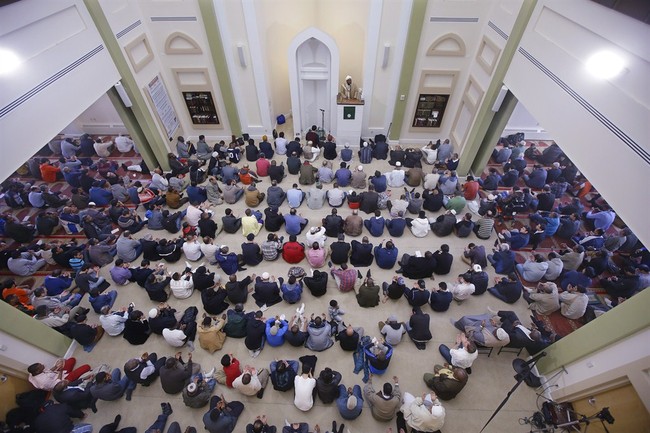
Local anger over a major expansion of the Islamic Association of McKinney boiled over at a city council meeting, drawing Republican Rep. Keith Self into the fray and sparking a recall effort against the mayor and three council members after officials approved the plan despite vocal opposition.
McKinney residents packed the council chambers and overflowed into hallways to protest a large mosque expansion that many felt was pushed through without proper listening to voters. The crowd’s size and intensity delayed the meeting and set the tone for a heated public airing of concerns about safety, cultural fit, and local control.
Rep. Keith Self, representing the district in Congress, stood with constituents that night and did not mince words when he addressed the council. He expressed deep fears about practices he associates with certain strains of political Islam and tied those worries to the broader question of community standards and public safety.
“Child marriage, honor killings, don’t tell me it can’t happen here.”
“The freedom to choose our faith or not does not exist in political Islam. Ask any Muslim what the penalty is for leaving political Islam. It’s death.”
After delivering those lines, Self amplified concerns about extremist rhetoric by pointing to sermons he says show imams preaching sedition. He told the assembled residents he has “any number of videos of imams in America, modern-day America, preaching sedition, open sedition, against the U.S. Constitution and the laws of this land.” That denunciation won a standing ovation from the crowd.
Despite the vocal opposition, the council voted unanimously to approve the expansion plan, a 7-0 decision that stunned many citizens who felt ignored. That vote crystallized frustration into action as residents moved quickly from protest to organization, declaring they would use the recall process to hold elected officials accountable.
The recall organizers have targeted Mayor Bill Cox and councilmembers Ernest Lynch, Justin Beller, and Geré Feltus, arguing this is not about a single issue but a pattern of governance. Their case emphasizes spending choices, prioritization, transparency, and whether leaders are responsive to everyday residents rather than special interests or outside pressures.
The recall group has worked to build public support through social media and local outreach, framing the effort as a test of whether elected officials will answer to the community. The message from organizers is straightforward: when officials ignore a strong, organized showing from voters on a major local decision, citizens should use the tools the system provides.
Rep. Self publicly pledged support for the recall and encouraged residents to sign the petition, framing the moment as an opportunity to defend local control. In remarks posted online he said, “To the citizens of McKinney, I will sign the recall petition.” He described the tactics he believes conservatives face and urged voters to stand tall and make their choice known.
To the citizens of McKinney, I will sign the recall petition.
What you are experiencing today — the intimidation, the bullying tactics, the threats — that’s what conservatives in Congress experience every single day in D.C.
This is your time. Just like I said at the City Council meeting, that was their time to stand tall.
This is your time to stand tall.
This is your moment of truth. This is your time for choosing.
https://x.com/RepKeithSelf/status/2088643548635635756
Sign the petition. They cannot ignore the citizens of McKinney.
The scene in McKinney highlights a broader dynamic playing out in many communities where rapid development and cultural change collide with long-standing local expectations. On one side are residents who demand transparency, careful vetting, and preservation of civic norms; on the other are leaders who argue plans meet legal requirements and serve community needs.
Supporters of the expansion say the facility will meet local needs and provide services for a growing population, while opponents worry about scale, traffic, and cultural implications. That clash has turned a planning decision into a political flashpoint, and it has galvanized both sides to organize more intensely ahead of the recall deadline.
With a firm deadline to gather signatures, the recall campaign now tests how effectively concerned citizens can convert protest energy into formal political action. For Republicans and conservatives in the area, the episode is being treated as a moment to defend local voice and push back against decisions they see as out of step with constituent concerns.
Whatever the outcome, the McKinney fight will be watched by nearby Texas communities weighing similar questions about development, zoning, and cultural fit. The recall effort shows that when residents feel unheard, they will use constitutional tools to demand accountability and push elected officials to be more attentive to the people they represent.

The truth is that Islam is a dangerous political ideology and does not fit the definition of a religion. The American citizens, true patriots, MUST rise up and totally eliminate Islam in the USA, and it IS going to require bloody violence to accomplish this task.