
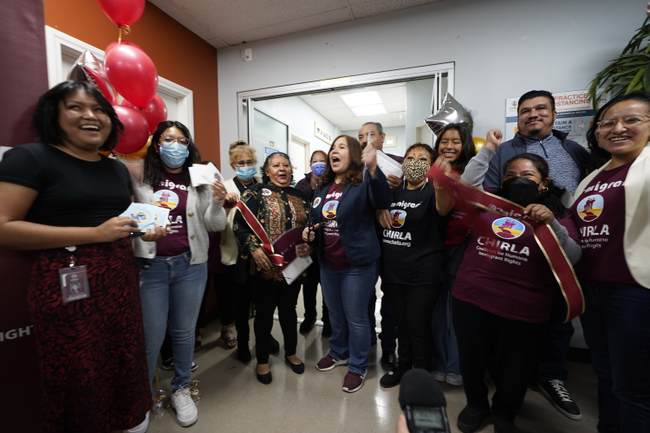
This article examines California Assembly Bill AB 2624, known as the “Stop Nick Shirley Act,” its sponsorship by the Coalition for Humane Immigrant Rights of Los Angeles, and the practical and legal consequences the measure would have for journalists, activists, and ordinary citizens who publish images or identifying details about employees, volunteers, or residents associated with organizations that provide immigration support services.
AB 2624, introduced in the state legislature, would make it a crime to publicly post images or personal information of people tied to taxpayer-funded immigration support providers when the post is alleged to threaten or incite harm. The bill is backed by a prominent immigrant-rights group with a long record of activism in Los Angeles. That sponsorship and the bill’s broad language have alarmed conservatives who see it as a threat to basic reporting and accountability.
The drafting lawmaker is connected to California’s political establishment, and the bill’s language grants protections that critics say are unprecedented. Under the proposed statute, even a photograph paired with publicly available workplace information could trigger criminal penalties if authorities interpret intent the wrong way. That creates a chilling effect for journalists and citizens trying to document public-facing organizations.
Supporters justify the bill by pointing to instances where people associated with service providers have faced threats or doxxing, arguing the state must protect vulnerable workers and residents. Those concerns deserve attention, but the measure’s sweeping definitions of “personal information” and “image” sweep in routine reporting and public interest inquiry. The law does not clearly separate malicious doxxing from legitimate scrutiny.
CHIRLA, the sponsoring organization, runs rapid response networks that notify volunteers about immigration enforcement activity and collect photos and locations as part of activism efforts. Those rapid responses have been connected to clashes with enforcement operations in the past, raising real concerns about safety on both sides. Yet that history does not justify placing investigative reporters at legal risk for photographing public figures or public spaces.
A person, business, or association shall not knowingly publicly post or publicly display, disclose, or distribute on the internet the personal information or image of any designated immigration support services provider, employee, or volunteer, or other individuals residing at the same home address, with the intent to do either of the following:
(A) Incite a third person to cause imminent great bodily harm to the designated immigration support services provider, employee, or volunteer identified in the posting or display, or to a coresident of that person, where the third person is likely to commit this harm.
(B) Threaten the designated immigration support services provider, employee, or volunteer identified in the posting or display, or a coresident of that person, in a manner that places the person identified or the coresident in objectively reasonable fear for their personal safety.
The quoted statutory language is broad and, as written, includes “coresidents” and household members as potential protected parties, which means anyone who lives with a designated worker could gain victim status. That expansion could turn routine reporting—like publishing a photo of an organization’s leader—into a criminal exposure for a journalist if a household member later claims to feel threatened. The law hinges on proving intent, but intent is notoriously difficult to adjudicate and easy to infer against political opponents.
Penalties under the proposal are steep. Beyond possible criminal sanctions, the bill allows civil suits that can seek takedown orders, attorneys’ fees, and statutory restitution without proof of actual damages. That civil avenue effectively weaponizes the courts as a rapid takedown mechanism, making it costly for outlets and independent reporters to publish even basic facts about public organizations that receive taxpayer support.
Conservative critics view AB 2624 as a tool to intimidate and silence investigative reporting into how public money is spent and who benefits. They argue the law would flip protections away from the public and toward organizations that want to avoid scrutiny, and that it is likely to be applied unevenly in a state where political bias in institutions is a legitimate concern. The potential for selective enforcement looms large.
Real-world examples cited by opponents include activists who have used photo-sharing to organize responses to enforcement activity, and incidents where confrontations followed publicized locations. Those events illustrate the tension: there is a public safety interest in preventing doxxing that leads to violence, but there is also a public interest in documenting and questioning powerful groups and public expenditures.
Journalists and activists on the right warn that the bill’s vague terms invite overreach, chilling routine coverage of nonprofit and government-funded operations. Ordinary citizens photographing public places or leaders should not face jail time or massive fines because a later incident is framed as a consequence. Protections against malicious harassment can and should be crafted without sacrificing transparency.
At the time of writing, AB 2624 remains under consideration in committee, and its fate will shape how California balances privacy, safety, and the public’s right to know. The debate over this bill is a flashpoint for larger fights about free speech, accountability, and the special protections the state may grant to politically connected nonprofits.
Reporting has highlighted that organizations involved in sponsoring the bill receive substantial public funding while running politically active programs, which fuels calls for clearer rules about transparency and oversight. Critics say those conditions should invite more reporting, not less, and that journalists should be free to document taxpayer-funded activity without fear of punitive legal action.
Stories of individuals who claim harassment or targeted threats are part of this conflict, and they deserve fair handling by law enforcement. Still, opponents insist the proper response is narrowly targeted criminal and civil remedies for proven wrongdoing, not a sweeping new regime that chills legitimate public-interest reporting and citizen oversight.
Ultimately, the controversy over AB 2624 is a reminder that lawmaking in a polarized environment can create tools that shift legal burdens in ways that favor well-connected groups. Public debate and careful scrutiny are essential to ensure laws protect safety without undermining essential freedoms such as journalism and civic transparency.


Add comment