
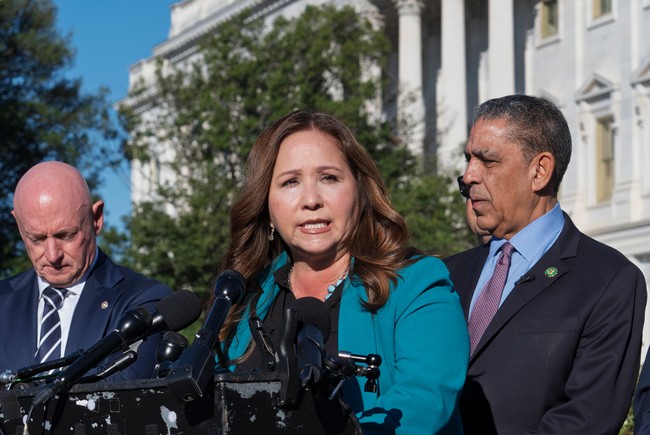
This piece walks through the aftermath of Democrat Rep. Adelita Grijalva’s public clash with federal immigration agents in Tucson, reviewing her claims, the video she shared, eyewitness details about the crowd, and responses from officials and media figures while preserving direct quotes and original embeds.
Rep. Adelita Grijalva said she was “pushed aside and pepper-sprayed” during an enforcement action in Tucson, and she described the scene as chaotic and frightening. She posted about the incident, insisting she was asking for clarification as a member of Congress. The exchange quickly drew attention and heated responses from multiple sides.
According to Grijalva, community members in Tucson had stopped approximately 40 ICE officers, most of whom were masked, in the middle of a street near Taco Giro, which Grijalva described as a small mom-and-pop restaurant.
She said the community members stopped the officers “because they were afraid they [the agents] were taking people without due process.”
“I was here — this is like the restaurant I come to literally once a week — and was sprayed in the face by a very aggressive agent, pushed around by others, when I literally was not being aggressive,” Grijalva posted to social platform X. “I was asking for clarification, which is my right as a member of Congress.”
The video Grijalva shared is central to the dispute, and it shows a crowded scene with people close to federal agents. Watching the clip, it’s clear many in the crowd were trying to block the agents’ movement and to draw attention to the operation. That disturbance frames how observers judged both protester and agent actions.
Here’s the post she also released, and the footage is meant to back her account and to show the interaction as aggressive toward her. The visual evidence prompted immediate debate about who escalated the incident first. Some say the video undercuts her claims; others say it proves the agents acted too forcefully.
Onlookers reported the crowd grew large enough to impede exit routes, and officials later said demonstrators had blocked agents in the parking lot. Those reports described people locking a gate so agents could not leave until the lock was cut. According to law enforcement accounts, the scene required additional local support to extricate the agents safely.
Authorities also said the enforcement action was part of a lengthy investigation, and federal spokespeople emphasized that the operation had been planned and ongoing for years. Reports circulated that officers endured physical interference from some demonstrators and that two agents were injured during the chaos. That context shaped how many viewed the legality and prudence of members of Congress inserting themselves into the operation.
After the incident, Grijalva appeared on a national program and described the moment as terrifying, saying the group was pushed and shot at. Her recounting included claims of being under direct threat during the encounter. Those comments fueled intense media coverage and political backlash alike.
“One agent said, I don’t care who you are, you need to get out of the way.”
“We were pushed. We were shot at.”
“It was very frightening and very jarring.”
It’s a script. Same one every time.
Disrupt and/or impede ICE operations, provoke a response.
Victimhood moment secured, media hits assured.
Critics argue the encounter was predictable: when civilians block an enforcement action, the response will escalate. Some commentators saw a pattern where activists provoke a scene and then portray themselves as victims once federal officers respond. That view holds that elected officials should not physically interfere with active law enforcement operations.
Others counter that members of Congress have a duty to document potential civil rights violations and to stand with constituents. Supporters of Grijalva maintain the representative was fulfilling oversight responsibilities. That split explains why reactions ranged from condemnation to solidarity.
The episode also drew statements from administration officials who criticized the conduct of protesters and questioned attempts to insert political theater into operational circumstances. That criticism was amplified by commentators who cited security risks when crowds latch onto enforcement actions. The exchange highlighted the broader political fault lines around immigration enforcement tactics.
Finally, the incident left unresolved tensions about the right balance between community oversight and lawful operations by federal agents, and it raised questions about how elected officials should engage in volatile enforcement settings. The competing narratives persist, and the tapes and testimonies will continue to be dissected. Readers and decision makers will likely keep debating where responsibility lies in such confrontations.
Editor’s Note: We voted for mass deportations, not mass amnesty. Help us continue to fight back against those trying to go against the will of the American people. Join RedState VIP today and use promo code FIGHT to get 60% off your VIP membership.

Add comment