
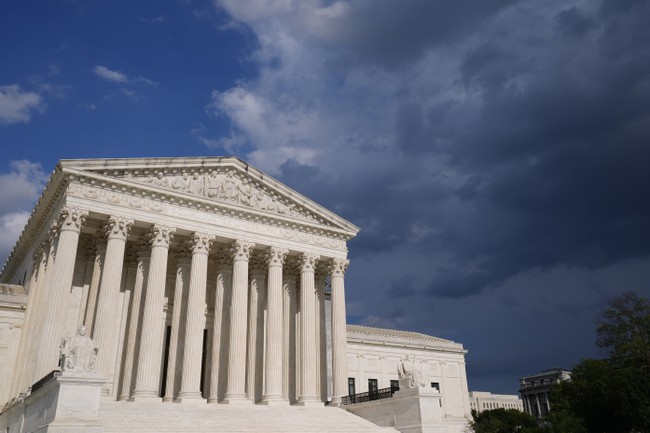
I’ll explain why the Supreme Court might reject President Trump’s executive order on birthright citizenship, trace the legal precedent that matters, summarize how lower courts ruled, outline the separation-of-powers issue driving conservative skepticism, and describe what a narrow institutional ruling could say.
The Supreme Court will finally face whether a president can unilaterally reinterpret the Fourteenth Amendment to restrict birthright citizenship. The politics are noisy, but the core constitutional question is straightforward and weighty: can any president, Republican or Democrat, rewrite a constitutional provision on their own? What the Court decides will shape the balance of power between the White House and Congress for decades.
The administration’s order targets a long-settled precedent from United States v. Wong Kim Ark, decided 127 years ago. That case held that a child born in San Francisco to Chinese parents was a U.S. citizen, and it did so by relying on the Fourteenth Amendment text: “All persons born or naturalized in the United States, and subject to the jurisdiction thereof…” This phrasing has anchored the modern understanding of birthright citizenship ever since.
For decades courts and scholars have treated that precedent as the governing rule, and overturning it would instantly redefine who counts as American. Even legal commentators who dislike the current policy acknowledge that presidents lack the power to alter a constitutional rule by fiat. The point is not whether someone likes birthright citizenship, but whether the executive branch can rewrite a constitutional guarantee.
Lower courts across the country have uniformly blocked the order, finding that the executive branch does not have authority to redefine citizenship. Judges appointed by both parties rejected the notion that an administration can change who is a citizen without congressional action or a constitutional amendment. Those rulings left the White House facing a steep legal uphill climb before the case reached the high court.
The current Supreme Court has signaled skepticism about broad unilateral presidential authority in other contexts, and those signals matter here. Justices who often push back against expansive federal or executive power have also resisted presidents claiming the power to remake statutory or constitutional rules. If those principled limits on executive reach hold, it undercuts the legal foundation for the birthright citizenship order.
At stake is separation of powers. If a president can determine by executive order who is and is not a citizen, the executive branch would eclipse Congress as the primary architect of national identity and policy. That would create a dangerous precedent: the same power could be used by a future administration to expand citizenship or to reshape other fundamental rights, depending on which party occupies the White House.
Conservative legal thought has long emphasized constrained executive authority and deference to Congress on major policy shifts. Allowing a unilateral change to the meaning of the Fourteenth Amendment would conflict with those long-standing principles. Many conservatives support tough immigration policies but also worry about empowering the presidency to rewrite constitutional texts.
A ruling against the administration is therefore plausible not because the Court loves the current application of birthright citizenship, but because the justices may reject the notion that the executive can alter a constitutional provision alone. Courts can uphold long-standing constitutional meanings while reserving to Congress the job of making major legal changes, through statute or amendment.
If the Court crafts a narrow, institutionalist opinion, it could emphasize a few clear points: the Fourteenth Amendment’s meaning cannot be revised by executive order; changes to citizenship must come through legislation or a constitutional amendment; the Court will decline to grant the executive branch power to strip or confer citizenship at will; and the judiciary will not hand either branch unilateral authority to rewrite fundamental rights. Such an approach would preserve constitutional process without endorsing every modern application of birthright citizenship.
- The Fourteenth Amendment’s meaning cannot be revised by executive order.
- Any change to citizenship laws must come through Congress or a new amendment.
- The Court will reject unilateral executive revision even if it questions specific modern applications.
- The Court will refuse to give the executive branch the power to strip citizenship from large groups of people.
Put bluntly, whatever power a president claims today can be used by the next president in the opposite direction tomorrow. Conservatives who prize limited government and institutional checks may balk at handing the White House that kind of authority, regardless of policy goals. That institutional caution may be the deciding factor when the justices hand down their opinion.

Add comment