
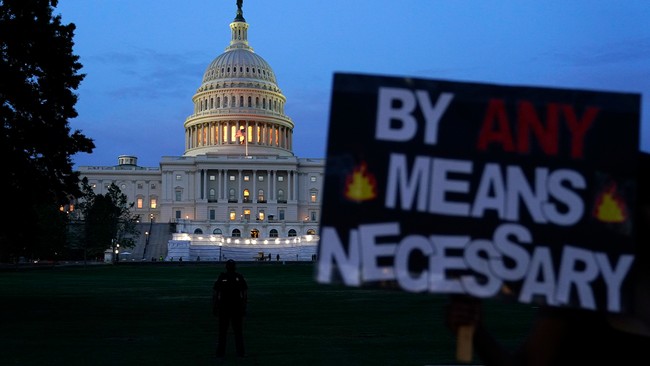
The White House Correspondents’ Dinner shooting left a shaken crowd and raised ugly questions about political rhetoric and violence, the suspect facing federal charges and investigators poring through his writings and online activity to understand what drove him to allegedly target President Trump and other officials.
The suspect was subdued quickly after shots rang out, and authorities moved fast to press serious charges against him. Prosecutors have accused Cole Tomas Allen of attempting to assassinate the President, transporting a firearm across state lines, and discharging a firearm during a crime of violence, among other counts. The speed of his arrest stopped the violence from becoming even worse, but the questions it exposes are far from settled.
What investigators and some media outlets find puzzling is how a man accused of trying to kill the President could appear, in parts of his online footprint, not to fit the classic profile of a violent extremist. NPR even ran a headline asking why, with no radical footprint, the suspect would try to assassinate Trump. That apparent disconnect is now at the center of debate among law enforcement, journalists, and the public.
The suspect’s alleged manifesto contains ravings about President Trump and his cabinet that echo heated language heard in mainstream discourse. A startling excerpt reads, “I would still go through most everyone here to get to the targets if it were absolutely necessary (on the basis that most people *chose* to attend a speech by a pedophile, rapist, and traitor, and are thus complicit) but I really hope it doesn’t come to that.” Those words are chilling and show how violent imagery can migrate from rhetoric into real-world action.
To that point:
Investigators say Allen traveled cross-country and attended political demonstrations, and his social media presence has drawn scrutiny. Some experts who track extremism say the profiles attributed to him look “quite centrist, pretty moderate left wing” rather than overtly radical, which complicates efforts to spot violent intent in advance. That assessment has provoked pushback from others who see the rhetoric surrounding the suspect as part of a broader normalization of extreme language on the left.
Reporting from mainstream outlets dug into his posts and highlighted comments that range from conspiratorial to angry, and that mix of views makes it hard to draw simple conclusions. CNN and other outlets cataloged social posts and interactions that illustrate how a person can blend mainstream progressive views with fringe conspiracies. Those blurred lines are a problem for investigators trying to identify genuine threats before they act.
This is a pattern critics argue has been building for years: hostility toward political opponents that slides into calls for or applause of violence. Some left-wing fringes openly celebrated extremism and even mused about assassination in online spaces, while established party figures continue to use aggressive rhetoric. The result is a political climate where violent fantasies can be normalized, making it harder to distinguish true threats from heated hyperbole.
Cultural and media environments both shape and reflect this dynamic. When influencers, commentators, or elected officials use dehumanizing language, it can filter down into the broader conversation and embolden those with unstable intent. At the same time, experts who monitor extremism are warning that relying solely on recognizable hardline markers will miss individuals who radicalize through a mix of mainstream and fringe content.
Law enforcement faces a difficult task: connect the dots between ideation and action when the dots are spread across different platforms and mixed with banal content. Prosecutors have already brought severe federal charges, including penalties that range up to life imprisonment, and more counts are reportedly possible as evidence is reviewed. That legal clampdown aims to deter would-be attackers and hold accountable anyone who crosses from words to violent deeds.
The larger political fallout will play out in courts, on cable shows, and across social feeds as Americans argue about culpability and cultural responsibility. Many conservatives, and critics across the spectrum, see this episode as proof that violent rhetoric from the left has become mainstream within parts of one major party. Others caution that labeling entire movements based on one alleged attack is dangerous and unproductive.
Either way, the attack has refocused attention on how language, online ecosystems, and political signaling can combine into real-world danger. The stakes are high: if polarized speech continues to spill into violence, the nation faces both a security problem and a civic crisis that will demand clearer lines between acceptable political debate and dangerous incitement.

Add comment