
The U.S. Navy and Marines intercepted and boarded an Iranian-flagged tanker, then confirmed the ship was carrying suspicious cargo, including dual-use chemicals and equipment with ties to missile production; President Trump described the shipment as a “gift from China” and officials say the vessel’s history and sanctions profile likely drew attention, while ongoing container searches and reports of metals, piping, and electronics suggest broader logistic support that could extend Iran’s military endurance.
The seizure began when U.S. forces stopped the Iranian-flagged vessel Touska and conducted an on-board search, driven by the ship’s known history of procurement for Tehran’s ballistic missile program. The operation revealed cargo that Marines have since verified as materials with potential dual-use for missile manufacture, prompting a detailed inspection of thousands of containers. That background made the ship an obvious focus for the blockade and explains why the crew tried to evade inspection.
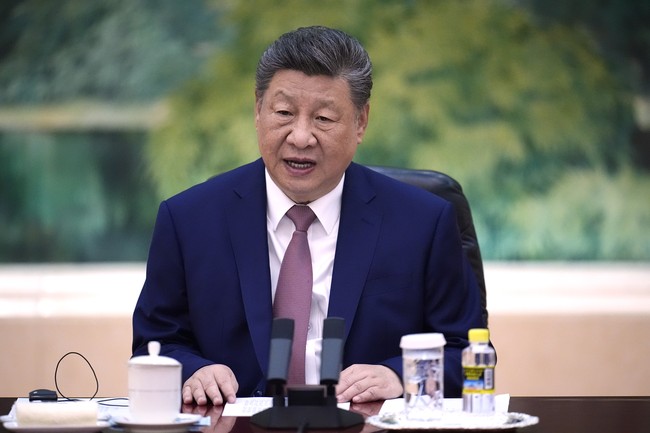
President Trump addressed the discovery directly, saying the load was a “gift from China” and expressing surprise because he believed he “had an understanding with President Xi.” He also said, “You know, they’re trying to move the missiles, because we’ve obliterated most of their missiles, and they’re trying to move their missiles around, even during the ceasefire, which I think was a good thing, because we’re totally loaded up.” Those quotes underscore the diplomatic and military friction this seizure has already produced.
Eyewitness accounts and reporting indicate the ship was carrying chemicals from China that can be used in ballistic missile production, and U.S. Marines began searching roughly 5,000 containers on board. Officials are treating components and raw materials with urgency because logistics are the engine of any sustained conflict, and items like specialized metals, piping, and electronics can meaningfully extend a recipient’s battlefield capability. Finding such cargo aboard a sanctioned entity adds a legal and geopolitical angle to the seizure.
The Touska is linked to the Islamic Republic of Iran Shipping Lines, a state-run company long described by U.S. officials as a preferred channel for procurement activities tied to Iranian military programs. That corporate profile, combined with prior accusations about this vessel’s role in procuring missile-related materials, is exactly the sort of pattern intelligence services monitor. When a ship with that pedigree approaches international waters under suspicious circumstances, naval interdiction becomes a legitimate tool to prevent proliferation.
Reports also point to other materials on board that are not strictly chemical precursors but are still valuable for missile work, including metals and electronic components. Those parts can be used in guidance systems, propulsion assemblies, or structural elements, and they complicate the picture because they often have legitimate civilian uses as well. For U.S. commanders, the challenge is differentiating bona fide commercial cargo from items intended to circumvent controls and feed a weapons program.
Strategically, this incident highlights how third-party supply and logistics can reshape conflict dynamics. If a foreign state or private suppliers funnel specialized materials, the recipient can sustain operations longer than anticipated by its adversaries. Even if China or other actors are not directly engaging in combat, the movement of critical components across global supply chains can materially affect outcomes on the battlefield.
From the U.S. perspective, intercepting such shipments serves multiple purposes: it prevents immediate material transfers, signals resolve to partners and competitors, and produces intelligence about procurement networks and routes. That intelligence is essential for disrupting future transfers and for informing diplomatic engagements—especially when high-level meetings between heads of state are pending. The discovery will therefore shape conversations in Washington and abroad.
Operationally, Marines and Navy personnel continue to catalog and analyze what they found, and investigators are tracing origins and intended recipients of the cargo. The presence of dual-use items and supporting components raises questions about how those supply chains were organized and whether sanctions or export controls were intentionally circumvented. Authorities will follow both criminal and diplomatic tracks to assign responsibility and deter repeat attempts.
What this all makes clear is that modern warfare and escalation are as much about logistics and procurement as they are about battlefield maneuvers. Controlling the flow of materials, enforcing sanctions, and interdicting suspect shipments are central parts of constraining adversaries. The Touska seizure is a reminder that supply lines, not just missiles, often decide how long a fight can continue and what options remain available to policymakers and commanders.
Local sources and official statements will continue to emerge as inspections finish and evidence is processed, and the broader implications for regional stability and great power competition are likely to surface in coming days. The Navy’s action and the president’s comments put pressure on both diplomatic channels and enforcement networks to respond to this kind of dual-use trafficking.


Add comment