
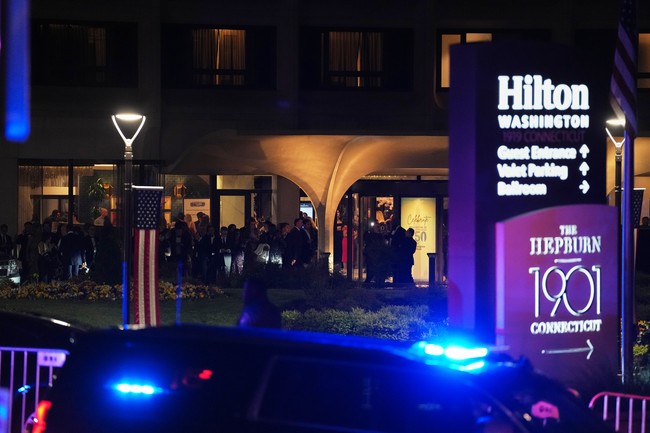
The attempted assassination at the White House Correspondents’ Dinner sparked a predictable wave of outrage and a firing after a UnitedHealthcare employee posted a sarcastic social video reaction, touching nerves because the company had a past workplace tragedy; the incident raises questions about political rhetoric, public expression by employees, and where consequences should fall.
Political divisions are not new, but the way some people respond to violence has become increasingly extreme and public. When employees of public-facing institutions celebrate or mock the harm of political opponents, it forces employers into a difficult spot. Companies have to weigh values, public trust, and legal exposure when addressing those incidents.
The recent case revolves around a UnitedHealthcare social media manager whose reaction to the WHCA shooting was captured on video and shared online. Her sarcastic remark drew rapid attention and led to her termination, illustrating how quickly offhand social posts can end careers. That speed of consequence is now part of the social media era employers and workers both must navigate.
UnitedHealthcare has fired a woman who expressed sadness in a TikTok video that President Donald Trump was not killed in the Saturday shooting during the White House Correspondents’ Association Dinner. In the video, she sarcastically asked, “Aww, they missed?”
“We’re cooked as a country when my first reaction to hearing the news about Trump’s attempt was, ‘It was probably fake,’” Alison King, who has reportedly deleted her LinkedIn account but was identified as a social media manager for UnitedHealthcare, said in the video.
“Like, immediately I was like, ‘Oh, that wasn’t real, probably fake,’” King said. “And the second was ‘Aww, they missed? So happy they missed.’ Yeah, that’s sad,’” King said sarcastically.
UnitedHealthcare publicly addressed the episode and confirmed it had taken action against the employee who posted the comments. The company’s statement emphasized that violence is unacceptable and that remarks suggesting otherwise do not align with its mission. That kind of corporate distancing is a predictable response when a worker’s words threaten a brand’s reputation.
Here’s the video:
UHC did comment on Tuesday morning – know that Ms. King (pronouns: she/her, of course) is no longer with the company:
Violence is never acceptable and any comments that suggest otherwise are in no way consistent with our mission and values. The person who made comments online about Saturday night’s incident at a Washington event where President Trump and many other political leaders were gathered is no longer employed by the company.
There is a sharper sting to this story for UnitedHealthcare employees and customers because the company endured a very public tragedy late in 2024 when its CEO was killed, allegedly by someone who had a grievance related to the health insurance industry. That history makes a flippant, celebratory take on an assassination attempt particularly brutal for coworkers and surviving family members. It also makes the company’s swift action more understandable to many observers.
Beyond this single firing, the episode opens a broader debate about political discourse and the normalization of violent rhetoric. When prominent figures and influencers entertain or gloss over assassination talk, it shifts the bounds of acceptable public speech. That trend is dangerous no matter where you sit on the political map because it erodes basic norms against violence.
Social media amplifies extremes, and some public personalities have, in various ways, made provocative comments that edge into dangerous territory. That amplification encourages copycat behavior and gives fringe ideas wider reach. Employers then face the tough job of policing off-duty expression that nonetheless reflects on the company.
Employees who work for large, consumer-facing companies should be mindful that their public profiles can be read as tied to their employers. Conversely, companies must be consistent in their policies and how they apply discipline so that enforcement does not appear selective or politically motivated. Both sides have responsibilities in preserving workplace cohesion and public trust.
Public reaction to this firing will be mixed, and that is to be expected in our polarized environment. Some will say the employee’s firing was necessary and justified, while others will frame it as an overreach or suppression of speech. Either way, the incident is another reminder that private posting has public consequences, and the boundaries between personal opinion and professional life keep getting blurrier.
Relatedly, there was this:
And just as a reminder, Thompson’s alleged killer, Luigi Mangione, has been romanticized and glorified by the same deranged leftists who pitch fits and reach for the smelling salts if Trump commits the crime of posting a mean tweet:

Add comment