
Checklist: Report the Republican primary challenge; note ethics investigation and allegations; present the challenger’s background and rationale; explain implications for the July/August primary and the general election; include verbatim quoted material and the original embed token.
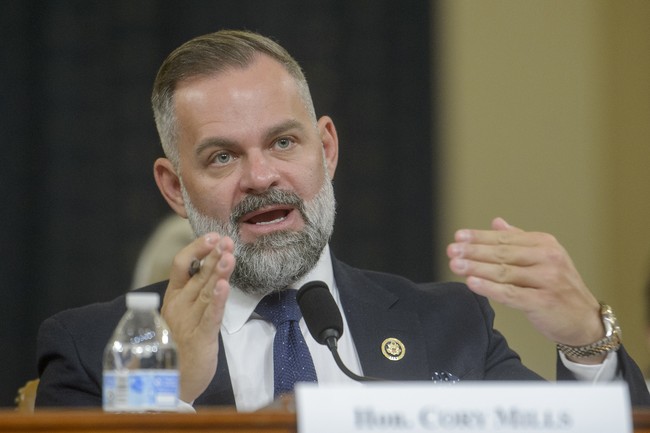
Republican Rep. Cory Mills of Florida’s 7th District is facing renewed pressure as a fellow Republican enters the race to replace him in the primary. The contest is unfolding amid an active House Ethics Committee inquiry and public allegations that have put Mills on unstable ground. This challenge underscores a broader belief in the party that accountability matters and voters deserve a clear, electable choice. The primary could reshape the GOP’s hold on this seat ahead of the fall contest.
The new GOP hopeful is Ryan Elijah, a veteran local news anchor with strong name recognition across central Florida. He’s built a profile over years on television and as a local voice, and now he’s translating that visibility into a campaign. Elijah frames his run as offering Republican voters an alternative to an embattled incumbent. That pitch plays to conservative voters who want steady governance and a candidate who can defend the seat in November.
Rep. Cory Mills, R-Fla., a scandal-plagued lawmaker facing bipartisan calls to resign, drew a GOP challenger Tuesday who threatens to scramble his re-election bid.
Ryan Elijah, a veteran former news anchor for FOX 35 Orlando, is launching a bid for Mills’ central Florida House seat, vowing to defeat the embattled incumbent in the Sunshine State’s August primary.
Elijah told Fox News Digital that Republican voters should have an alternative to Mills, who is facing allegations of sexual misconduct and campaign finance violations, among other improprieties.
The ethics investigation remains a central issue for voters and for Republican strategists who worry about holding the district in November. The House Ethics Committee has confirmed it has an active probe into allegations of sexual misconduct and/or dating violence. That lingering inquiry creates uncertainty about Mills’ ability to run an effective, well-funded campaign while fighting allegations in the background.
Elijah has emphasized that community leaders urged him to run and he believes the district needs a candidate who can both unite conservatives and win the general election. He argues that the current situation could hand Democrats an opening in a Republican-leaning seat if the GOP nominee is weakened by scandal. Republicans are right to be concerned about defensive races that leave the majority at risk.
Elijah called the allegations against Mills “serious” and said the House Ethics Committee should continue its investigation into the incumbent’s alleged misconduct. The panel announced last week that its only active investigation related to “sexual misconduct and/or dating violence” is the Mills probe.
The committee has not indicated when it plans to wrap up its investigation into Mills, which began in November.
Financial dynamics are another potential factor. The Democratic challenger in the district reportedly has a significant campaign war chest, and reports suggest Mills’ campaign is struggling with fundraising and debt. Republicans know that contested toss-up resources and money on hand matter in the closing months before November. A fresh Republican nominee with solid fundraising and no scandal baggage would be preferable to a contested incumbent.
Local voters who have grown tired of incumbency-by-default will likely respond to a challenger who presents a clear, conservative alternative. The principle at stake is straightforward: primaries exist to test incumbents and ensure they remain accountable to the electorate. That message resonates with grassroots voters who expect vigorous contests when leadership falls short.
Elijah’s media background gives him an advantage in name recognition and the ability to communicate effectively across the district. His experience makes him a plausible candidate to compete in the August primary and, if victorious, to pivot quickly into a general election battle. For the GOP, choosing a nominee who can both hold the base and appeal to swing voters is vital.
Republicans entering this primary season should weigh two priorities: holding safe seats and defending the majority. When an incumbent faces credible allegations that might cost the party a winnable race, it is reasonable for party voters to consider alternative candidates. The primary calendar will determine whether the district stays in firm Republican hands or becomes a battleground in November.



Add comment