
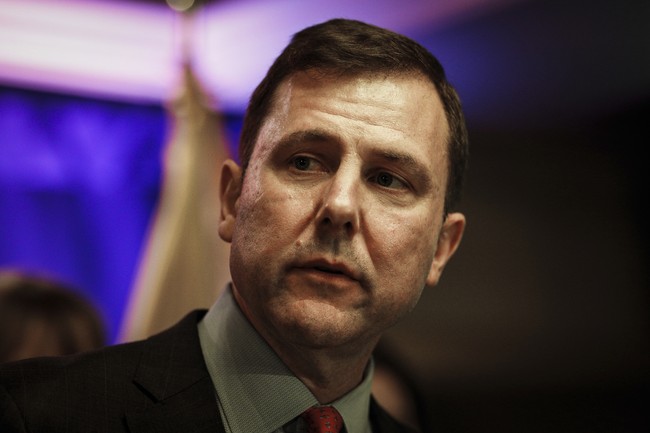
Republican Congressman Tom Kean Jr.’s nearly two-month disappearance from Congress has finally drawn a response, and this article reviews the timeline, the statement he posted, the gaps in communication with party leaders and constituents, and the political consequences he now faces as the June primaries approach.
Tom Kean Jr. was absent from votes and public duties for almost two months, and Republicans noticed the hole in representation long before clear answers arrived. That absence left colleagues and constituents wondering what happened and raised questions about internal communication within the party. The timing, right before a heated primary season, makes the silence even more consequential.
Kean posted this short statement on his X campaign account:
I want to thank my constituents and colleagues for their patience as I address a personal medical issue. My doctors continue to assure me that my recovery will be complete and that I will be back to the job I love very soon.
I take my responsibilities seriously and have a strong record of showing up and delivering, which makes this absence all the more difficult. I am especially proud of my Congressional team, who have kept constituent services and legislature work moving forward without interruption, and my political team for ensuring the campaign continues to run strong.
I also want to thank my friends and colleagues on both sides of the aisle for their patience and understanding during this time. I appreciate your support and look forward to being back in the near future.
The statement acknowledges a “personal medical issue” but offers little detail, and that lack of detail is the source of much of the frustration. House Speaker Mike Johnson and other New Jersey Republicans reportedly learned of the situation in fits and starts, rather than through direct briefings. For a party that stresses accountability, the perception of being kept in the dark is damaging.
Records show Kean’s last recorded vote in the House was on March 5, which left a long period without his participation in floor votes or visible constituent outreach. When the press dug into the absence, party leaders were suddenly under pressure to respond. In a high-stakes election year, optics matter and voters notice when their representative is unavailable for extended stretches.
Kean thanked his staff in the statement, saying, “I am especially proud of my Congressional team, who have kept constituent services and legislature work moving forward without interruption, and my political team for ensuring the campaign continues to run strong.” Those staffers clearly stepped up to keep services running, but voters deserve clarity about who was making decisions and why leadership wasn’t looped in sooner.
The public reaction has not been forgiving. Opponents and skeptical voters are already sharpening messages for the primary and general election, and silence creates room for speculation. In that environment, even a legitimate medical recovery becomes a political liability if it is not managed with transparency and timely communication.
Kean also wrote, “My doctors continue to assure me that my recovery will be complete and that I will be back to the job I love very soon,” which signals intent to return but lacks a clear timetable. Constituents expect their representative to be reachable and accountable, especially when votes affecting the district are at stake. A vague promise to return may not satisfy voters who want concrete assurance of representation.
There are procedural questions as well: who covered constituent work day to day, and how were urgent matters escalated when Kean was not publicly present? Those practical concerns about constituent service are what ultimately drive voter sentiment more than rhetorical apologies. Citizens want to know they are represented, not left guessing about availability.
The political calculus gets sharper as the New Jersey June primaries approach, and rivals will exploit perceived weakness. This is not only about one member’s health; it is about whether the party projects strength and preparedness heading into midterms. Republicans need candidates who can weather scrutiny and maintain steady lines of communication with both leadership and voters.
Kean’s final lines, “I also want to thank my friends and colleagues on both sides of the aisle for their patience and understanding during this time. I appreciate your support and look forward to being back in the near future,” aim to smooth bipartisan relationships, but they may not blunt the immediate political fallout. Lawmakers and voters alike will be watching for concrete steps to restore confidence.
At its core, this episode highlights how critical transparency and prompt communication are for elected officials, particularly in a polarized era when every absence is scrutinized. Medical issues are private, but elected office brings public obligations, and managing that balance matters more than ever.


Add comment