
I’ll recap the White House swearing-in of Ken Warsh as Federal Reserve chair, highlight President Trump’s remarks and praise, note Warsh’s background and independence pledge, explain contrasts with Jerome Powell’s tenure, include Warsh’s Greenspan reference and quoted lines, and restore the original embeds in place.
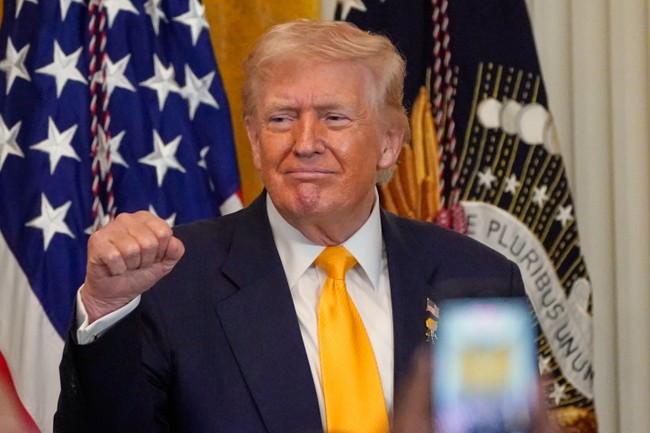
The White House hosted a formal swearing-in for Ken Warsh, and the moment carried visible weight. Supreme Court Justice Clarence Thomas administered the oath, and President Trump attended the ceremony along with administration officials. The event felt like a clear signal that the Fed is entering a new chapter under Warsh’s leadership. It was part ceremonial and part political theater, with the president setting expectations loud and clear.
Trump opened his remarks by welcoming guests and laying out a sweeping endorsement of Warsh’s future role. He predicted Warsh “will go down” in history as a great Federal Reserve chairman, a high bar meant to shift public and market expectations right away. That kind of presidential framing sends a message about priorities and the mandate the new chair will be expected to pursue. The tone blended praise with a call for decisive leadership at the central bank.
The president also highlighted Warsh’s intellectual pedigree, noting his studies with Milton Friedman and reflecting on Warsh’s familiarity with the White House. “He knows the White House very well, the president said. “He’s walking through the White House, and he’s pointing [out] things to me that even I didn’t know.” Trump pointed to Warsh’s long public service, including 15 years as a Fed governor beginning at age 35, to underline both experience and youth in a demanding role.
Trump used the occasion to draw a contrast with the previous Fed regime, framing Warsh as a corrective force after years of economic challenges. He took a jab at Jerome Powell’s record while emphasizing the need to restore confidence in monetary policy. That critique reflected broader Republican arguments about inflation and economic management, and it set expectations that Warsh will be judged against a promise of change. The president made it clear he expects the Fed to regain both credibility and clarity of purpose.
The new chair made his case for independence and a clear agenda during his brief remarks at the podium. Observers noted that Warsh named Alan Greenspan as a model for the job, pointing to a style that blends firmness with market-savvy judgment. As reported, Warsh signaled a “reform-oriented Federal Reserve” and emphasized tackling inflation and employment “with wisdom and clarity, independence” — exact words he used to stress autonomy. That emphasis on independence was deliberately repeated, acknowledging the delicate balance between political expectations and institutional responsibility.
There’s a new sheriff in town, Warsh made clear, auguring a “reform-oriented Federal Reserve.” Citing Alan Greenspan as a model, Warsh said the bank would tackle inflation and employment “with wisdom and clarity, independence” — there’s that word again — “and resolve.”
Warsh stressed personnel and performance as immediate priorities, promising to “surround his office with the best people can do their life’s best work” and to focus on “the national interest” with a daily goal of “excellence.” Those phrases are practical signals about the culture he wants to build at the Fed, aimed at both restoring public trust and improving policy delivery. He framed the job as a team effort where competence and commitment matter above all.
The chair acknowledged the ceremonial weight of the day while reminding listeners that the real work begins afterward. “After we leave this stage, the real work begins. So let’s begin that work. It’s an honor. Thank you, Mr. President,” he said before shaking the president’s hand. That short closing underscored a transition from rhetoric to responsibility and a pledge of immediate action.
Markets and pundits will watch Warsh closely as he moves from words to policy, especially on inflation and interest rate strategy. His background, including his time as a young Fed governor and academic influences, suggests he will marry intellectual rigor with a willingness to be decisive. The administration framed his elevation as a pivot away from recent Fed choices, positioning Warsh as someone who will restore confidence across partisan lines. For Republican observers, the ceremony was both a victory lap and the opening of high-stakes expectations.

Add comment